
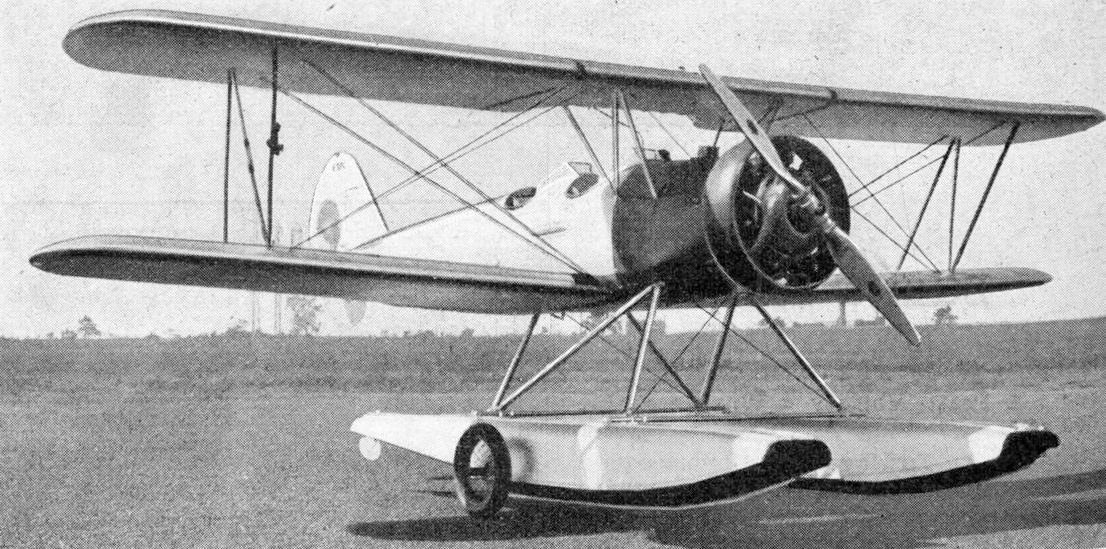
The Consolidated PT-11, designated by the manufacturer as the Model 21, was a primary training biplane developed in the early 1930s. It represented a continuation of Consolidated's efforts in the trainer market, following earlier designs such as the PT-1 of the 1920s. While the aircraft appeared in Consolidated's product listings as a 1931 trainer, it did not achieve large-scale adoption, as several trial variants were developed for the U.S. Army Air Corps without leading to mass production.
Production of the PT-11 for U.S. services took place at Consolidated Aircraft's facilities in Buffalo, New York. The company, founded by Reuben H. Fleet in 1923, operated primarily out of Buffalo until shifting its corporate focus and major manufacturing operations to San Diego, California, in the mid-1930s. A specific export variant, the Model 21-M, was produced in Canada by a Consolidated affiliate; 11 of these aircraft were delivered to Mexico.
Designed as a two-seat trainer with tandem open cockpits for a student and instructor, the PT-11 featured a fabric-covered airframe and a fixed tailwheel undercarriage. It was powered by a single piston engine, though specific model details and horsepower ratings were not documented in available technical literature. Performance data indicates a maximum speed of 118 mph (190 km/h) and a service ceiling of 13,700 feet.
In military service, the aircraft was operated by the U.S. Army Air Corps as the PT-11 and by the U.S. Coast Guard under the designation N4Y. Beyond the United States, the Model 21 family saw international use in Latin America, including the Colombian Air Force (operating the PT-11C), the Paraguayan Air Arm (operating the Model 21-C), and the Mexican Air Force. These aircraft served exclusively in training roles and were not utilized in combat operations.
Consolidated Aircraft eventually merged with Vultee Aircraft in 1943 to form Consolidated Vultee (Convair), which later became a division of General Dynamics Corporation in 1954. While the PT-11 was overshadowed by later, more standardized trainers, it remains a notable example of the interwar period's aviation development. There are no documented surviving airframes in museums or active flight today.