
Service History
Throughout most of the 1970s, the SA-330 Puma dominated the European transport helicopter market as the continent's best-selling rotorcraft in its class. By July 1978, the worldwide fleet had accumulated over 500,000 operational hours, with more than 50 aircraft delivered to civilian customers alone. The helicopter's versatility made it equally valuable for military transport, offshore oil platform operations, and VIP transport missions.
The Puma's operational supremacy was demonstrated on April 25, 1978, when the SA-330J became the first helicopter outside the Soviet Union certified for all-weather operations, including flight in icing conditions. This capability set it apart from competitors and expanded its operational envelope significantly.
Military Operations
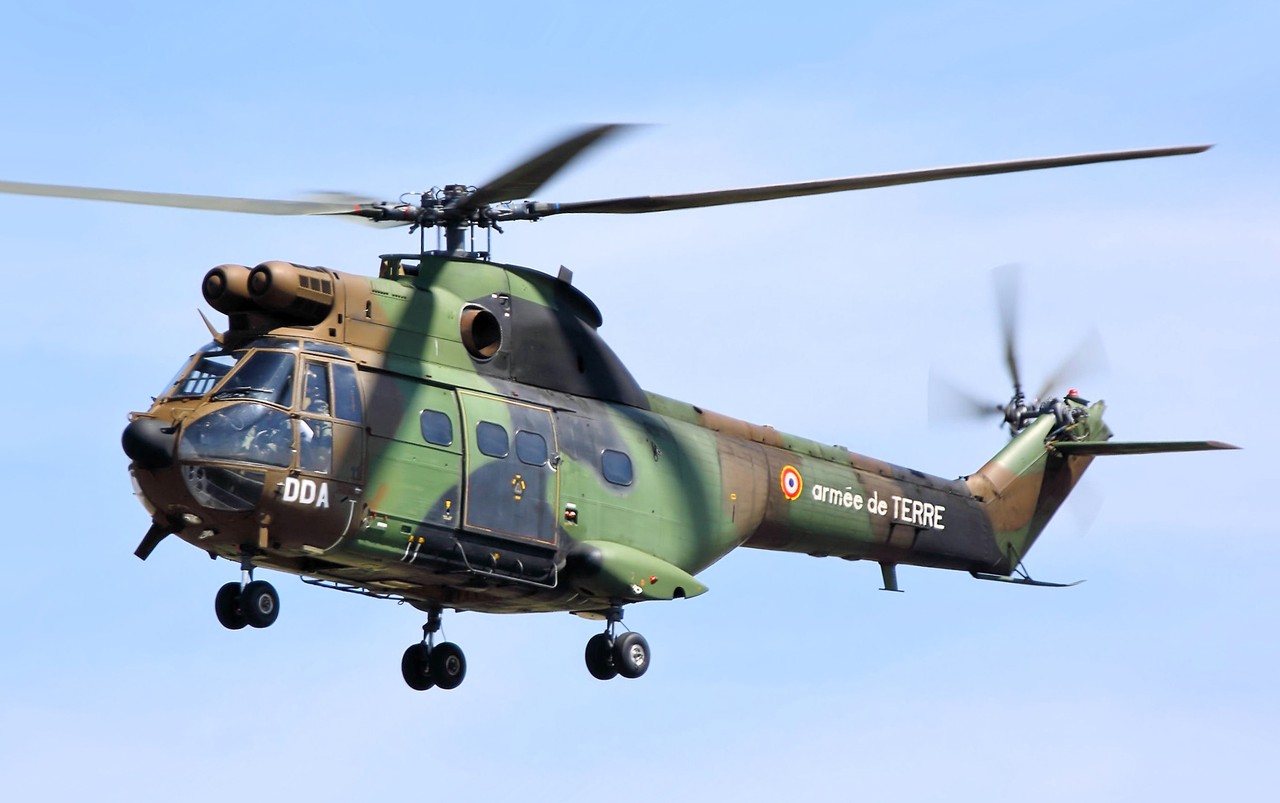
French Army deliveries commenced in early 1969, with the type becoming fully operational by 1970. The military variant could transport up to 20 soldiers in combat configuration or serve as a medical evacuation platform carrying six litters with four attendants. The South African Air Force became one of the first foreign operators in 1969, accumulating 53,000 operational hours before retiring their fleet in 1998. Notable SAAF pilot Charlie Tait logged approximately 3,500 hours on the Puma, more than any other pilot in the service.
An Anglo-French cooperation agreement resulted in Westland Helicopters producing 48 SA-330Es for the Royal Air Force, designated Puma HC.Mk 1. These aircraft differed only slightly from their French counterparts, demonstrating the design's international adaptability.
The Manufacturer
Sud Aviation initiated Puma development in 1963 with French government backing, later becoming Aérospatiale, which continued production until 1987. Aérospatiale represented the consolidation of France's aviation industry and eventually became part of the modern Airbus Group through successive mergers. The company's expertise in rotorcraft design made France a major competitor to American helicopter manufacturers during the Cold War era.
Engine and Technical Innovation
The Puma's twin Turbomeca Turmo turboshaft engines provided the reliability crucial for its success. The SA-330B featured 991-kilowatt Turmo III C4 engines, while later variants like the SA-330G utilized more powerful 1,175-kilowatt Turmo IVC engines. This powerplant configuration gave the helicopter a maximum takeoff weight of 7,000 kilograms.
Innovative design elements included a four-blade main rotor with fully articulated hub and integral rotor brake. Each blade attached to its sleeve via two quick-disconnect pins, enabling rapid manual blade folding for storage or transport. Engineers experimented with a large Fenestron shrouded tail rotor during testing, but concluded that practical limitations existed for this configuration on helicopters of the Puma's size, leading to retention of the conventional tail rotor.
Pilot Perspective
The SA-330's all-weather certification reflected its sophisticated flight systems and robust construction. Pilots appreciated the helicopter's ability to operate in conditions that grounded other rotorcraft, making it invaluable for search and rescue, medical evacuation, and military operations. The type's reputation for reliability was built on thousands of hours of operation in challenging environments from the North Sea oil fields to African combat zones.
Production and Legacy
Aérospatiale produced 686 aircraft between 1968 and 1987, with total sales reaching 697 units including licensed production. Romania manufactured over 200 aircraft as the IAR 330 starting in 1977, with production continuing into the 21st century. Indonesia also undertook domestic manufacturing, while South Africa's Atlas Aircraft Corporation developed the upgraded Oryx variant through extensive modifications.
The Puma's commercial success directly led to development of the AS332 Super Puma in 1978, featuring more powerful engines and improved aerodynamics. By 1980, Super Puma production had overtaken the original SA-330, marking the transition to a new generation of medium transport helicopters. The SA-330's legacy lives on through continued Romanian production and the dozens of Pumas still operating worldwide in military and civilian roles, testament to a design that defined European rotorcraft excellence for two decades.