
Revolutionary Manufacturing Meets Aviation Reality
The Prescott Pusher emerged from the vision of Tom Prescott, an aerospace veteran who had accumulated extensive experience at Sikorsky Aircraft, Piper Aircraft, and Learjet before departing Learjet in 1983 to establish his own company. Working alongside investor and CEO Linden Blue, marketing head Les Jordan, and public relations director Steve Cain, Prescott founded Prescott Aeronautical Corporation with ambitious goals for revolutionizing homebuilt aircraft construction.
Engineering Innovation and Development
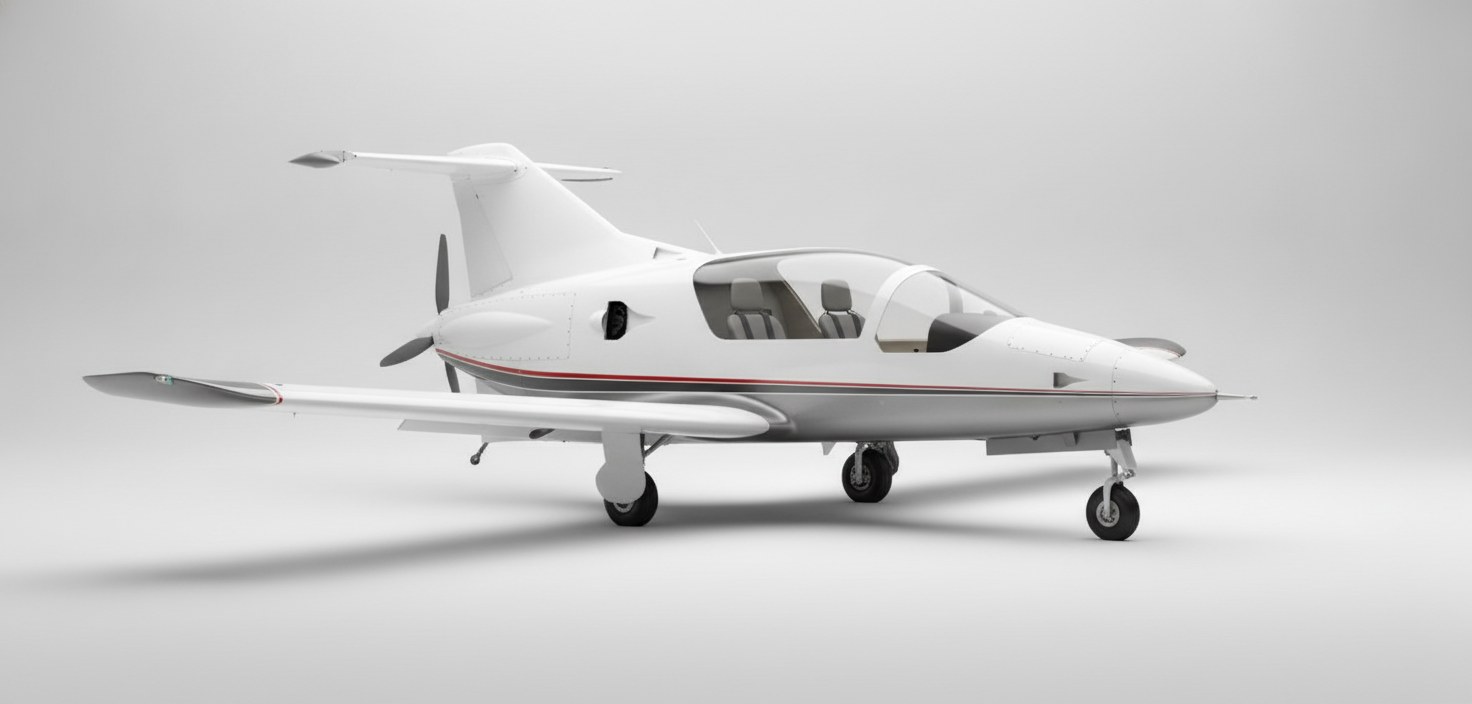
Prescott's design philosophy centered on precision engineering unprecedented in the homebuilt market. The company conducted rigorous testing using a one-fifth scale model in the Wichita State University wind tunnel during 1983, followed by flying scale model tests in 1984. These evaluations led to the incorporation of drooped wing tips, which improved low-speed handling characteristics while reducing drag—a critical consideration for the pusher configuration.
The aircraft's modular construction system represented another breakthrough, allowing builders to purchase and pay for individual component kits separately rather than committing to the entire aircraft upfront. This approach marked a fundamental shift in homebuilt aircraft assembly practices, making the hobby more accessible to builders with limited budgets.
Technical Specifications and Design Features
The Pusher featured a distinctive T-tail configuration mounted high above the fuselage, necessitated by the rear-mounted propeller arrangement. The four-bladed variable pitch propeller, driven by the 180-horsepower Lycoming O-360 horizontally-opposed engine, provided propulsion from behind the passenger compartment. This pusher configuration promised improved visibility and reduced cabin noise compared to conventional tractor designs.
With an empty weight of 1,550 pounds and maximum takeoff weight of 2,400 pounds, the aircraft offered an 850-pound useful load. The spacious cabin accommodated four occupants with baggage, while 56.5 gallons of fuel capacity provided a theoretical range of 870 nautical miles. Performance projections included a service ceiling of 18,000 feet and rate of climb of 1,100 feet per minute.
Market Introduction and Initial Reception
The Prescott Pusher made its spectacular debut at the 1985 Experimental Aircraft Association airshow in Oshkosh, Wisconsin, generating unprecedented excitement within the homebuilt aviation community. The aircraft earned the distinction of being "the most publicized and most scrutinized new aircraft introduction in history," with nine major magazine articles and coverage in over ten aviation publications immediately following its introduction.
This initial enthusiasm translated into substantial orders, with Prescott Aeronautical Corporation producing 68 kits between 1983 and 1989. By 1991, approximately 25 to 35 builders had completed their aircraft in various configurations, representing a reasonable completion rate for the homebuilt market.
Performance Reality and Technical Challenges
Despite the initial fanfare, the Prescott Pusher's real-world performance failed to match promotional expectations. Aviation editors and test pilots who flew completed aircraft quickly identified fundamental design limitations that undermined the aircraft's practical utility. The 180-horsepower Lycoming engine proved significantly underpowered for the aircraft's large, short-coupled, draggy structure, resulting in disappointing climb performance and cruise speeds.
The aircraft suffered from pilot-induced oscillations during takeoff sequences, requiring specific techniques to maintain control. Landing procedures demanded jet-like approaches at approximately 75 mph rather than conventional full-stall touchdowns, creating challenges for pilots accustomed to traditional general aviation handling characteristics. The high stall speed of 50 knots, combined with limited ground clearance, necessitated an inefficient propeller design and unusual landing gear positioning that further compromised performance.
Company Decline and Market Impact
The dramatic reversal from initial acclaim to widespread criticism proved fatal to Prescott Aeronautical Corporation's commercial prospects. Within three years of the aircraft's introduction, negative reviews and poor performance reports decimated sales and tarnished the company's reputation. By 1989, just six years after its founding, Prescott Aeronautical Corporation ceased operations, unable to overcome the fundamental aerodynamic and engineering limitations that plagued their flagship design.
Legacy and Surviving Aircraft
The Prescott Pusher's legacy serves as a cautionary tale demonstrating that innovative manufacturing techniques alone cannot compensate for basic aerodynamic shortcomings. While the CAD/CAM design and modular construction concepts pioneered by Tom Prescott influenced subsequent homebuilt aircraft development, the Pusher itself became synonymous with the dangers of prioritizing marketing appeal over engineering fundamentals.
At least one Prescott Pusher remains airworthy today, representing a small fraction of the aircraft completed during the company's brief existence. These surviving examples serve as flying reminders of an ambitious project that promised to revolutionize homebuilt aviation but ultimately demonstrated the unforgiving nature of aircraft design, where innovation must be balanced with practical aerodynamic principles to achieve lasting success.