
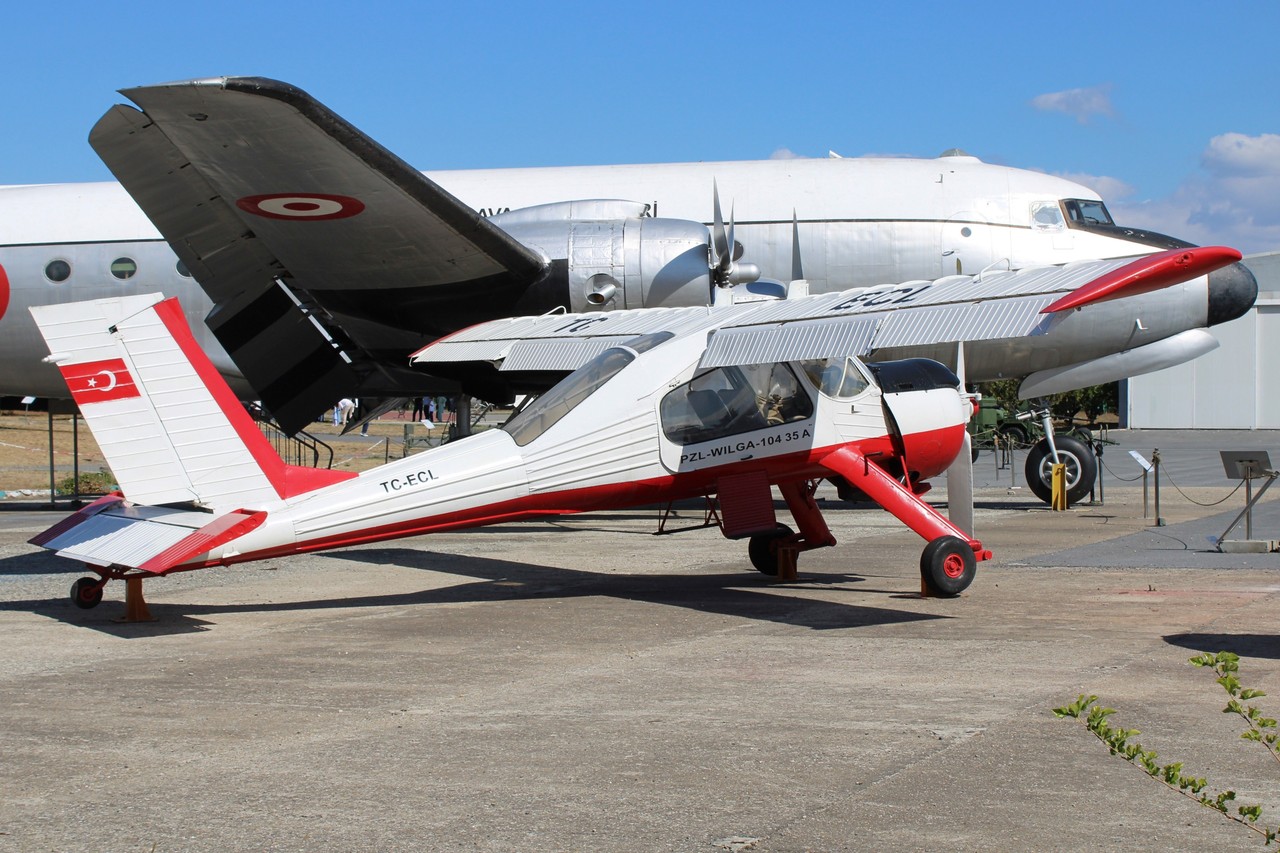
Service History
The Wilga 35 dominated Polish civil aviation training and utility operations from its introduction in 1968. Polish Aero Clubs, tasked with flight training responsibilities, adopted the aircraft extensively for primary instruction, glider towing, and parachute training operations. The aircraft's robust construction and forgiving flight characteristics made it ideal for student pilots, while its 40-mph stall speed and 625-foot takeoff distance over a 50-foot obstacle provided exceptional short-field performance that rivaled purpose-built bush aircraft.
By the 1970s, the Wilga had become the backbone of Polish general aviation, with examples serving in roles ranging from aerial observation to utility transport. The aircraft's four-seat configuration and 390-mile range made it suitable for cross-country flight training and light transport duties. International recognition followed, with exports to numerous countries seeking a reliable, economical utility aircraft.
Military and Government Service
The Polish military adopted the Wilga 35 for liaison, observation, and training duties, appreciating its ability to operate from unprepared airstrips and rough terrain. The aircraft's high-wing configuration provided excellent ground visibility for observation missions, while its sturdy fixed landing gear withstood operations from marginal airfields that would challenge more conventional aircraft.
The Polish Border Guard became a notable operator of the later Wilga 2000 variant, with several aircraft remaining in service for patrol and surveillance operations. The aircraft's reliability and low operating costs made it attractive for government agencies requiring dependable utility aircraft for specialized missions.
The Manufacturer
WSK-Okęcie, part of the Polish State Aviation Works (Państwowe Zakłady Lotnicze), developed the Wilga series as part of Poland's post-war aviation reconstruction efforts. Based in Warsaw, the company had previously produced licensed versions of Soviet aircraft but sought to establish indigenous design capabilities. The Wilga project represented a significant achievement for Polish aviation engineering.
In 2001, the European Aeronautic Defence and Space Company (EADS) acquired production rights, viewing the Wilga as a potential addition to their light aircraft portfolio. However, EADS decided to focus resources on other projects and discontinued Wilga production in 2006, ending nearly four decades of continuous manufacturing. The original WSK-Okęcie facility no longer operates under its historical name, marking the end of an important chapter in Polish aviation manufacturing.
Engine and Technical Innovation
The Wilga 35's success stemmed largely from adopting the reliable Ivchenko AI-14R nine-cylinder radial engine. This powerplant replaced earlier problematic engines that had plagued initial Wilga variants. The original WN-6RB boxer engine, designed specifically for the Wilga by Wiktor Narkiewicz, suffered continuous cooling problems that threatened the program's viability. Engineer Ryszard Orłowski, the original chief designer, and his successor Bronisław Żurakowski recognized that engine reliability was crucial for commercial success.
The 260-horsepower Ivchenko engine, manufactured under license by PZL-Kalisz, provided the performance necessary for the aircraft's diverse mission requirements. Despite altering the aircraft's aerodynamic profile compared to the sleeker boxer engine installation, the radial engine's proven reliability justified the compromise. The engine enabled the Wilga 35 to achieve a 127-mph maximum speed and 865-feet-per-minute initial climb rate.
Pilot Perspective and Performance
Pilots praised the Wilga 35 for its forgiving handling characteristics and exceptional short-field performance. The aircraft's 93-mph cruise speed, while modest, proved adequate for training and utility missions, while the 12,075-foot service ceiling provided sufficient altitude capability for most operations. The generous control authority at low speeds made the aircraft particularly suitable for inexperienced pilots.
The Wilga's fixed tailwheel landing gear, while adding drag, contributed to the aircraft's rugged character and reduced maintenance requirements compared to retractable gear systems. Pilots appreciated the aircraft's predictable ground handling and ability to operate from grass strips and unpaved surfaces that would challenge tricycle-gear aircraft.
Production Success and Variants
With approximately 935 Wilga 35 aircraft produced between 1968 and 2006, the type achieved remarkable commercial success for a specialized utility aircraft. The American market received the Wilga 80 variant, featuring English cockpit instrumentation and modifications to meet Federal Aviation Administration requirements, while maintaining the same basic airframe and engine combination.
Specialized variants expanded the aircraft's capabilities: the 35A featured 20-inch tundra tires for rough field operations, the 35H incorporated LAP-3000 floats for water operations with an upgraded 285-horsepower engine, and the 35P utilized 29-inch Alaska Bush Wheels with 360 horsepower for extreme short-field performance. The ultimate 35X variant boasted 35-inch Alaskan Bush Wheels and 450 horsepower, transforming the basic design into a formidable bush aircraft.
Legacy and Current Status
The PZL-104 Wilga series represents one of the most successful post-war Polish aircraft designs, with over 1,000 examples produced across all variants. This production total made it the most numerous aircraft of purely Polish design, demonstrating the country's aviation engineering capabilities during the Cold War era.
Today, numerous Wilga aircraft remain active worldwide, testament to their robust construction and continued utility. The Polish Border Guard continues operating Wilga 2000 variants, while civilian examples serve in various roles from flight training to recreational flying. Museums and private collectors maintain several examples, including the preserved Wilga 35A (SP-EBK) at Leszno airfield, ensuring this significant Polish aviation achievement remains visible for future generations.