
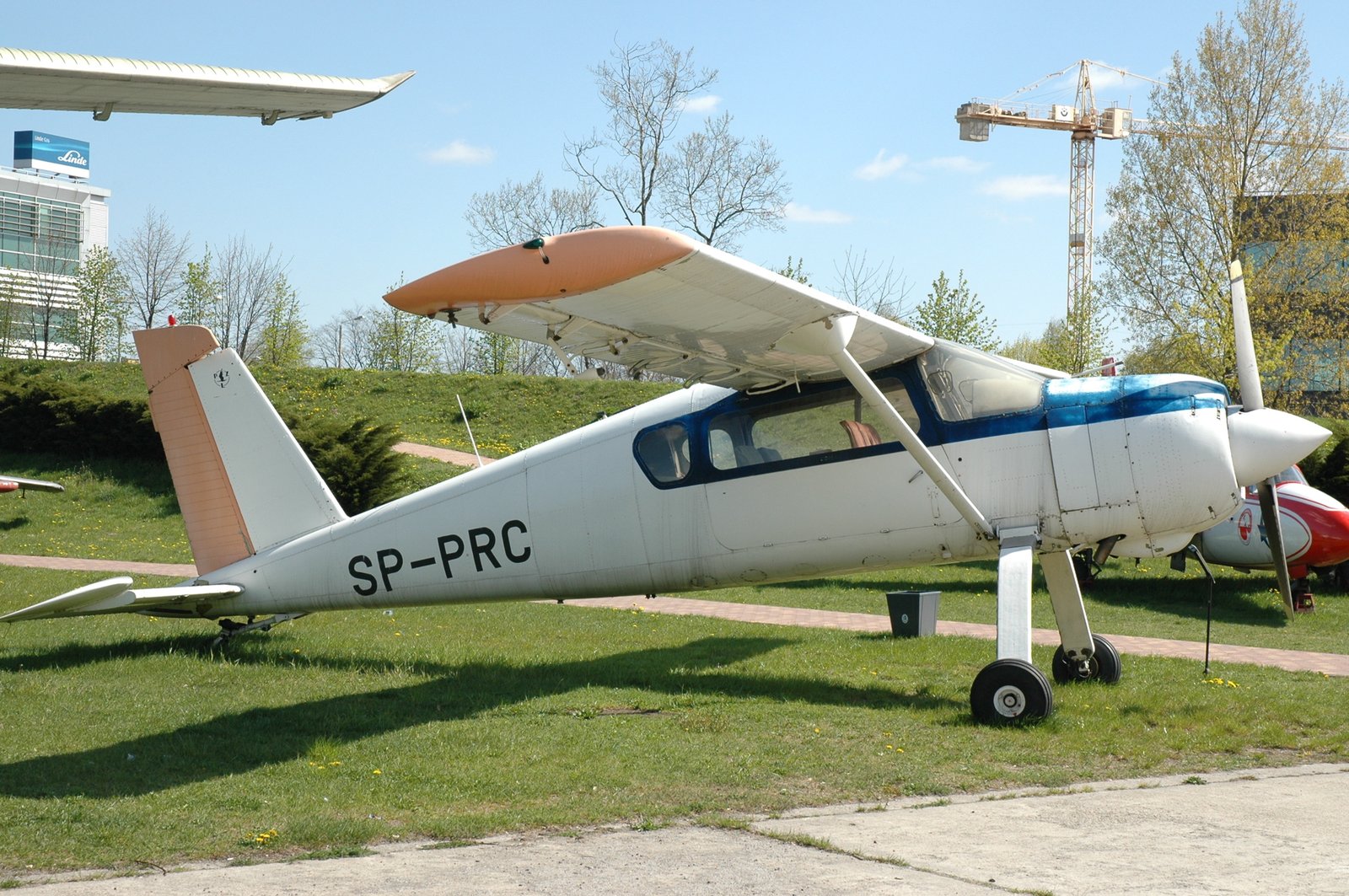
A Promise Unfulfilled
The PZL-105 Flaming emerged during Poland's final years under communist rule as an ambitious project to modernize the nation's aging general aviation fleet. Conceived as a more capable successor to the venerable PZL-104 Wilga, the Flaming promised enhanced performance, greater payload capacity, and improved economics for Polish civilian operators. However, the aircraft's development timeline coincided with Poland's dramatic political transformation, ultimately making it a casualty of the country's transition to a market economy.
Design Philosophy and Innovation
Engineers at PZL Warsaw-Okęcie designed the Flaming with specific improvements over its predecessor. The aircraft featured a semi-monocoque fuselage construction with rectangular single-spar wings equipped with Fowler flaps and slotted flaperons—sophisticated high-lift devices that enhanced short-field performance. Large upward-opening side doors provided excellent access to the six-seat cabin, while the conventional fixed landing gear employed composite spring legs, a modern touch that reduced weight and maintenance requirements.
The design team prioritized versatility, creating an aircraft capable of serving multiple roles from passenger transport to cargo hauling. With a maximum payload of 990 pounds and generous fuel capacity of 71 US gallons, the Flaming offered significant operational flexibility. The spacious cabin could accommodate five passengers plus pilot, or be reconfigured for cargo operations with the seats removed.
Two Prototypes, Two Powerplants
The prototype program explored different engine options to optimize performance and marketability. The first prototype, registered SP-PRC, utilized the Vedeneyev M-14P, a nine-cylinder air-cooled radial engine producing 360 horsepower. This Russian powerplant was readily available in Eastern European markets and familiar to Polish maintenance personnel.
The second prototype, SP-PRD and designated PZL-105L, flew nearly two years later on July 27, 1991, powered by the American Lycoming IO-720 flat engine generating 400 horsepower. This engine choice reflected Poland's growing orientation toward Western markets and technology, offering potentially better fuel efficiency and smoother operation than the radial-engined variant.
Performance Characteristics
Flight testing revealed respectable performance figures that positioned the Flaming competitively within the utility aircraft market. The aircraft achieved a maximum speed of 152 mph and cruised economically at 117 mph, providing a useful balance between speed and fuel consumption. Its service ceiling of 13,580 feet and rate of climb exceeding 1,000 feet per minute demonstrated adequate high-altitude capability for European operations.
Particularly impressive were the Flaming's short-field capabilities, with takeoff distance of just 577 feet and landing distance of 502 feet. These figures, combined with a relatively low stall speed of 63 mph with flaps deployed, made the aircraft well-suited for operations from small airfields and unpaved strips—a crucial capability for utility work in remote areas.
The Manufacturer's Legacy
PZL Warsaw-Okęcie had established itself as a significant force in general aviation through the success of earlier designs, particularly the PZL-104 Wilga series. The company's expertise in utility aircraft design positioned it well to develop the Flaming, drawing upon decades of experience in creating rugged, versatile aircraft for challenging operating environments.
However, the rapid political and economic changes sweeping Poland in the early 1990s fundamentally altered the business landscape. State funding for aircraft development evaporated, while the emerging free market economy demanded different priorities and financial structures than those under which the Flaming program had been conceived.
Economic Reality and Program Termination
The collapse of communist rule in Poland brought both opportunities and challenges for the aviation industry. While Western markets potentially offered new customers, the transition period created severe funding shortages for existing programs. PZL Warsaw-Okęcie faced difficult choices about resource allocation, ultimately prioritizing the PZL-130 Orlik trainer program over the Flaming.
The Orlik received priority partly due to its military training applications and potential for international sales, while the Flaming faced an uncertain civilian market during Poland's economic transition. This strategic decision, while perhaps necessary for company survival, effectively ended the Flaming's development after only two prototypes.
A Design Out of Time
Aviation historians often describe the PZL-105 Flaming as "a good design at the wrong time"—a characterization that captures both its technical merits and unfortunate timing. The aircraft incorporated sound engineering principles and offered genuine improvements over existing utility aircraft, but arrived just as Poland's aviation industry underwent fundamental restructuring.
Today, no examples of the PZL-105 Flaming remain in flying condition, and the prototypes' current status is unclear. The aircraft serves as a reminder of the challenges facing aircraft manufacturers during periods of dramatic political and economic change, and represents one of the final projects of Poland's communist-era aviation industry.