
Development and Design
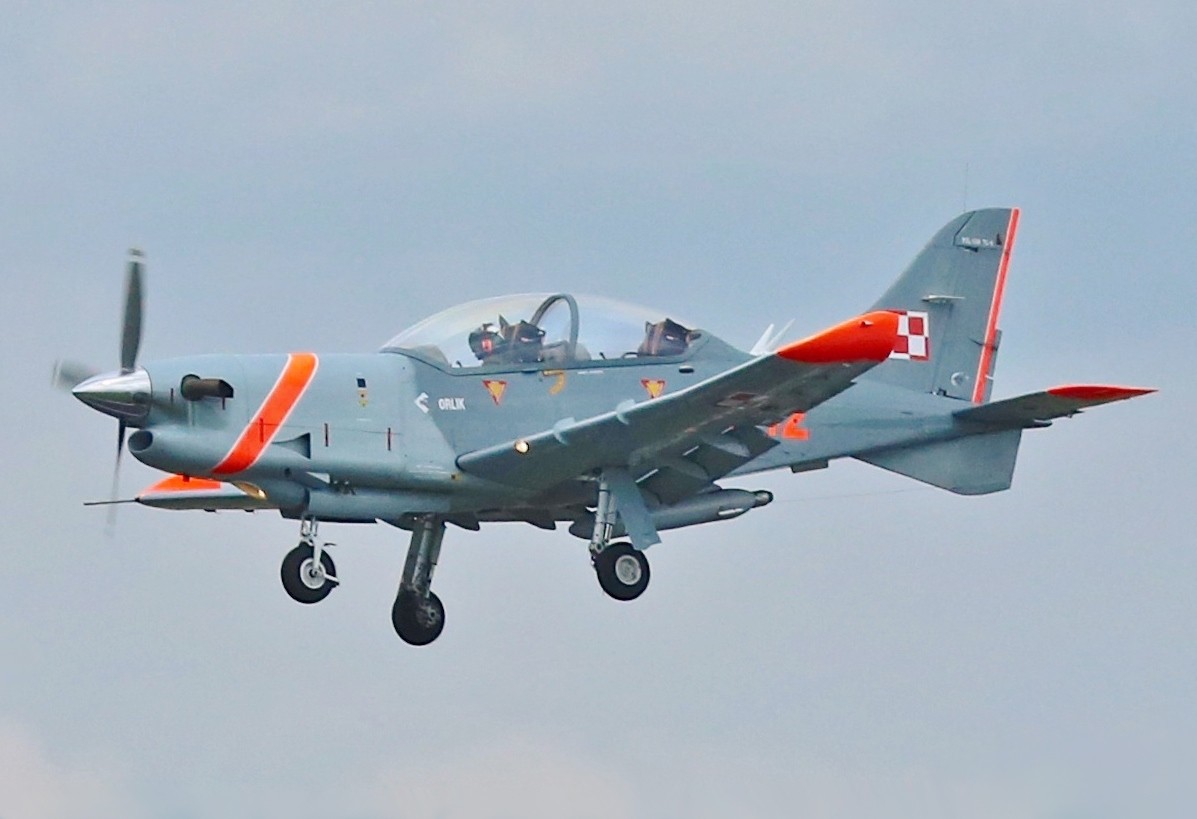
Development of the PZL-130 Orlik began in 1981 when PZL Warszawa-Okęcie initiated the project to replace aging Soviet-supplied trainers including the Yak-11 and TS-11 Iskra in Polish Air Force service. The design team faced a unique challenge: creating an aircraft that would simulate jet fighter handling characteristics while utilizing more economical piston or turboprop propulsion. Their solution incorporated low-aspect ratio wings that mimicked jet gliding characteristics, providing students with flight dynamics closer to operational fighters than traditional training aircraft.
The first prototype took to the air on October 12, 1984, powered by a Soviet Vedeneyev M14Pm nine-cylinder radial engine producing 246 kilowatts. This initial configuration represented the culmination of three years of engineering work focused on creating a compact, aerobatic airframe capable of bridging the gap between primary and advanced training phases.
Engine Evolution and Production Challenges
Engine selection proved problematic throughout the Orlik's development. Following the initial M14Pm installation, engineers tested the Polish-manufactured Kalisz K8-AA radial engine, but this powerplant proved inadequate for the aircraft's performance requirements. Political and economic pressures during the late 1980s forced PZL-Okęcie to abandon piston-powered variants entirely in 1990, despite completing several pre-production examples.
The breakthrough came with the adoption of turboprop propulsion. The production PZL-130TB variant, which entered manufacturing in 1992, utilized the Czech-built Motorlet Walter M601E turboprop engine producing 560 kilowatts. This powerplant, originally developed in the 1960s and widely used in Let L-410 aircraft, provided the reliability and performance necessary for military training operations.
Military Service and Variants
Deliveries to the Polish Air Force commenced in 1994, with all 48 production PZL-130TB aircraft assigned to training units at the Military Pilot Academy in Dęblin and the 60th Training Air Regiment in Radom. The aircraft fulfilled its design objectives, providing student pilots with jet-like handling characteristics while maintaining the operating economy of turboprop propulsion.
Subsequent variants expanded the Orlik's capabilities significantly. The PZL-130TC incorporated Martin-Baker Mk.11 zero-zero ejection seats, hydraulic systems, and four underwing hardpoints capable of mounting rockets, bombs, or external fuel tanks. This configuration transformed the basic trainer into a light attack aircraft suitable for weapons training and close air support missions. Further development produced the PZL-130TC-II with enhanced avionics and improved pilot-vehicle interfaces.
Manufacturing and Corporate Evolution
PZL Warszawa-Okęcie, the aircraft's manufacturer, traced its origins to Poland's post-World War II aviation reconstruction efforts during the 1940s. Operating under the state-owned PZL umbrella, the company specialized in training aircraft and light aviation throughout the Communist era. The political transformations of the 1990s brought privatization and corporate restructuring, with the company passing through various ownership arrangements including integration with the WSK conglomerate and temporary association with EADS influence.
Production remained centered at the Warsaw-Okęcie facility, where exactly 59 Orlik aircraft were manufactured across all variants, including prototypes and pre-production models. The company successfully navigated the transition from Communist-era state enterprise to private manufacturer, continuing operations today as PZL-Okęcie while pursuing ongoing Orlik upgrades and export opportunities.
Export Efforts and International Variants
Recognizing limited domestic market potential, PZL-Okęcie developed export variants powered by Pratt & Whitney Canada PT6A turboprops. These Turbo-Orlik models, designated PZL-130TC, TD, and TE, utilized various PT6A configurations ranging from the PT6A-25A producing 410 kilowatts to the PT6A-62 generating 708 kilowatts. The Canadian-manufactured PT6 series, in production since 1963 with over 50,000 units delivered worldwide, offered potential customers proven reliability and established global support networks.
Despite these efforts, export success remained limited. A prototype crash during Colombian Air Force demonstrations on January 13, 1987, highlighted the challenges facing the program in international markets dominated by established Western manufacturers.
Current Operations and Legacy
Approximately 40 to 48 Orlik aircraft remain operational with the Polish Air Force, with all original PZL-130TB models upgraded to TC-I or TC-II standards by the late 1990s. These modernized aircraft continue fulfilling their primary training mission while providing light attack capabilities when required.
The Orlik's significance extends beyond its modest production numbers. It represented Poland's successful transition from dependence on Soviet aircraft suppliers to indigenous design and manufacturing capability. The aircraft demonstrated adaptive engineering solutions, particularly in powerplant selection and variant development, while providing cost-effective training that bridged traditional piston and modern jet aircraft handling characteristics. Museum examples, including prototype airframe Number 001 at the Polish Aviation Museum in Kraków, preserve this important chapter in Polish aviation history.