
Service History
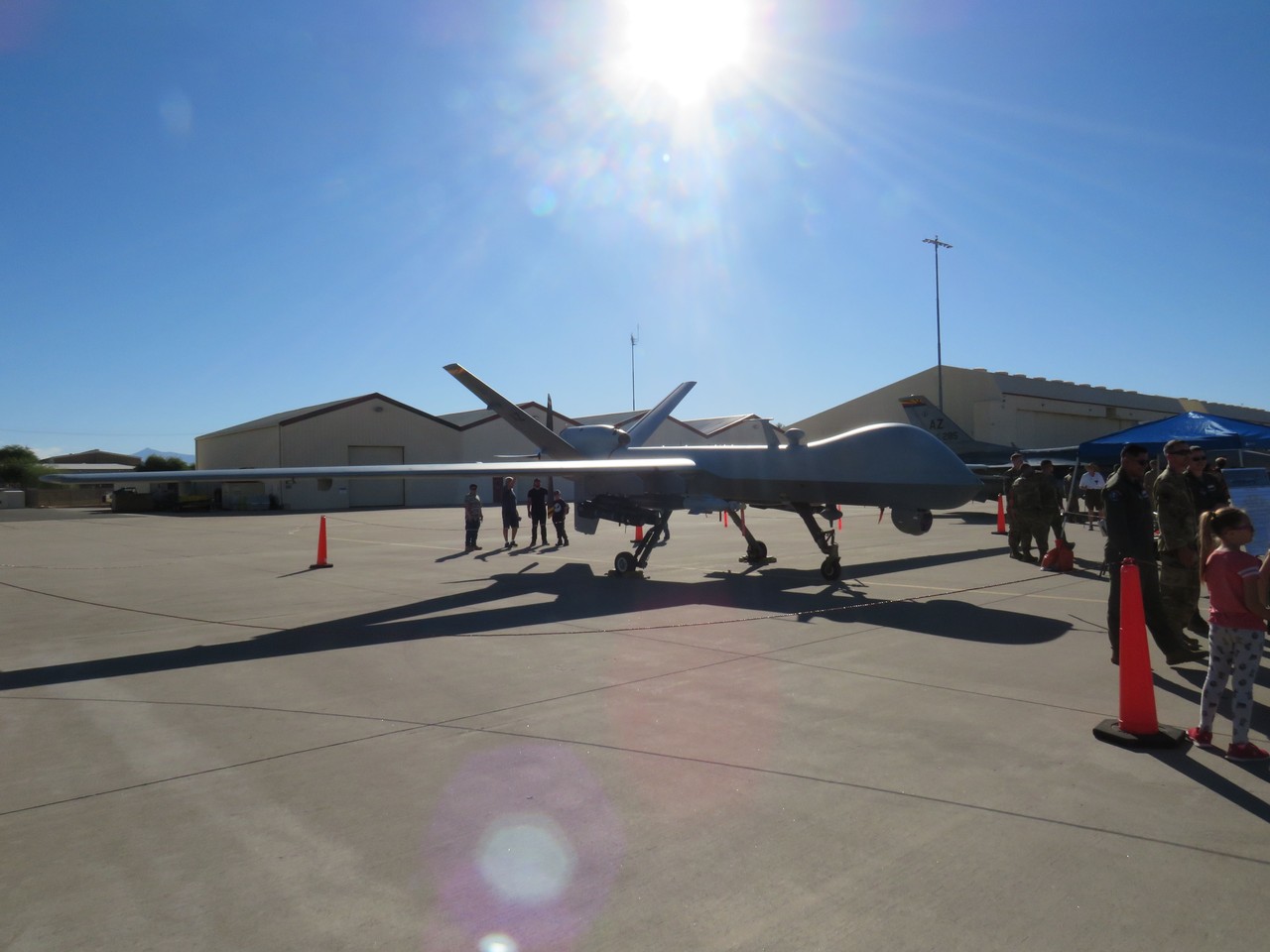
The MQ-9 Reaper transformed aerial warfare by becoming the backbone of American drone operations worldwide. By May 2021, the U.S. Air Force operated more than 300 Reapers, with the aircraft logging countless hours over combat zones in Afghanistan and Iraq since entering service in 2007. The drone's ability to provide persistent surveillance while carrying lethal payloads made it indispensable for counterterrorism operations, fundamentally changing how military forces conduct intelligence gathering and targeted strikes.
The aircraft achieved its first combat kill on October 28, 2007, when a Reaper launched a Hellfire missile against Afghan insurgents in Deh Rawood, Oruzgan province. This milestone marked the beginning of a new era in unmanned warfare, where operators thousands of miles away could eliminate threats with surgical precision.
Operational History
The 42nd Attack Squadron, activated on November 9, 2006, at Creech Air Force Base, became the first operational Reaper unit. The squadron received its first aircraft on March 13, 2007, and commenced combat operations that summer. The 432nd Wing followed on May 1, 2007, establishing the organizational structure for America's growing drone fleet.
Beyond the U.S. Air Force, the Reaper found service with multiple international operators. The Royal Air Force, Italian Air Force, French Air Force, and Spanish Air Force all integrated the platform into their inventories. The U.S. Marine Corps joined the Reaper community in 2018 when VMU-1 began operations, followed by VMU-3 achieving initial operating capability in August 2023. Australia selected the Reaper in November 2018, while the Netherlands planned to operate four aircraft by 2017.
Several variants emerged to meet evolving mission requirements. The MQ-9 Reaper ER (Extended Range) achieved initial operating capability in 2015, dramatically extending endurance to 33-35 hours. The first ER conducted combat operations in Afghanistan on December 1, 2015. The Long Wing variant, first flown on February 18, 2016, stretched the wingspan to 79 feet for even greater persistence.
The Manufacturer
General Atomics Aeronautical Systems developed the Reaper using company funding as an evolution of their successful MQ-1 Predator. The company traces its roots to General Atomics, founded in 1955, with the aeronautical division emerging during the 1980s Predator development program. GA-ASI remains active today, securing major contracts including $263 million in November 2018 and $279 million in February 2015 for continued Reaper production and support.
The company's Poway, California facility serves as the primary manufacturing center, where skilled technicians assemble each aircraft by hand. By 2018, GA-ASI had delivered 287 Reapers out of 366 contracted, with total program quantity reaching 433 units including Foreign Military Sales.
Engine and Technical Innovation
The Reaper's Honeywell TPE331-10 turboprop engine, producing 900-950 shaft horsepower, represented a significant advancement over the Predator's piston powerplant. This turboprop selection provided the thrust necessary to lift the Reaper's maximum 3,850-pound payload—nearly nine times the Predator's 450-pound capacity. The engine's reliability proved crucial for missions lasting 27-35 hours, where mechanical failure meant potential loss of aircraft and mission.
Design innovations included the ability to operate at 50,000 feet, well above most weather and air traffic, while maintaining stable flight characteristics essential for precision weapons employment. The aircraft requires a crew of two remote pilots plus a sensor operator, all stationed at ground control facilities that can be located anywhere in the world.
Pilot Perspective
Reaper operators, while physically distant from their aircraft, face unique challenges requiring exceptional skill and concentration. The remotely piloted nature demands pilots maintain situational awareness through cameras and sensors rather than direct visual contact. Flight operations can span multiple time zones, with crews in Nevada controlling aircraft over Afghanistan or Iraq, creating demanding schedules that test human endurance alongside machine capability.
The aircraft's performance envelope includes a cruising speed of approximately 300 miles per hour and operational range of 1,150 miles, though the Extended Range variants can remain airborne for more than a day. This persistence allows single aircraft to conduct multiple mission phases, from initial reconnaissance through target engagement and post-strike assessment.
Production and Legacy
Production began with deliveries in November 2003 and continued through 2018 with no specified end date. Early production included 10 preproduction units by 2006, growing to 163 aircraft by 2014, and exceeding 300 operational platforms by 2021. The U.S. Marine Corps planned to operate 18 Reapers by 2025, while international orders continued expanding global fleet size.
The program's prototypes, B-001 and B-002, found retirement homes at the U.S. Air Force Museum at Wright-Patterson Air Force Base, where they represent the dawn of armed drone warfare. The MQ-9 Reaper stands as aviation history's first operational hunter-killer UAV, achieving initial operating capability in October 2007 and influencing military aviation development worldwide. Its success spawned numerous competitors and variants, but the Reaper remained the gold standard for medium-altitude long-endurance armed drones, forever changing how nations project power across vast distances.