
Service History
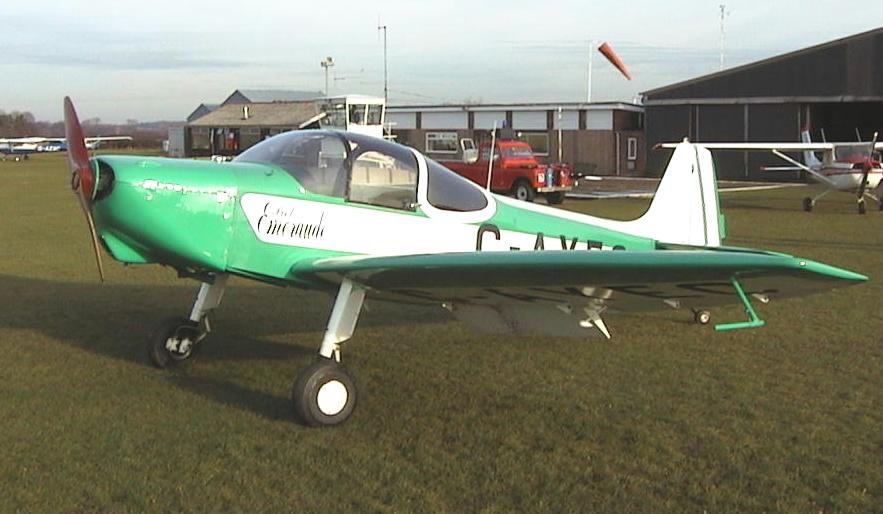
The R-2100 Super Club carved out a specialized niche in French pilot training from the late 1970s onward. French flying clubs embraced the aircraft for its combination of aerobatic capability and forgiving handling characteristics, making it ideal for transitioning students from basic trainers to more advanced aircraft. The type also found export markets in the United Kingdom, South Africa, and Australia, where its robust construction and reliable Lycoming powerplant proved attractive to flight training organizations.
Unlike mass-produced trainers that dominated airline pilot schools, the R-2100 served primarily smaller aero clubs that valued its aerobatic certification and excellent cockpit visibility. This specialization limited total production but created a loyal following among European flight instructors who praised its predictable stall characteristics and responsive controls.
The Manufacturer
Avions Pierre Robin emerged from the partnership between Pierre Robin and Jean Délémontez, the principal Jodel designer, when they founded Centre Est Aéronautique in October 1957. The company initially focused on wooden aircraft designs, producing the successful DR100 and DR200 series from 1957 through 1972. Pierre Robin demonstrated his aircraft's capabilities personally, winning the 1964 Round Sicile Rally at 162 mph flying a DR105 prototype.
The company underwent significant evolution during the R-2100's development period. Renamed Avions Pierre Robin in November 1970, the firm transitioned from wooden to all-metal construction with the HR.200 series that formed the foundation for the R-2100. However, financial pressures led to multiple ownership changes and licensing agreements. Production rights were licensed to Canada from 1977 to 1983, then to Apex Aircraft in France from 1994 to 2004, and finally to Alpha Aviation in New Zealand from 2004 until liquidation in January 2008.
The original company ceased operations, but Robin Aircraft resumed limited production in May 2011, focusing on the DR400/DR401 and CAP 10C NG models. Type certificates for the HR200/R2000 family are now held by CEAPR in France, which reacquired supplemental type certificates for spare parts in 2017.
Engine & Technical Details
Christophe Heintz designed the R-2100 by combining the proven HR.200 fuselage with entirely new aerobatic wings and tail surfaces. This hybrid approach allowed Robin to leverage existing tooling while incorporating structural improvements necessary for aerobatic certification. The aircraft featured innovative control stick design to reduce the risk of control lockage during aggressive maneuvering.
The R-2100A variant utilized the 81-kilowatt (108-horsepower) Lycoming O-235 horizontally opposed four-cylinder engine, while the later R2112 Alpha incorporated a more powerful 83.5-kilowatt (112-horsepower) version of the same engine family. Lycoming's O-235 series, in production from approximately 1955 through 2008, proved exceptionally reliable in training applications, with over 32,000 examples of the O-235 family manufactured across all variants.
The fully metallic construction represented a significant departure from Robin's wooden heritage, offering improved durability and reduced maintenance requirements for commercial training operations. The cranked wing dihedral, inherited from Jodel designs, provided inherent stability while maintaining crisp roll response essential for aerobatic instruction.
Pilot Perspective
UK Pilot magazine described the HR.200 family as a "brilliant little training aeroplane," praising its flight handling qualities and instructor-friendly characteristics. The side-by-side seating configuration optimized communication between instructor and student, while the aircraft's outstanding visibility became a defining characteristic that set it apart from competitors with more restrictive cockpit designs.
Pilots particularly appreciated the R-2100's benign stall characteristics and predictable behavior throughout the aerobatic envelope. The +6/-3g certification provided adequate margins for standard aerobatic maneuvers while maintaining structural safety for training operations. The aircraft's 900-kilogram maximum takeoff weight allowed substantial fuel loads for cross-country training flights, addressing another key requirement of European aero clubs.
Production & Legacy
Total production of the broader HR.200/R2000/R2100 family reached 108 examples by 1976, with the specific R2100A variant accounting for 34 aircraft. These modest numbers reflected the aircraft's specialized market position rather than any deficiency in design or performance. The type's success in meeting its design objectives led to continued development through licensed production, extending the design's active life well into the 21st century.
Alpha Aviation's brief revival included plans for four aircraft per month production capacity, demonstrated by the Alpha 160A ZK-FXY that debuted on April 12, 2006, at Warbirds over Wanaka. However, the 2008 liquidation effectively ended new production, leaving existing aircraft to serve out their operational lives in training roles.
Today, surviving R-2100s continue flying as both active trainers and privately owned sport aircraft. The type's historical significance extends beyond its modest production numbers, representing a successful transition from wooden to metal construction in French general aviation and demonstrating how specialized aircraft could thrive in niche markets despite limited production volumes.