
Development and Design Philosophy
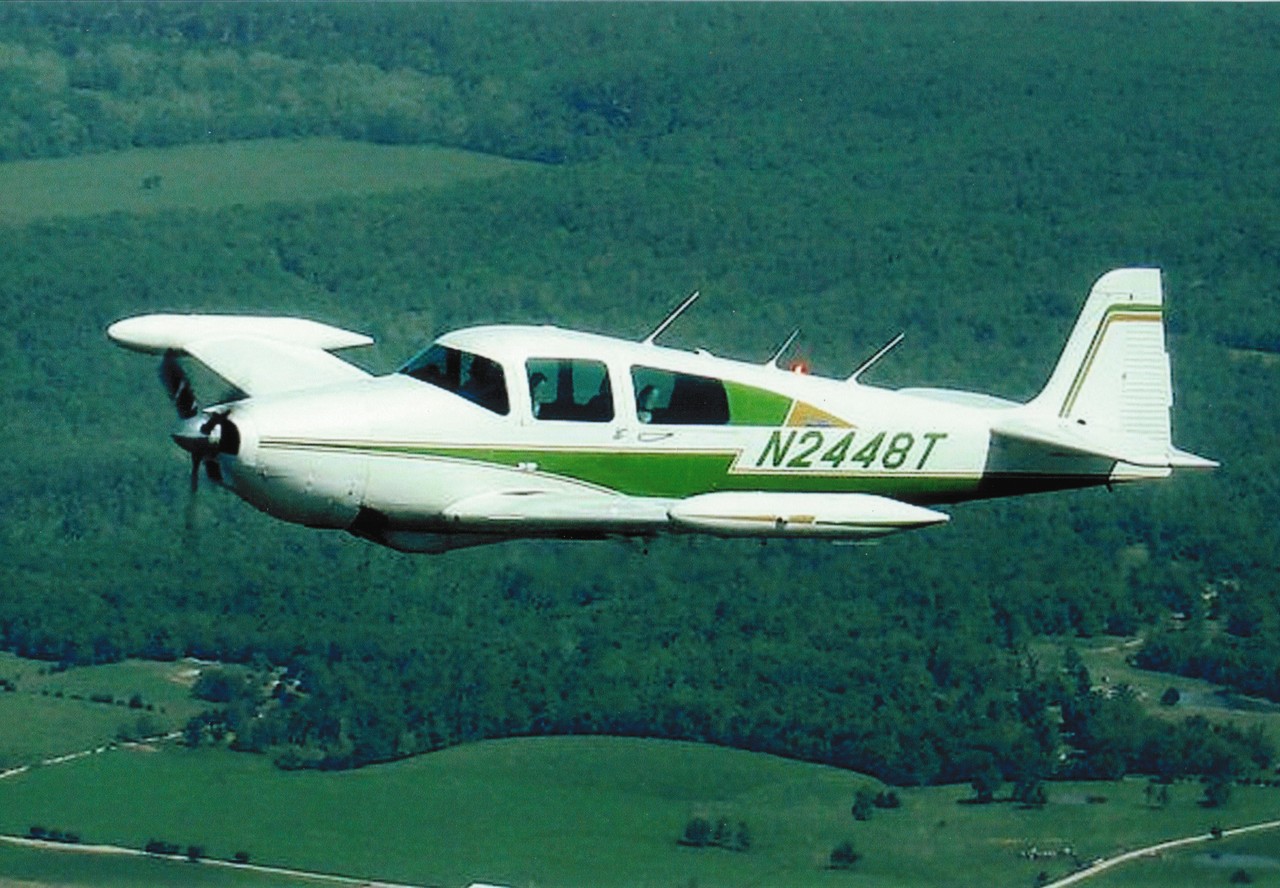
The Rangemaster emerged from an ambitious effort by Navion Aircraft Company to resurrect and dramatically improve upon North American Aviation's post-war Navion design. Where the original Navion offered modest 500-mile range, the Rangemaster's engineers targeted an extraordinary 1,800-mile capability through the addition of 34-gallon wingtip fuel tanks supplementing the aircraft's 40-gallon main tank. This transformation represented one of the most significant range improvements achieved in general aviation during the early 1960s.
The design team retained the Navion's proven P-51 Mustang-derived landing gear and basic fuselage structure while implementing substantial modifications. They replaced the original aircraft's sliding canopy with conventional automotive-style doors, upgraded the cabin to accommodate five occupants comfortably, and redesigned the tail surfaces for improved performance characteristics.
Manufacturing Challenges and Production
Navion Aircraft Company, formed by members of the American Navion Society and linked to TUSCO Corporation, established production facilities in Galveston, Texas around 1960. The company faced immediate challenges when Hurricane Carla devastated their factory in September 1961, destroying approximately 50 completed Rangemasters and halting production just as the aircraft was gaining market acceptance.
Despite this setback, manufacturing resumed intermittently through various ownership changes. Production continued through 1976 under different corporate entities, including Navion Aircraft Corporation beginning in 1965 and Navion Rangemaster Aircraft Company, which assembled the final H-model example in 1974. Total Rangemaster production reached approximately 182 aircraft, comprising 121 G-model variants and 60 H-model aircraft.
Engine Specifications and Performance
The Rangemaster G employed the Continental IO-470H fuel-injected engine producing 260 horsepower, driving a McCauley constant-speed hydraulic propeller controlled by a Woodward governor. Later H-model aircraft received the more powerful Continental IO-520B engine generating 285 horsepower, providing full power capability up to 16,000 feet altitude.
These Continental six-cylinder horizontally-opposed engines delivered exceptional reliability and enabled cruise speeds in the 160-180 knot range. The aircraft's short-field performance proved equally impressive, with takeoff distances under 400 feet and landing rolls below 300 feet, making it suitable for operations from smaller airstrips throughout remote regions.
Operational Service and Global Reach
The Rangemaster found its primary role in private cross-country flying, where its exceptional range capabilities distinguished it from contemporary single-engine aircraft. Australian operators particularly valued these characteristics, with the type marketed as the longest-range single-engine light aircraft available to civilian buyers during the mid-1960s.
Police departments and government agencies also operated Rangemasters for prisoner transport and patrol duties, taking advantage of the aircraft's spacious five-seat cabin and reliable performance. The type's rugged construction, inherited from its military-derived ancestry, proved well-suited to demanding operational requirements.
Technical Innovation and Design Legacy
The Rangemaster's most distinctive feature remained its prominent wingtip fuel tanks, which not only extended range but also provided beneficial effects on wing loading and handling characteristics. The G-1 variant, introduced in 1962, featured redesigned smaller tail surfaces that improved the aircraft's overall performance envelope.
Engineers integrated these modifications while maintaining the structural integrity and handling qualities that made the original Navion design successful. The fixed cabin ceiling and improved interior appointments elevated comfort standards above those typical in general aviation aircraft of the period.
Current Status and Preservation
Today, dozens of Navion family aircraft, including numerous Rangemasters, remain active in private hands throughout the United States and internationally. The American Navion Society continues supporting owners with technical information, parts sources, and restoration guidance for these increasingly rare aircraft.
Many examples have undergone modern avionics upgrades and engine modifications, extending their operational capabilities well beyond original specifications. The type's enduring appeal stems from its unique combination of long-range capability, robust construction, and distinctive appearance that links it directly to the golden age of post-war general aviation development.
The Rangemaster's legacy extends beyond its modest production numbers, representing a successful attempt to adapt proven military-derived design concepts for civilian cross-country touring requirements during the jet age's early years.