
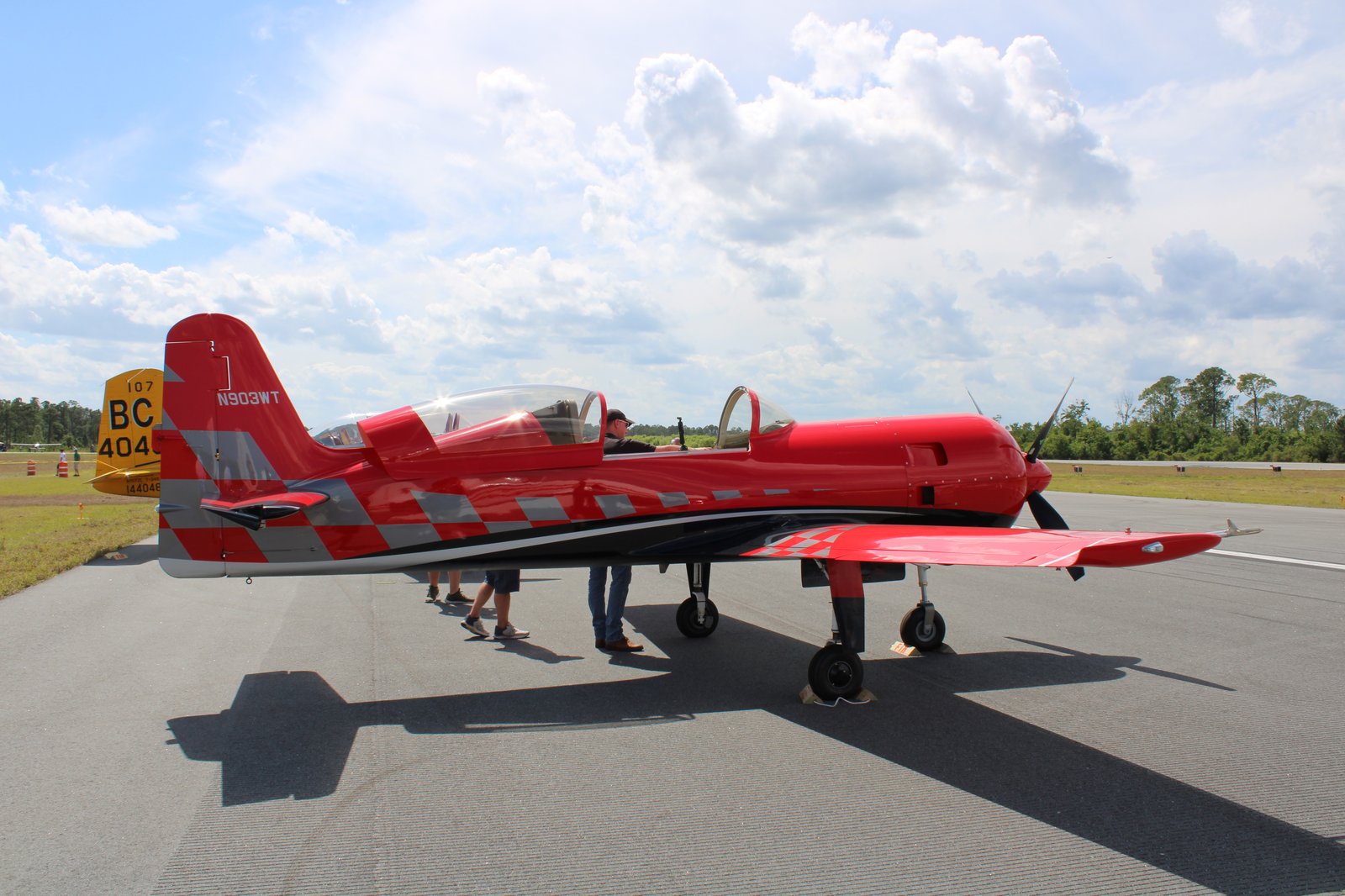
Development and Design Philosophy
Jeff Ackland conceived the Radial Rocket with a singular mission: creating an amateur-built aircraft that would deliver authentic fighter aircraft sensations while remaining accessible to sport pilots. His design philosophy centered on combining the visceral experience of radial engine power with modern composite construction techniques and aerobatic capabilities that could satisfy demanding pilots seeking performance beyond typical homebuilt aircraft.
The aircraft employed pre-molded composite sandwich panels constructed from E-glass fiberglass over honeycomb core material, strategically reinforced with carbon fiber in high-stress areas. This construction approach provided the structural strength necessary for aerobatic loads while maintaining relatively light weight. Push-pull tube controls for ailerons and elevators delivered precise handling characteristics that Ackland considered essential for the fighter-like feel he sought to achieve.
Production and Manufacturing
New Century Aerosport began kit production in 2005 at New Century Air Center (KIXD) in New Century, Kansas, located southwest of the Kansas City metropolitan area. The company initially offered the taildragger Radial Rocket TD variant, followed by the retractable-gear RG model. By 2011, the first customer-built RG variant reached final assembly stages, demonstrating the progression from initial design to completed aircraft.
Production later transitioned to the Altitude Group in Overland Park, Kansas, which continued manufacturing the design under the Altitude Radial Rocket designation. The limited production run reflected the specialized nature of the aircraft and its demanding build requirements. As of 2023, only seven examples remained registered with the FAA in the United States, plus one additional aircraft completed in South Africa in April 2019.
Powerplant and Performance
The Radial Rocket's defining characteristic lies in its Vedeneyev M-14P or M-14PF nine-cylinder radial engine, a Russian-manufactured powerplant derived from Soviet aviation programs. The standard M-14P produces 360 horsepower, while the M-14PF variant delivers 400 horsepower, with testing confirming output up to 430 horsepower under optimal conditions.
Significant modifications adapted these engines for American operation, including Barrett pistons, Barrett electronic ignition systems, pressure carburetors with automatic mixture control, and inverted oil systems enabling sustained aerobatic flight. Additional enhancements included Kimball air start systems, pre-oilers for engine longevity, and augmenter exhaust systems with ceramic coating for improved cooling and thrust generation.
The supercharged engine maintains reliable performance to 18,000 feet without requiring mixture adjustments, while delivering climb rates exceeding 3,500 feet per minute. This performance envelope allows pilots to experience the authentic sound and vibration of radial power while achieving modern aircraft capabilities.
Operational Characteristics
Two primary variants emerged during production, each optimized for different operational preferences. The TD (taildragger) configuration employed a 98-inch three-blade constant-speed propeller and conventional landing gear, appealing to pilots preferring traditional aircraft handling characteristics. The RG (retractable gear) variant utilized an 80-inch four-blade MT constant-speed propeller, shortened to provide adequate ground clearance with its tricycle retractable landing gear system.
Both variants achieved impressive performance figures, with cruise speeds of 242 mph and maximum range approaching 1,200 miles. The aircraft's 65-gallon fuel capacity enabled extended cross-country flights while maintaining aerobatic capabilities throughout its flight envelope. Empty weight of 1,720 pounds and gross weight of 2,575 pounds resulted in a wing loading of 27.4 pounds per square foot across the 90.8 square feet of wing area.
Pilot Experience and Handling
Pilots consistently praised the Radial Rocket's handling characteristics, particularly its exceptional roll rates and balanced control forces throughout the aerobatic envelope. The tandem seating arrangement beneath a bubble canopy provided excellent visibility while maintaining the fighter-like atmosphere that Ackland intended. Control harmony and responsiveness met the demanding standards of aerobatic pilots while remaining manageable for cross-country touring.
The radial engine's automatic mixture control simplified pilot workload during aerobatic sequences, allowing focus on aircraft handling rather than engine management. This feature proved particularly valuable during complex maneuvers where pilot attention must remain directed toward aircraft attitude and energy management.
Legacy and Current Status
The Radial Rocket achieved its designer's goal of bringing radial-powered aerobatic performance to the amateur-built aircraft community, though limited production numbers reflected both the specialized market and the complexity of integrating Russian radial engines with American aircraft systems. The design demonstrated that innovative engineering could successfully combine authentic warbird sensations with modern safety standards and construction techniques.
Today, the few remaining examples represent unique specimens in the experimental aircraft community, offering their owners an increasingly rare combination of radial engine authenticity and aerobatic capability. The aircraft's significance lies not in production numbers but in proving the viability of high-performance composite construction married to classic powerplant technology.