
International Partnership Origins
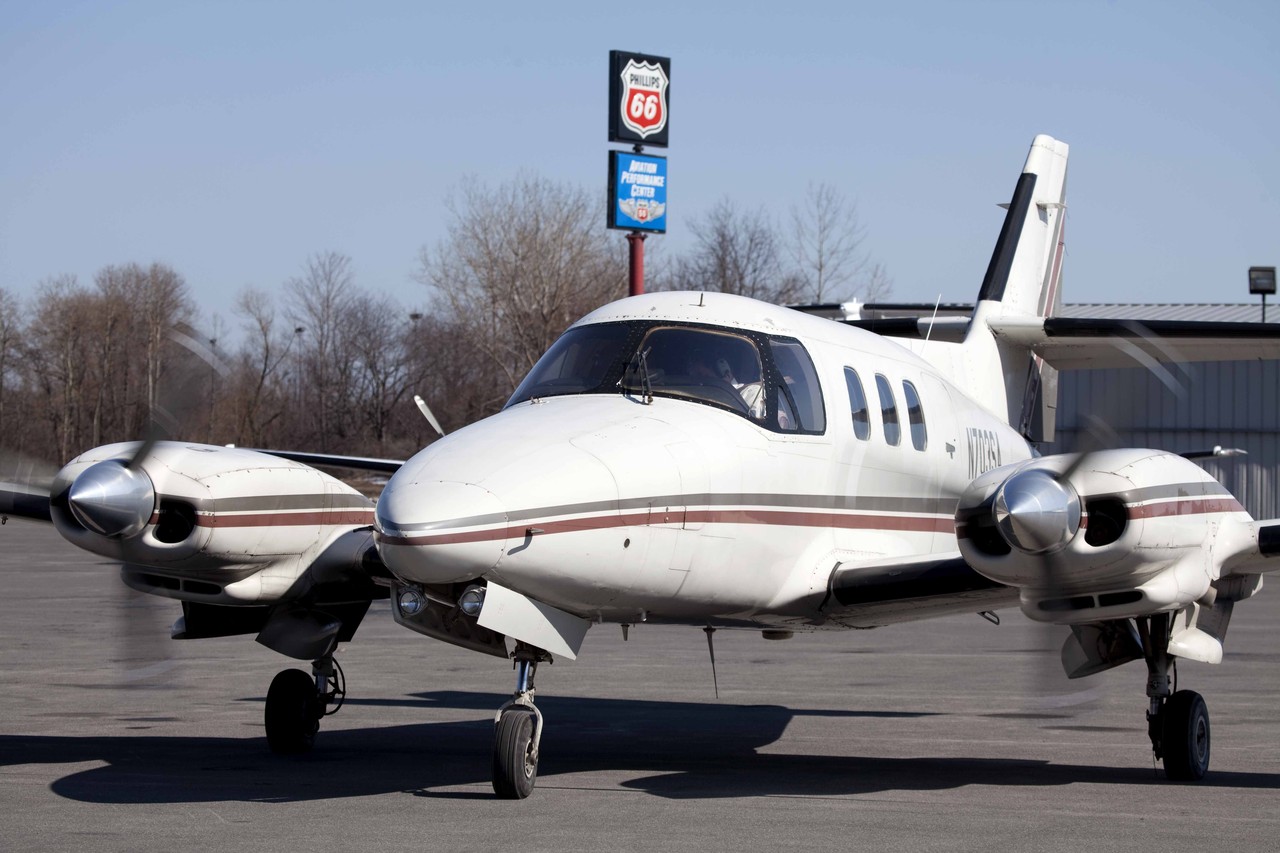
The Commander 700 began life in 1971 as the FA-300 in Japan, representing Fuji Heavy Industries' ambitious entry into Western general aviation markets. On June 28, 1974, Fuji formalized a groundbreaking collaboration agreement with Rockwell International, creating one of the era's most significant transpacific aerospace partnerships. This arrangement addressed Rockwell's strategic need for a medium-size pressurized twin to compete against established aircraft like the Cessna 340 and Piper Navajo.
Design and Development
The aircraft marked a significant departure from Rockwell's traditional high-wing twin designs, embracing a modern low-wing cantilever monoplane configuration with retractable tricycle landing gear. Engineers incorporated flush riveting construction for enhanced aerodynamic efficiency and designed the fuselage for pressurization, maintaining sea-level cabin comfort up to 12,500 feet altitude.
The prototype first flew on November 13, 1975, at Fuji's Utsunomiya factory in Japan, followed by the first Rockwell-assembled aircraft on February 25, 1976, at Bethany, Oklahoma. This dual-production approach reflected the partnership's complexity, with Fuji manufacturing airframe subassemblies while Rockwell handled North American final assembly and marketing.
Manufacturing Strategy
Rockwell planned an ambitious production schedule beginning February 1977, targeting an initial rate of two aircraft monthly before scaling to six or seven per month. The manufacturing split involved approximately 80 percent U.S. content in final assemblies, balancing international cooperation with domestic economic considerations.
Fuji Heavy Industries brought significant manufacturing expertise from its automotive and aerospace background, while Rockwell contributed established North American distribution networks and marketing capabilities. This arrangement represented an early example of globalized aircraft production that would become commonplace decades later.
Technical Specifications
Powered by two Avco Lycoming TIO-540-R2AD turbocharged engines producing 340 horsepower each, the Commander 700 achieved impressive performance figures for its class. The aircraft cruised at 244 mph with a maximum speed of 254 mph, while its 25,000-foot service ceiling provided operational flexibility above weather and conflicting traffic.
With a wing area of 200.2 square feet and gross weight of 6,947 pounds, the Commander 700 offered substantial useful load capacity of up to 2,283 pounds. Its 210-gallon fuel capacity enabled ranges between 1,214 and 1,384 miles, depending on configuration and conditions. Takeoff distance over a 50-foot obstacle required 2,264 feet, while landing distance measured 2,154 feet.
Market Position and Variants
Rockwell positioned the Commander 700 as a corporate transport competing directly with Cessna's 340 and 414 series, Beech's Queen Air, and Piper's Navajo family. The pressurized cabin represented a significant selling point, offering airline-like comfort for executive passengers.
Engineers developed the more powerful Commander 710 variant, equipped with two 450-horsepower Lycoming TIGO-541 engines. Additional derivatives including turboprop and light jet variants remained in planning stages when the program terminated.
Corporate Upheaval and Program Termination
The Commander 700's promising trajectory ended abruptly in December 1979 when Rockwell International sold its General Aviation Division to Gulfstream American. This corporate restructuring reflected broader industry consolidation during the late 1970s economic downturn.
Gulfstream American immediately terminated the joint venture agreement with Fuji, leaving the Japanese manufacturer holding worldwide manufacturing and marketing rights. Production had run from 1977 to 1979, representing a brief window for what had been envisioned as a long-term program.
Legacy and Historical Significance
The Commander 700 program demonstrated both the potential and challenges of international aerospace collaboration during the 1970s. While the aircraft itself achieved limited commercial success, the partnership between Fuji and Rockwell presaged future globalized manufacturing approaches that would reshape the aviation industry.
Fuji's involvement marked an early Japanese attempt to establish presence in Western general aviation markets, decades before similar efforts by companies like Honda with their HondaJet program. The technical collaboration also transferred valuable knowledge between American and Japanese aerospace industries during a period of increasing economic integration.
Today, the Commander 700 remains a historical footnote representing ambitious international cooperation cut short by corporate restructuring. Few examples remain active, making surviving aircraft rare representatives of 1970s pressurized twin technology and innovative manufacturing partnerships.