
Design Genesis and Development
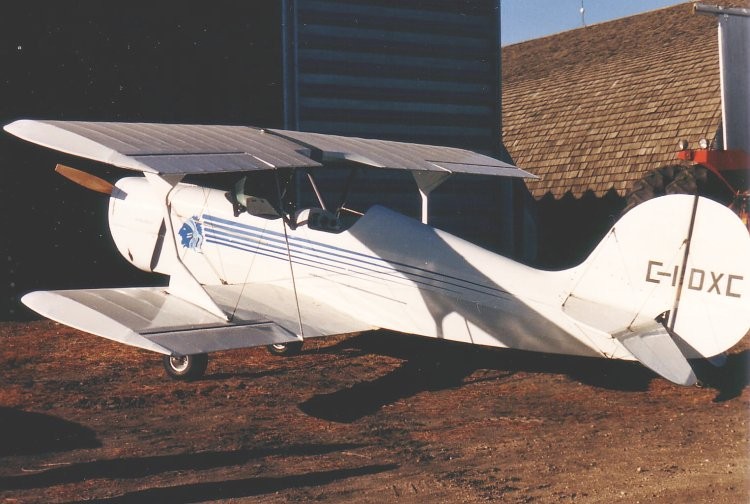
The Murphy Renegade originated from the creative mind of Dale Murphy during his recovery from injury in the early 1980s. Murphy designed the original single-seat prototype specifically to meet Canada's newly established ultralight category regulations. His personal aircraft, registered C-IDJY, served as the foundation for what would become a successful kit aircraft business.
Positive feedback from fellow aviators at fly-ins convinced Murphy to transform his one-off design into a commercial venture. In 1985, he made the bold decision to quit his day job and establish Murphy Aircraft in Chilliwack, British Columbia. The company's first production model, the two-seat Renegade II, made its maiden flight in May 1985 with Dale Murphy at the controls.
Production Success and Market Impact
The Renegade's commercial journey began modestly, with initial sales proving sluggish in 1985. However, Murphy's decision to display the aircraft at the 1986 EAA Oshkosh Convention proved transformative. The exposure generated substantial international interest, creating a backlog of orders that extended Murphy Aircraft's reach far beyond Canadian borders.
By 1989, the Renegade II reached its peak production year with 129 kits delivered to builders worldwide. This success established Murphy Aircraft as a significant player in the kit aircraft industry. Over the aircraft's production run through the early 2000s, approximately 800 Renegade kits were shipped globally, contributing to Murphy Aircraft's eventual total of around 2,000 kits across all models by the 2010s.
Technical Innovation and Variants
The Renegade II featured several innovative design elements that set it apart from competing homebuilt aircraft. Its aluminum square-tube fuselage construction utilized Avex rivets, while the wings employed fabric-covered stamped aluminum ribs. The aircraft incorporated Friese-type ailerons, with two standard units on the lower wing and an optional four-aileron configuration for enhanced control response.
Murphy continuously refined the design based on operational experience. On January 1, 1989, the company introduced significant wing improvements, including a rectangular front spar and outboard drag braces that increased structural rigidity. These modifications came after extensive testing that demonstrated the wings could withstand loads of 4,050 pounds and achieved a working load factor of +7.2g during certification testing conducted on February 16, 1988.
The Renegade Spirit, which first flew on May 6, 1987 as prototype C-IJLW, represented the refined evolution of Murphy's design. This variant featured an attractive radial-style cowling that enhanced the aircraft's aesthetic appeal while maintaining the proven structural design of the Renegade II.
Powerplant Options and Performance
The Renegade series accommodated various Rotax two-stroke engines that were becoming popular in the ultralight community. The Renegade II typically employed the 50-horsepower Rotax 503, while the Spirit variant standardized on the more powerful Rotax 532 or 582 engines producing 64 horsepower. For builders seeking additional performance, Murphy offered compatibility with the four-stroke Rotax 912UL generating 80 horsepower.
Alternative powerplant options included traditional aircraft engines such as the Teledyne Continental O-65, O-75, and O-85 series, and even the unconventional Norton rotary engine. All variants utilized ground-adjustable two-bladed propellers optimized for the aircraft's performance envelope.
Global Operations and Regulatory Compliance
The Renegade's design versatility allowed it to operate under various international regulatory frameworks. In Canada, the aircraft qualified under Transport Canada's amateur-built and ultralight categories. American builders could register their Renegades in the Experimental Amateur-Built category, while international operators found acceptance under their respective national regulations.
Notable international examples include VH-MQY, construction number 422, exported to Australia in 1999 for operation under Recreational Aviation Australia rules. In the United Kingdom, G-RENE represented the Spirit variant equipped with the Rotax 912 engine. Venezuela became an early international market, with Pino Turco obtaining kits in the early 1980s that were subsequently assembled by Aerocentro under Valerio Reremidi's supervision.
Construction and Builder Experience
Murphy designed the Renegade for amateur construction, estimating build times between 300 and 500 hours depending on builder experience and chosen options. The aircraft's 14-gallon fuel capacity provided reasonable range for recreational flying, while its tandem seating arrangement with dual controls made it suitable for flight training applications.
The wire-braced tail assembly and torque tube control system simplified construction while maintaining structural integrity. Optional fiberglass landing gear pants enhanced the Spirit's appearance while potentially providing modest performance improvements.
Legacy and Continuing Influence
While Murphy Aircraft temporarily halted kit production in the 2010s to update documentation for modern CAD/CAM manufacturing processes, the company announced plans to resume production of select models in 2023. The Renegade's success established Murphy Aircraft as a respected name in homebuilt aviation and paved the way for subsequent designs including the Rebel, Moose, and Maverick series.
Today, dozens of Renegades remain active on civil registers worldwide. Canadian examples like C-ICRQ (1990 Spirit), C-ICSW (1986 Renegade II), and C-IHAV continue flying into the 2020s, testament to the design's durability and enduring appeal among sport aviation enthusiasts. The Renegade's significance extends beyond its production numbers, representing the successful commercialization of ultralight design principles and helping establish the modern homebuilt aircraft industry.