
Service History
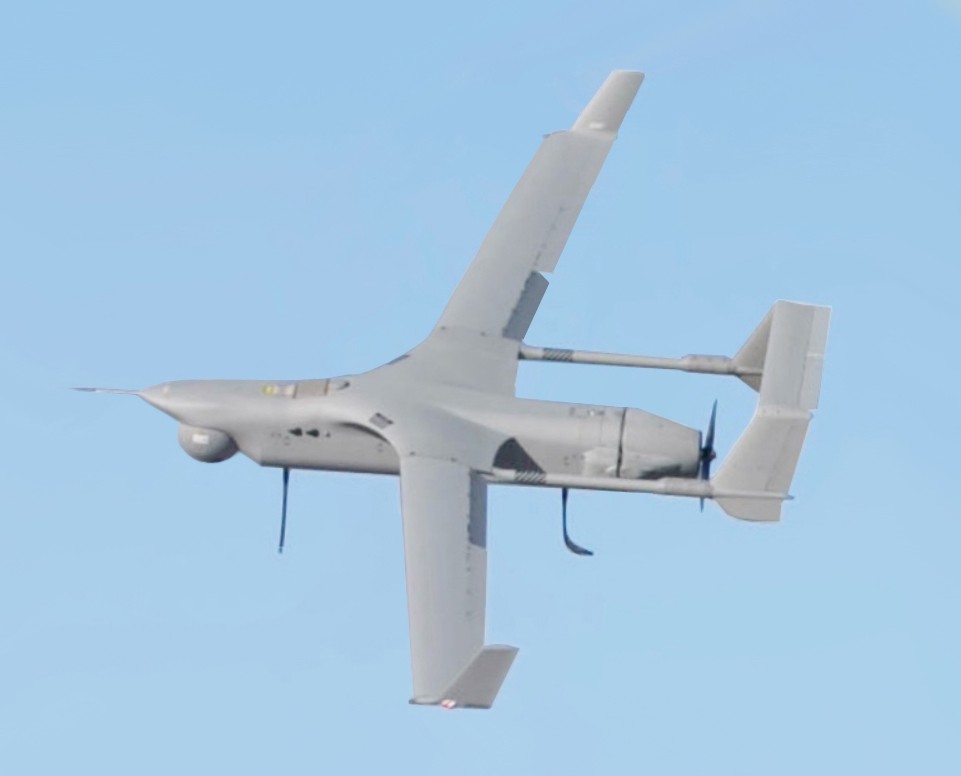
The RQ-21 Blackjack emerged from the Navy's urgent need for a ship-compatible tactical drone that could operate from vessels lacking traditional runways. After Insitu won the competitive STUAS program in June 2010, the system entered low-rate initial production in 2014 following extensive testing. The US Marine Corps conducted the first operational deployment to Afghanistan in 2014, though early reliability issues delayed full-rate production approval. By 2016, the Marines achieved Initial Operational Capability, and the system has since become integral to expeditionary operations.
The Navy awarded Boeing Insitu an $8.8 million contract in November 2013 for the first production lot, followed by a substantial $71.5 million contract in June 2016 for six complete systems. Each system includes multiple air vehicles, ground control stations, launch and recovery equipment, and support infrastructure.
Operational Capabilities
Unlike larger military drones requiring prepared airfields, the RQ-21 launches via pneumatic catapult and recovers using Insitu's proprietary "skyhook" system, enabling operations from ships as small as frigates or temporary land sites. This capability proved crucial for Marine Corps expeditionary units and Navy vessels operating in contested environments where traditional aircraft cannot deploy.
The aircraft serves primary roles in Intelligence, Surveillance, and Reconnaissance (ISR), target acquisition, and communications relay. In 2021, the Navy successfully tested the platform with inert kinetic payloads and miniature precision munitions, expanding its mission profile beyond passive reconnaissance to potential strike operations.
The Manufacturer
Boeing Insitu, originally founded as Insitu Inc., became a Boeing subsidiary in summer 2008. The company previously developed the successful ScanEagle drone and introduced the Integrator UAV in 2007, which served as the foundation for the RQ-21 design. Operating from Bingen, Washington, Boeing Insitu has established itself as a leader in small tactical unmanned systems, with the Blackjack representing their most sophisticated shipboard-capable platform.
The acquisition by Boeing provided Insitu with enhanced manufacturing capabilities and global support infrastructure, enabling the transition from prototype development to full-scale military production and international sales.
Engine and Technical Innovation
The RQ-21 employs a 5.9-kilowatt (8-horsepower) NWUAV gas piston engine in a pusher configuration, providing 16 to 24-hour endurance while maintaining the reliability essential for shipboard operations. The twin-boom design represents a significant departure from the company's earlier tailless ScanEagle, offering improved payload capacity and sensor placement options.
Key innovations include modular payload architecture accommodating electro-optical and infrared cameras, laser rangefinders, infrared markers, and communications relay equipment. The aircraft's 50-nautical-mile operational range and maximum speed of 104 mph provide tactical commanders with real-time intelligence across extended areas of operation.
International Operations
Canada became the first international customer in September 2016, purchasing five air vehicles delivered in 2017. The Netherlands subsequently evaluated five complete packages, reflecting growing international interest in ship-compatible tactical drones. These export sales validate the system's design while providing allied nations with enhanced maritime surveillance capabilities.
The system's compatibility with existing ScanEagle launch and recovery equipment offered significant cost advantages for militaries already operating Insitu products, facilitating international adoption and logistical support.
Production and Legacy
Full-rate production continues at Boeing Insitu's Washington facilities, with the US Navy planning deployment across four packages containing five air vehicles each, while the Marine Corps initially targeted 32 complete systems. The exact current production total exceeds early reports of 12 units, though specific cumulative numbers remain classified.
The RQ-21 Blackjack represents a crucial bridge in unmanned aviation between smaller reconnaissance drones and larger strategic systems. Its success in proving expeditionary drone operations from naval vessels without catapult systems has influenced subsequent tactical UAV development across multiple services. As military operations increasingly emphasize distributed operations and contested environments, the Blackjack's runway-independent capability positions it as an enduring asset for forward-deployed forces requiring persistent surveillance and reconnaissance capabilities.