
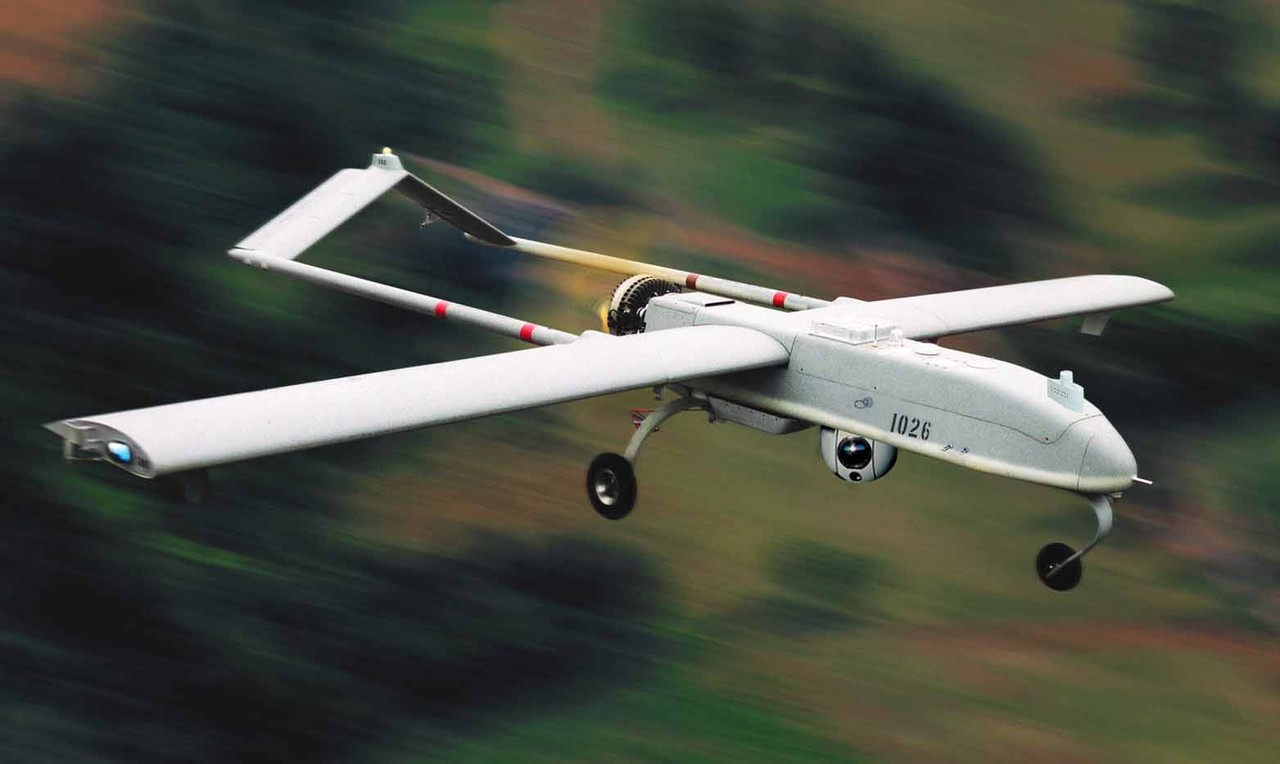
Tactical Revolution
The RQ-7 Shadow transformed modern warfare by delivering persistent aerial surveillance directly to brigade-level commanders. Unlike strategic reconnaissance platforms, the Shadow operated at tactical altitudes, providing real-time battlefield intelligence that ground forces could immediately act upon. By 2016, Shadow aircraft had accumulated over one million flight hours in combat operations, demonstrating their critical importance to military operations.
The system proved so valuable that the U.S. Army alone operates more than 450 Shadow aircraft across multiple variants. During peak deployment years in Iraq and Afghanistan, Shadow systems provided continuous reconnaissance coverage, with endurance capabilities of six to seven hours per mission.
Combat Service Record
The Shadow's combat debut occurred in April 2003 during Operation Iraqi Freedom, when an RQ-7A nicknamed "Screamin' Demon" conducted the first reconnaissance flight over Baghdad. The aircraft quickly proved indispensable for urban warfare, where its ability to loiter overhead and transmit live video helped ground forces navigate complex tactical situations.
Throughout the Iraq War (2003-2011) and Afghanistan conflict (2001-2021), Shadow systems operated continuously from forward operating bases. The aircraft's compact design allowed rapid deployment with minimal infrastructure requirements - each system required only 19 support personnel and could operate from unprepared airstrips.
Beyond U.S. forces, the Shadow attracted international operators including the Australian Army (18 systems delivered 2011-2012), Italian Army (four systems in July 2010), and Swedish Armed Forces (two systems in May 2010). Pakistan and Romania also acquired Shadow systems for their military reconnaissance needs.
AAI Corporation Legacy
AAI Corporation developed the Shadow building upon decades of unmanned aircraft experience. Founded in 1950 as Aeronautical Affiliates Inc., the Hunt Valley, Maryland company had previously created the RQ-2 Pioneer drone, giving them crucial expertise in military unmanned systems.
The company's engineering team designed the Shadow specifically for the Army's Tactical Unmanned Aircraft System program, which demanded a reliable platform for brigade-level reconnaissance. AAI's approach emphasized operational simplicity and battlefield durability over sophisticated autonomy.
In 2007, Textron Inc. acquired AAI Corporation, integrating it into Textron Systems while maintaining the AAI name for unmanned systems operations. Today, Textron Systems continues Shadow production and upgrades from the original Maryland facilities, with ongoing contracts extending the platform's service life.
Technical Innovation
The Shadow's pusher-propeller configuration, powered by a 52-horsepower Wankel rotary engine, represented a significant advancement over earlier tactical drones. The EL-01 engine's compact design and fuel injection system provided reliable operation in harsh tactical environments, enabling maximum speeds of 129 mph and service ceilings reaching 14,993 feet.
Most critically, the Shadow pioneered gimbal-mounted electro-optical and infrared sensors that delivered stabilized video feeds to ground control stations. Operators could view targets up to 125 kilometers away, providing unprecedented surveillance range for a tactical system.
The aircraft's tubular tail boom design maximized internal volume for fuel storage while maintaining structural strength. This configuration enabled the extended endurance that made Shadow systems so effective for persistent surveillance missions.
Operational Excellence
Pilots praised the Shadow's reliability and mission flexibility, though all flights were conducted by remote operators from ground control stations. Each Shadow system included two operators plus extensive support personnel, reflecting the platform's integration into larger military intelligence networks.
The RQ-7B variant, introduced in 2004, extended endurance from five to seven hours through larger wings and increased fuel capacity. Later modifications achieved nine-hour endurance with extended wing configurations, first tested in April 2010.
A Tactical Common Data Link upgrade allowed Shadow systems to share intelligence directly with other military platforms, creating integrated reconnaissance networks across battlefield areas.
Production Success
AAI delivered the first four Shadow systems in early 2001, beginning low-rate initial production under Army contracts valued initially at $135 million. Full-rate production commenced in 2002 with the RQ-7A model, transitioning to the improved RQ-7B variant during summer 2004.
By January 2010, the Army had ordered 116 complete systems encompassing over 450 individual aircraft. Major contracts included a June 2007 order for 74 systems (296 air vehicles and 148 ground control stations) and a July 2012 upgrade contract worth $358 million for 45 RQ-7B systems.
Total production exceeded 600 aircraft across all variants, making the Shadow one of the most successful military drone programs. The 2014 RQ-7B V2 Block 1 upgrade ensures continued operations well into the current decade.
Enduring Legacy
The "Screamin' Demon" RQ-7A that flew the first Baghdad mission now resides at the Smithsonian's National Air and Space Museum in Washington, D.C., commemorating the Shadow's role in modern warfare evolution. The aircraft represents the transition from strategic to tactical unmanned reconnaissance, bringing persistent surveillance capabilities directly to frontline commanders.
Hundreds of Shadow systems remain operational today, continuing their reconnaissance missions with American and allied forces worldwide. The platform's success established tactical drones as essential military equipment, influencing an entire generation of unmanned aircraft development.