
Design and Development
The Royal Aircraft Factory S.E.5 was developed in 1916 to meet a Royal Flying Corps requirement for a fighter capable of surpassing enemy aircraft following significant losses in early 1917. The design team consisted of Henry Folland and John Kenworthy, with critical development and testing contributions from Major Frank Goodden, the Factory's chief test pilot. The first of three prototypes flew on 22 November 1916, powered by a 150 hp Hispano-Suiza engine.
Technical Specifications and Performance
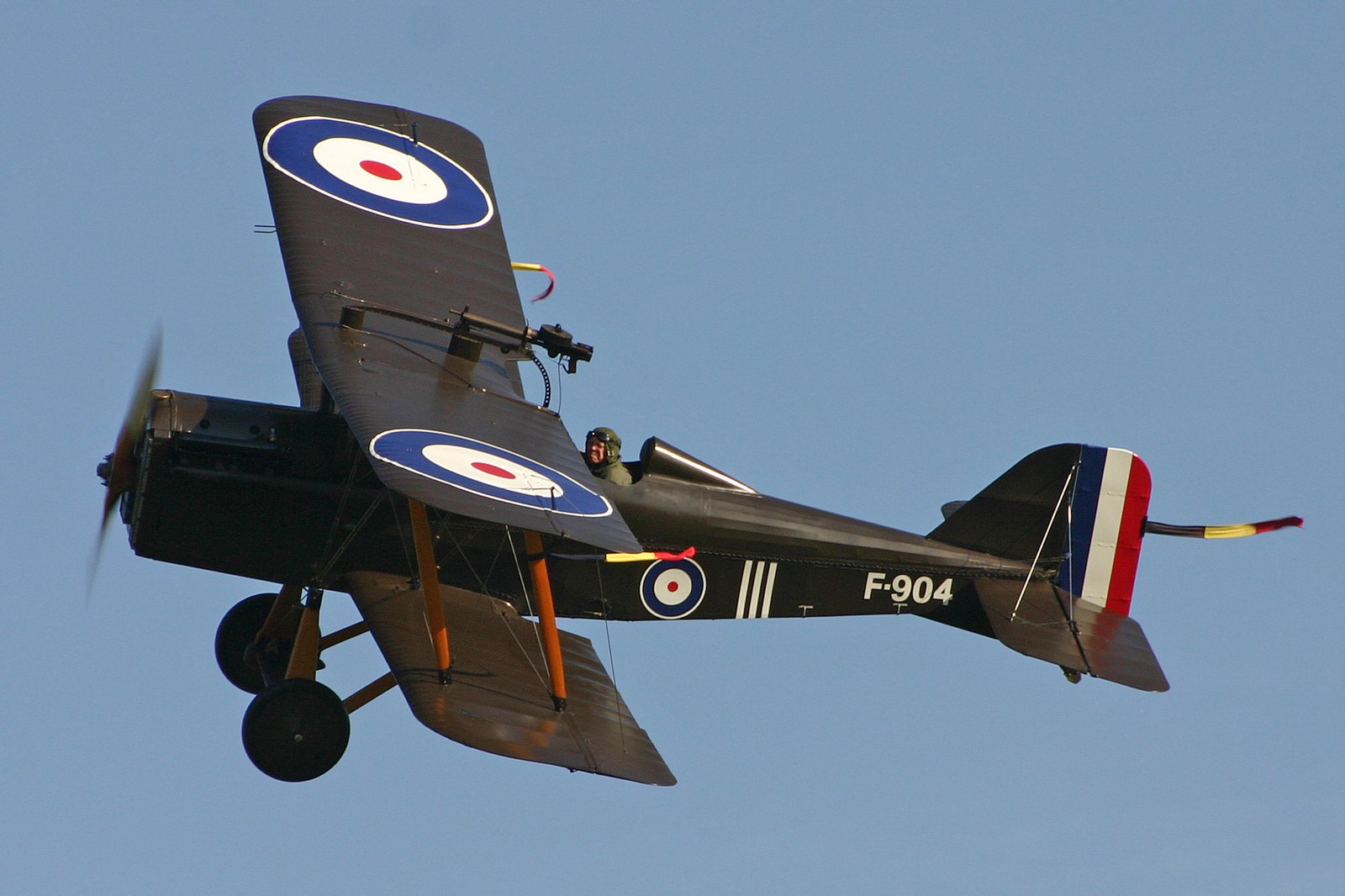
Notable for its strong structure and excellent visibility, the S.E.5 was one of the fastest aircraft of the Great War, reaching top speeds of approximately 138 mph. It was highly regarded as a steady gun platform due to its stability and ease of control. The aircraft's armament featured a synchronized .303 in Vickers machine gun firing through the propeller and a .303 in Lewis gun mounted on a Foster sliding mount on the upper wing, allowing pilots to fire upward at enemy aircraft. Additionally, it could carry up to four 25 lb Cooper bombs for light ground-attack missions. The S.E.5a variant typically utilized the 200 hp Wolseley W.4A "Viper," a high-compression, direct-drive version of the Hispano-Suiza 8 engine.
Production and Manufacturer History
While designed at the Royal Aircraft Factory in Farnborough, Hampshire, mass production was handled by external British contractors, including Wolseley Motors in Birmingham. Between 1916 and 1918, approximately 5,200 to 5,269 aircraft were produced. Of these, only 77 were the original S.E.5 model, while over 5,000 were the improved S.E.5a. The Royal Aircraft Factory itself was a government establishment; it was renamed the Royal Aircraft Establishment (RAE) in 1918 and eventually merged into larger defense research organizations by the early 1990s.
Service History and Legacy
The S.E.5 entered service in March or April 1917 with No. 56 Squadron RFC. By the end of World War I, 21 British and two United States squadrons operated the S.E.5a. It was flown by legendary aces such as Albert Ball, Edward "Mick" Mannock, James McCudden, and William "Billy" Bishop. Post-war, some aircraft saw limited use in Poland during the Polish-Soviet conflict in 1920, while others were used for civilian skywriting in Britain between 1924 and 1928. Today, the S.E.5a is remembered as the "Spitfire of World War One," with a few original airframes and several replicas surviving in collections, including a replica at the Museum of Flight in Seattle.