
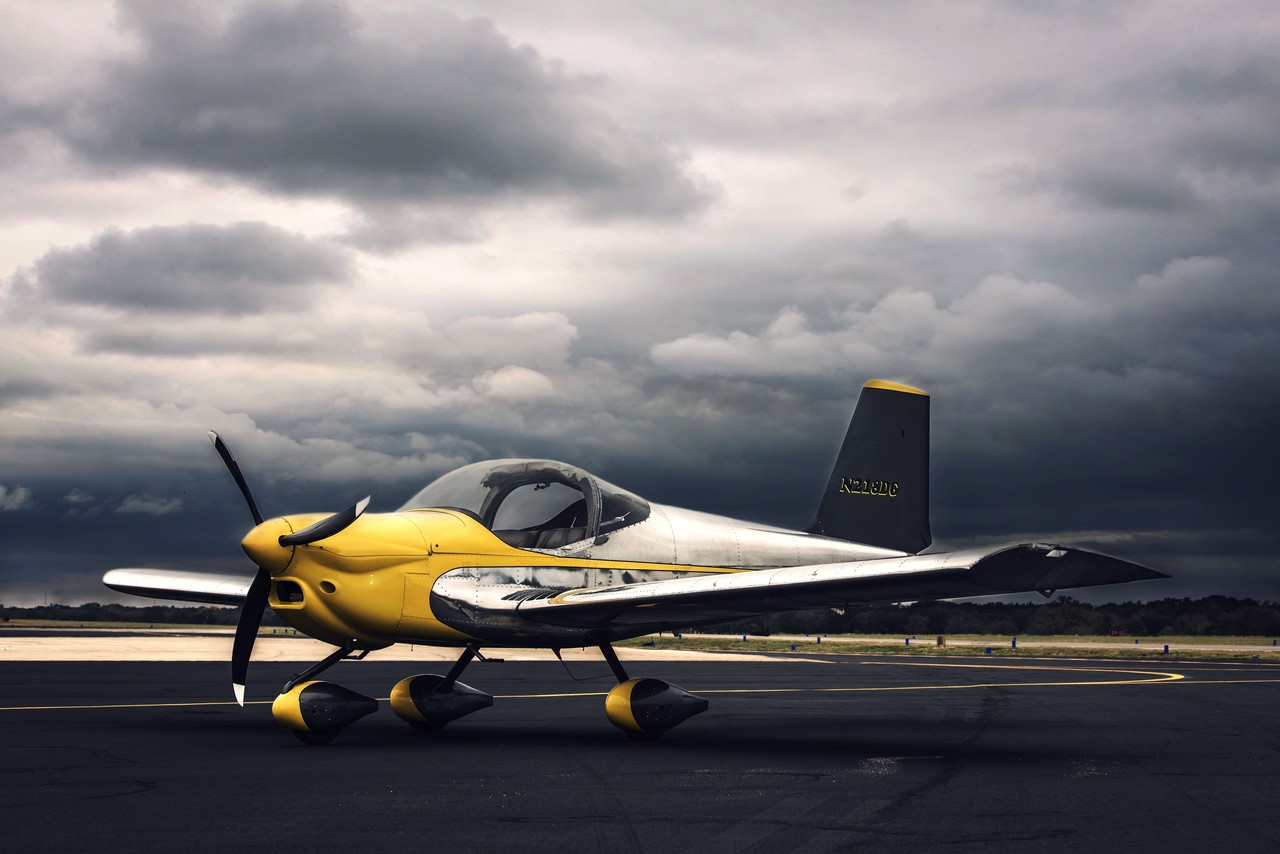
Design Philosophy and Market Position
Richard VanGrunsven's decision to create the RV-12 marked a strategic departure from Van's Aircraft's traditional high-performance homebuilt philosophy. When the FAA established the Light Sport Aircraft category in 2004, VanGrunsven recognized an opportunity to capture a market segment that prioritized ease of construction and regulatory simplicity over raw performance. Unlike previous RV designs that pushed experimental aircraft boundaries, the RV-12's specifications were deliberately constrained by LSA regulations: maximum gross weight of 1,320 pounds, maximum stall speed of 45 knots, and fixed landing gear.
The aircraft's development emphasized complete kit integration, a revolutionary approach for Van's Aircraft. Previous RV models required builders to source engines, propellers, and avionics separately. The RV-12 kit included everything: the Rotax 912ULS engine, Sensenich ground-adjustable propeller, Dynon glass cockpit avionics, complete wiring harnesses, and all hardware. This comprehensive approach reduced builder decision-making and potential compatibility issues, contributing to the model's exceptional completion rate.
Manufacturing Innovation
Van's Aircraft revolutionized kit aircraft manufacturing with the RV-12's production methods. All aluminum parts arrived completely formed and pre-punched, eliminating the need for builders to drill thousands of holes—a time-consuming process in traditional kit construction. The company estimated 700 to 900 hours for completion, significantly less than comparable homebuilt aircraft. Experienced builders documented completion times as low as 500 hours, making the RV-12 accessible to first-time kit builders.
The aircraft's construction utilized matched-hole tooling and computer-controlled manufacturing processes. Every component was designed for consistent fit and finish, addressing a common complaint about homebuilt aircraft quality variation. The monocoque aluminum structure employed conventional riveting techniques, ensuring repairability and familiar construction methods for amateur builders.
Commercial Success and Training Role
In 2009, the RV-12 achieved ASTM certification for factory production as a Special Light Sport Aircraft, allowing Van's Aircraft to sell completed aircraft alongside kits. This dual market approach proved financially successful, with flight training schools adopting the type for primary instruction. The aircraft's 100-horsepower Rotax engine provided sufficient performance for training operations while maintaining operating costs below traditional training aircraft.
Commercial flight schools praised the RV-12's handling characteristics and mechanical reliability. The Rotax 912ULS engine's automotive-grade fuel capability reduced operational complexity, while the glass cockpit configuration prepared students for modern aircraft systems. Van's Aircraft documented more than 600 RV-12s in active service by 2020, with completion rates averaging 1.5 aircraft per day across all builder locations.
Technical Advancement: The RV-12iS
Van's Aircraft introduced the RV-12iS variant in 2017, featuring the fuel-injected Rotax 912iS engine and structural improvements for commercial training operations. The updated design included electric flaps, revised instrument panel layout, and increased baggage capacity. These modifications addressed operator feedback while maintaining the original model's construction simplicity and performance characteristics.
The 912iS engine provided improved fuel efficiency and reduced maintenance requirements compared to the carbureted 912ULS. Single-lever power control simplified engine management, while integrated engine monitoring systems enhanced operational safety. These improvements positioned the RV-12iS as a modern training platform competitive with factory-built light sport aircraft.
Van's Aircraft Legacy and Challenges
Richard VanGrunsven founded Van's Aircraft in 1973, establishing the company as America's most successful kit aircraft manufacturer. By 2023, more than 11,000 Van's aircraft were flying worldwide, representing one-third of America's experimental aircraft fleet. The RV-12's contribution to this success demonstrated the viability of LSA-category homebuilding and expanded Van's market beyond traditional experimental aircraft enthusiasts.
However, Van's Aircraft faced significant challenges culminating in Chapter 11 bankruptcy protection in December 2023. Manufacturing quality issues, including laser-cut parts that required replacement in 1,800 kits, created multi-million dollar warranty obligations. Additionally, kit pricing below actual production and shipping costs undermined profitability despite strong sales volumes.
Current Status and Future
Despite corporate financial difficulties, the RV-12 remains in production with continued builder support. The aircraft's proven design and comprehensive documentation ensure continued airworthiness for existing examples. Flight training schools continue operating RV-12 fleets, while individual builders complete new aircraft from existing kit inventory.
The RV-12's significance extends beyond production numbers to its role in democratizing sport aviation. By combining modern manufacturing techniques with proven powerplant and avionics integration, the aircraft created an accessible pathway into homebuilt aviation. This approach influenced subsequent LSA designs and established new standards for kit completeness and builder support in the experimental aircraft industry.