
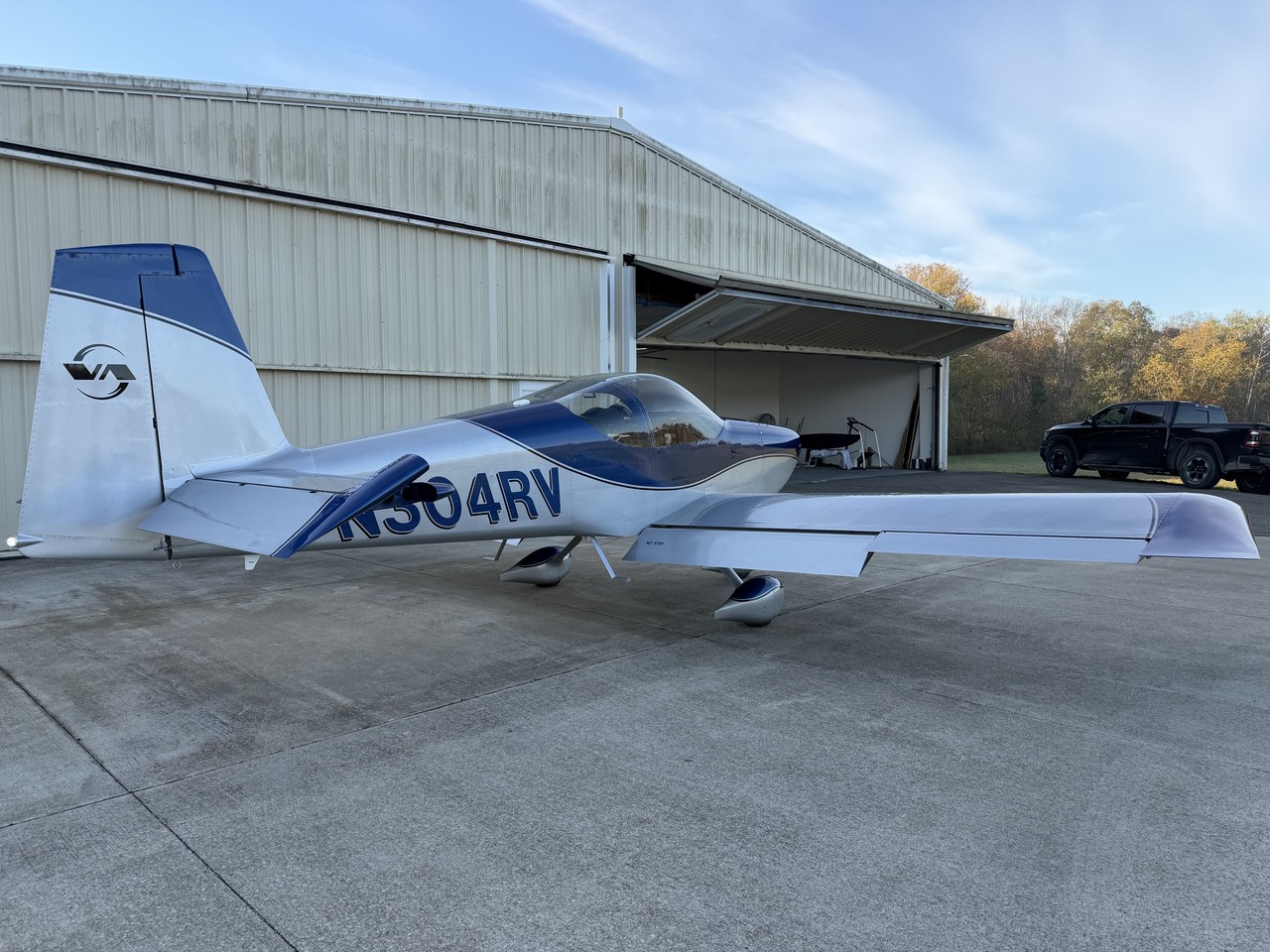
Design Genesis
Richard VanGrunsven began developing the RV-14 as early as 2005, with the first computer design files dating to that year. The project evolved during concurrent development of the RV-12, drawing from lessons learned with the four-seat RV-10. VanGrunsven's objectives were ambitious: create an aerobatic two-seater suitable for larger pilots while incorporating improved visibility, a wider cabin, and enhanced baggage capacity of 100 pounds behind the seats. The design demanded low landing speeds through larger slotted flaps, strong climb and glide performance, and FAR Part 23-compliant landing gear, all while maintaining compatibility with experimental amateur-built regulations.
Manufacturing Innovation
Van's Aircraft introduced the RV-14 to production in 2012, with wing kits becoming available in autumn of that year. The company implemented numerous manufacturing innovations to simplify construction, including pre-punched longerons, pre-installed wiring harnesses, plug-in avionics compatibility, and a pre-trimmed bubble canopy with pre-welded frame. The matched-hole construction technique, pioneered by Van's across their product line, ensures precise assembly for amateur builders. Pre-fitted engine baffles and constant-chord wings with removable leading-edge fuel tanks further streamline the building process.
The Manufacturer's Legacy
Van's Aircraft, founded by Richard VanGrunsven in 1972 in Oregon, began with plans for the single-seat RV-3 and has operated continuously for over five decades. The company celebrated its 50th anniversary in 2022 at EAA AirVenture Oshkosh, marking an extraordinary milestone in general aviation. By 2022, Van's had delivered over 11,000 completed aircraft kits worldwide, with the 10,000th aircraft taking flight on November 25, 2017, in Virginia. The RV-6 and RV-7 models led production numbers with a combined 4,297 aircraft by mid-December 2017. During the COVID-19 pandemic, Van's experienced kit order backlogs of up to one year due to unprecedented demand for homebuilt aircraft.
Powerplant Excellence
The RV-14 exclusively uses the Lycoming IO-390, a four-cylinder, horizontally-opposed, air-cooled engine producing 210 horsepower in standard configuration. This angle-valve design was specifically optimized for the RV-14's cross-country performance requirements. In 2020, Lycoming introduced the updated IO-390-EXP119 variant, delivering 215 horsepower through new exhaust and induction systems, a revised oil sump, aluminum induction pipes, and a lighter oil pump and accessory case that saves 10 pounds. These improvements boost cruise speed by 11 mph to 201 mph and increase climb rate by 250 feet per minute. The engine typically drives a Hartzell propeller and proves reliable for both aerobatic operations and short-field performance.
Performance Characteristics
With an empty weight of 1,240 pounds and a gross weight of 2,050 pounds, the RV-14 offers a useful load of 810 pounds. When carrying full fuel (50 gallons), the aircraft maintains a 510-pound payload capacity sufficient for two occupants and baggage. At 70 percent power, the RV-14 cruises at 190 mph, achieving a maximum range of 1,611 miles with full fuel. The aircraft's short-field capabilities and strong climb performance make it suitable for operations on grass, dirt, and gravel airstrips. Its low landing speed, enabled by large slotted flaps, enhances safety margins during approach and landing.
Construction and Aerobatics
The RV-14 employs a monocoque riveted aluminum airframe construction, providing the structural strength necessary for aerobatic operations while maintaining light weight. The constant-chord, constant-thickness wing design simplifies manufacturing while delivering predictable flight characteristics. Rigid pushrod ailerons mounted on bearings and bushings provide precise control response essential for aerobatic maneuvers. The wide cabin accommodates larger pilots comfortably, addressing a common limitation of earlier RV designs.
Production Success
As of November 2022, 207 RV-14 aircraft had been completed and flown worldwide, representing steady growth for Van's newest design. Notable examples include the first Australian import, VH-XIV (construction number 149), delivered to Alan Carlisle and displayed at OzKosh Narromine in October 2016. Recent completions include Raymond Labonte's RV-14 (serial number 140800), which made its first flight on October 11, 2025, from Sanford Seacoast Regional Airport. The RV-14 remains in active production at Van's Aurora, Oregon facility, with both conventional gear RV-14 and tricycle-gear RV-14A variants available.
Legacy and Impact
The RV-14 represents Van's most technologically advanced design, bridging the stability characteristics of the four-seat RV-10 with the aerobatic capabilities expected from a two-seat RV. Unveiled at EAA AirVenture in July 2012, the aircraft complemented rather than replaced the popular RV-7 and RV-9 models. Its significance lies in advancing the most successful kit aircraft lineage in aviation history, emphasizing evolutionary improvements in build ease, pilot comfort, and performance for both sport flying and cross-country touring. The RV-14 continues the Van's tradition of delivering professional-quality aircraft to amateur builders worldwide.