
Service History
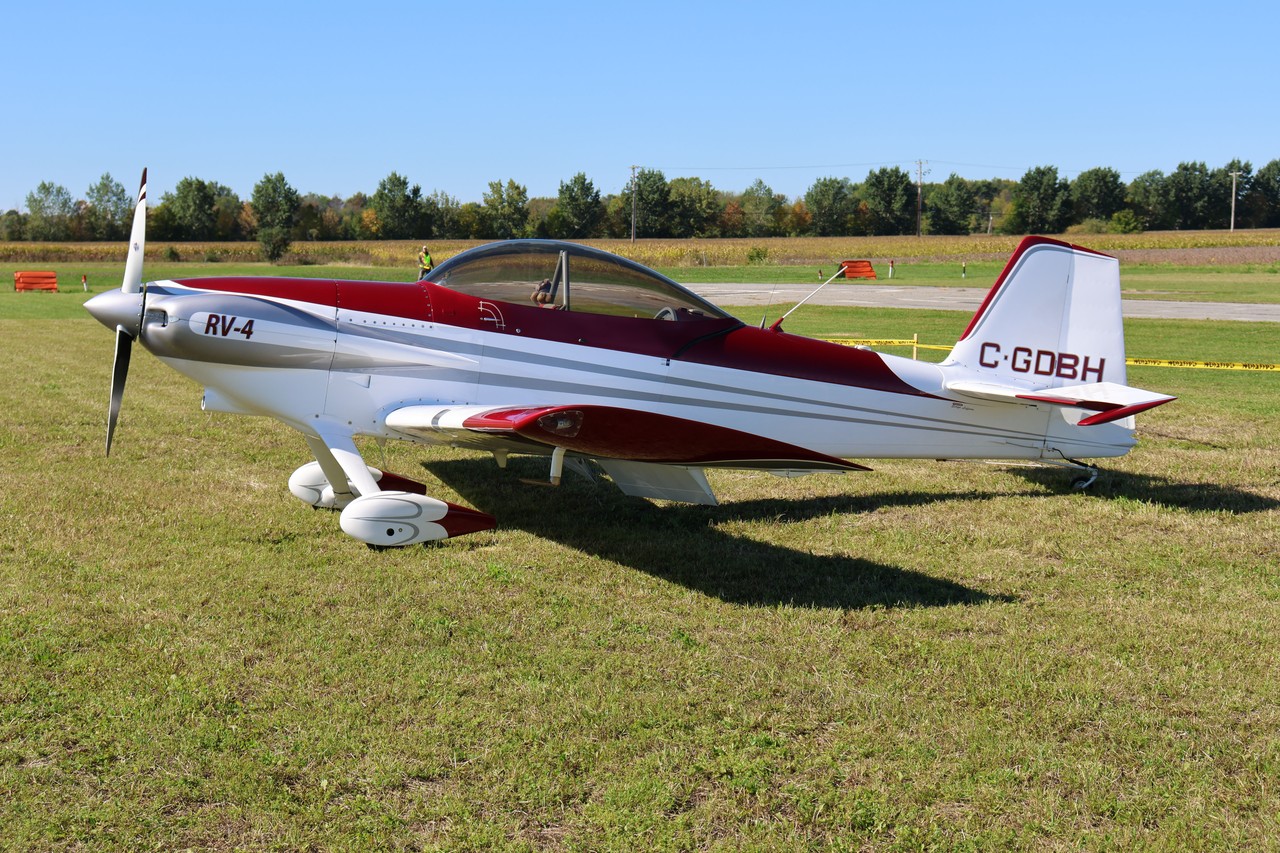
The RV-4 transformed homebuilt aviation by proving that amateur-built aircraft could achieve professional-level performance and handling qualities. Since entering service in the early 1980s, it has remained one of the most successful kit aircraft ever produced, ranking as the fourth most-built model in Van's extensive RV series. By November 2022, builders had completed and flown 1,446 RV-4s worldwide, contributing significantly to Van's total production of over 10,500 aircraft across all models.
The aircraft's impact extended far beyond raw numbers, establishing new standards for kit plane performance that competitors struggled to match. Its success helped Van's Aircraft achieve $30 million in annual sales by 2004, when the company employed 60 people and shipped 650 kits yearly. The RV-4's popularity among aerobatic pilots and sport aviation enthusiasts demonstrated that homebuilt aircraft could rival factory-produced planes in both performance and build quality.
The Designer and Development
Richard VanGrunsven designed the RV-4 in the mid-1970s as a natural evolution of his successful single-seat RV-3. VanGrunsven, whose aviation journey began with the RV-1 prototype completed in 1965 from a modified Stits SA-3 Playboy, recognized the market demand for a two-seat aircraft that retained the RV-3's exceptional performance characteristics. The RV-4 prototype first took to the skies in August 1979, featuring a completely redesigned wing with increased span and area compared to its single-seat predecessor.
The design philosophy emphasized "total performance" – a combination of speed, agility, and handling reminiscent of World War II fighters. VanGrunsven incorporated a bubble canopy and narrow fuselage to maximize visibility, while the all-aluminum cantilever wing construction provided both strength and precision in flight controls. The result was an aircraft that pilots described as "an extension of the pilot's thought process," responding instantly and predictably to control inputs.
The Manufacturer
Van's Aircraft, Inc. began as Richard VanGrunsven's personal quest to build the perfect sport aircraft, evolving into the world's most successful kit plane manufacturer through purely organic growth. The company started offering kits in 1973 with the single-seat RV-3, establishing its headquarters in Aurora, Oregon, where it continues operations today. Unlike many aviation companies that grew through mergers or acquisitions, Van's expanded steadily by consistently delivering innovative designs that met pilots' evolving needs.
The company achieved significant milestones throughout its growth, completing 1,000 RVs by 1995 and surpassing 3,600 aircraft by 2004. This success stemmed from Van's commitment to providing complete, well-engineered kits that amateur builders could confidently assemble in their garages and hangars. The RV-4's introduction in 1981 marked a crucial transition from single-seat to multi-seat aircraft, broadening the company's market appeal and establishing the foundation for future two-seat and four-seat designs.
Engine and Technical Innovation
The RV-4's heart is the Lycoming O-360 four-cylinder engine, producing 180 horsepower through an air-cooled, horizontally opposed configuration. This powerplant choice proved ideal for the aircraft's aerobatic mission, providing exceptional reliability and a strong power-to-weight ratio that enabled impressive climb rates and sustained vertical maneuvers. Builders could choose between fixed-pitch and constant-speed propellers, allowing customization based on intended use and budget considerations.
The aircraft's technical innovations extended beyond powerplant selection to encompass the entire airframe design. The conventional taildragger landing gear configuration, combined with the low-wing layout, provided ground handling characteristics that experienced pilots appreciated while teaching newcomers the fundamentals of tailwheel flying. The tandem seating arrangement, with the pilot positioned in the front seat, offered excellent visibility during both normal flight operations and aerobatic sequences.
Pilot Perspective and Performance
Pilots consistently praise the RV-4's exceptional handling characteristics, particularly its responsiveness and predictability throughout the flight envelope. The aircraft's design accommodates engines up to 180 horsepower, enabling performance levels that rival or exceed many factory-built aircraft in its class. The 32-gallon fuel capacity provides adequate range for cross-country flights while maintaining the light weight essential for aerobatic performance.
The RV-4's appeal extends across diverse pilot demographics, from experienced aerobatic competitors seeking a cost-effective platform to sport pilots wanting an engaging weekend aircraft. Its forgiving flight characteristics make it accessible to pilots transitioning from tricycle gear aircraft, while its performance capabilities satisfy those seeking genuine aerobatic capability. The aircraft's reputation for precise control response has made it a favorite among pilots who value the direct connection between input and aircraft response.
Production Legacy
After more than four decades in production, the RV-4 celebrated its 40th anniversary in 2019, with kits still available from Van's Aircraft. The sustained production run demonstrates the design's enduring appeal and Van's commitment to supporting builders with parts and technical assistance. The aircraft's success paved the way for Van's entire product line, establishing design principles and manufacturing processes that continue to influence the company's newer models.
The RV-4's legacy lives on not only in the 1,446 aircraft flying worldwide but also in its influence on the broader homebuilt aviation movement. The prototype, registered as N14RV in 1979, survives as a testament to VanGrunsven's vision, while early production aircraft from 1985 onward continue serving their builders and subsequent owners. Museums may not prominently display RV-4s, but their impact on aviation culture and the democratization of high-performance flying ensures their place in aviation history.