
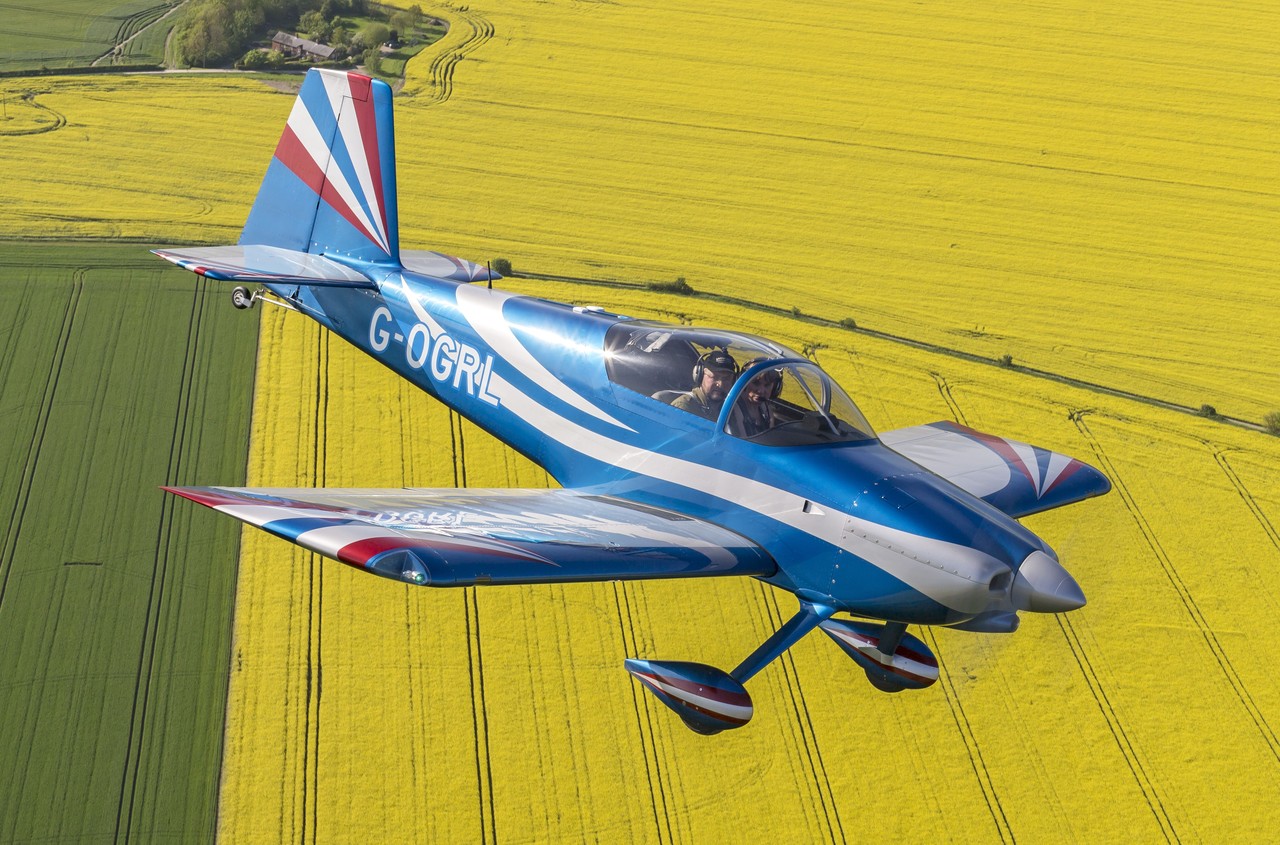
Service History
The RV-7 established itself as one of the most successful experimental aircraft designs in general aviation history, with over 1,900 examples completed and flown by 2022. This achievement places it among Van's Aircraft's most popular designs, though still trailing the legendary RV-6 series with its 2,700+ completions. The aircraft serves exclusively in civilian roles, operated primarily by individual homebuilders and sport pilots seeking high-performance recreational flying. Unlike production aircraft, each RV-7 reflects its builder's preferences in avionics, interior, and engine selection, creating a diverse fleet unified by exceptional performance characteristics.
The Manufacturer
Van's Aircraft traces its origins to Richard "Dick" VanGrunsven's pioneering work beginning in 1965 with the RV-1 prototype. VanGrunsven officially founded Van's Aircraft, Inc. in 1973, initially operating from North Plains, Oregon before relocating to Aurora State Airport in 2001. The company experienced remarkable growth from its humble beginnings, evolving from selling RV-3 plans in 1972 to becoming the world's dominant kit aircraft manufacturer. By December 2017, Van's celebrated its 10,000th aircraft taking flight - fittingly an RV-7 - and by 2023, over 11,000 Van's aircraft flew worldwide, representing one-third of all experimental aircraft in the United States.
The company faced significant challenges in December 2023 when it filed for Chapter 11 bankruptcy protection due to corrosion issues affecting laser-cut parts in approximately 1,800 kits, combined with underpriced kit sales that strained finances. Despite these difficulties, Van's continues operations under the same management and name, maintaining production of the RV-7 and other popular designs.
Design Innovation
Richard VanGrunsven designed the RV-7 as a direct successor to the successful RV-6, incorporating feedback from over 2,000 RV-6 builders to address the earlier design's limitations. The RV-7 featured increased wingspan and wing area for improved handling, enhanced fuel capacity of 42 gallons versus the RV-6's 38 gallons, and accommodation for larger engines up to the 215-horsepower Lycoming IO-390. VanGrunsven prioritized increased headroom and legroom while maintaining the side-by-side seating configuration that distinguished Van's designs from traditional tandem-seat homebuilts.
The aircraft incorporated computer-assisted design with pre-punched rivet holes, reducing typical build times to approximately 1,500 hours compared to earlier designs requiring 2,000+ hours. Cost savings were achieved through shared components with the RV-8 and RV-9 models, while the larger rudder improved spin recovery characteristics over the RV-6.
Engine and Performance
The RV-7's versatile engine mount accommodates the full range of Lycoming O-320 through IO-390 engines, spanning from 160 to 215 horsepower. Most builders select the proven Lycoming O-360 or IO-360 engines producing 180 horsepower, though the design's capability to handle the larger IO-390 distinguishes it from the more limited RV-6. These air-cooled, horizontally-opposed engines, manufactured by Lycoming Engines (a Textron subsidiary), have powered general aviation aircraft since the 1950s with proven reliability.
Typical RV-7 configurations achieve cruise speeds exceeding 200 mph while maintaining excellent fuel efficiency. The aircraft's empty weight ranges from 1,000 to 1,200 pounds depending on equipment and engine selection, with gross weights around 1,800 pounds providing useful loads superior to the RV-6. The constant-speed propellers commonly fitted to RV-7s optimize performance across the flight envelope.
Pilot Experience
Pilots consistently praise the RV-7's exceptional handling characteristics, describing controls as light, responsive, and well-harmonized. The side-by-side seating arrangement proves popular for training and recreational flying, offering better communication than tandem configurations. The aircraft's docile stall characteristics and improved spin recovery over earlier Van's designs provide confidence for pilots transitioning from production aircraft.
The RV-7's performance envelope spans from gentle touring flights to spirited aerobatic sessions, though most builders configure their aircraft for cross-country travel rather than unlimited aerobatics. Visibility from the low-wing configuration proves excellent, while the spacious cabin accommodates pilots up to 6'4" comfortably.
Legacy and Current Status
Despite Van's Aircraft's recent financial challenges, RV-7 production continues in 2025, with kits manufactured at the Aurora, Oregon facility using quick-build components prefabricated in the Philippines and Brazil. The aircraft's legacy extends beyond mere production numbers, representing the maturation of amateur-built aviation into a sophisticated alternative to factory-built aircraft.
The RV-7 demonstrates that homebuilt aircraft can equal or exceed certified aircraft performance while maintaining the personal satisfaction of construction by the owner. With nearly 2,000 examples flying and production ongoing, the RV-7 continues VanGrunsven's vision of making high-performance aviation accessible to dedicated amateur builders.