
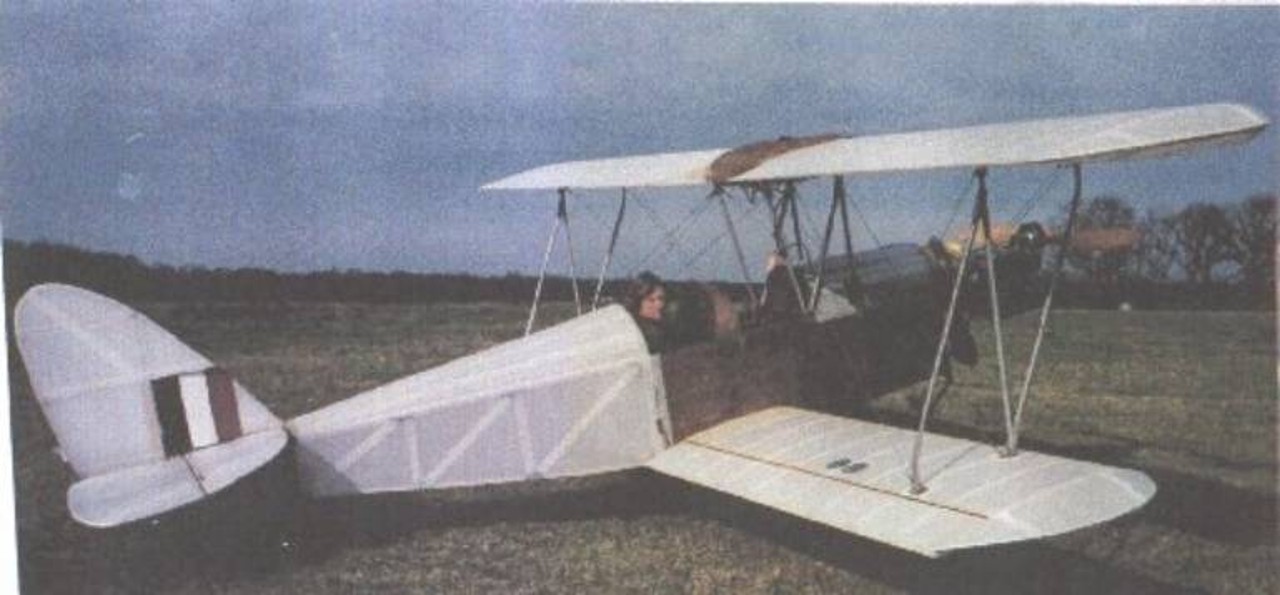
Design Philosophy and Development
The RW-22 Tiger Moth emerged from designer Roger Mann's vision to bring the classic 1930s training biplane experience to modern homebuilders. RagWing Aircraft Designs developed this replica to qualify under the Experimental Light-sport aircraft category, making it accessible to amateur constructors while maintaining the distinctive characteristics of its famous predecessor. The design team used original Tiger Moth plans as reference, scaling them down to 80% of the original dimensions to create a more manageable aircraft for recreational flying.
The project represented RagWing's commitment to bringing classic aviation designs within reach of homebuilders, following their earlier success with other replica aircraft including the Ultra-Piet and Rag-A-Bond models.
Construction and Technical Features
The RW-22 employs traditional biplane construction methods, featuring a wood and tube airframe covered in fabric. One of its most practical innovations is the incorporation of folding wings, allowing owners to store the aircraft in standard automobile garages. The conventional landing gear configuration maintains the authentic appearance and handling characteristics of the original Tiger Moth.
The aircraft measures 19 feet in length with a 23-foot wingspan and stands 7 feet 6 inches tall. Its wing area of 161 square feet provides adequate lift for the aircraft's maximum gross weight of 1,050 pounds, while maintaining an empty weight of just 490 pounds. This favorable power-to-weight ratio contributes to the aircraft's respectable performance characteristics.
Powerplant Options
RagWing designed the RW-22 to accommodate various engine configurations, with the standard powerplant being the 50-horsepower Rotax 503 twin-cylinder two-stroke engine driving a wooden two-blade propeller. Alternative engines include the 70-horsepower 2si 690, the 60-horsepower HKS 700E, and the 80-horsepower Rotax 912UL four-stroke engine.
This engine flexibility allows builders to tailor their aircraft's performance to their specific needs and budget constraints. The Rotax 503 configuration provides a cruise speed of 80 mph with a stall speed of just 35 mph, making the aircraft forgiving for pilots transitioning from modern tricycle-gear aircraft to conventional gear biplanes.
The Manufacturer's Legacy
RagWing Aircraft Designs, founded by Roger Mann, operated from at least 1997 through 2007, specializing in replica and ultralight homebuilt designs. The company's portfolio included several successful projects: the RW1 Ultra-Piet with 22 aircraft built by January 1999, the RW19 Stork with 9 completed by December 2007, and the RW11 Rag-A-Bond with 4 built by 1998.
The RW-22 represented the company's most ambitious replica project, though production numbers remained limited. Initially offered as quick-build kits to reduce construction time, the aircraft later became available only in plans form, requiring an estimated 600 hours of construction time.
Performance and Flying Characteristics
The RW-22 delivers authentic biplane flying characteristics with modern reliability. Its cruise speed of 80 mph and never-exceed speed of 110 mph place it squarely in the recreational flying category, while its impressive rate of climb of 750 feet per minute demonstrates adequate power loading. The aircraft achieves a service ceiling of 10,000 feet and offers a range of 250 miles with its 10-gallon fuel capacity.
Pilots appreciate the aircraft's gentle stall characteristics and stable flight behavior, making it suitable for pilots seeking to experience classic biplane flying without the complexity and expense of maintaining a vintage aircraft. The tandem seating arrangement provides excellent forward visibility for both occupants while maintaining the traditional Tiger Moth cockpit layout.
Production Reality and Current Status
Despite initial enthusiasm, only one RW-22 Tiger Moth was documented as completed by December 2000. This limited production reflects the challenges faced by many homebuilt aircraft designs, where initial interest may not translate into completed projects due to the significant time and skill requirements involved in amateur construction.
RagWing Aircraft Designs appears to have ceased operations, with no recent activity documented and questions surrounding the current availability of plans and support materials. The company's official website status remains uncertain, leaving prospective builders with limited access to construction support.
Legacy in Homebuilt Aviation
While the RW-22 Tiger Moth achieved only limited production success, it represents an important chapter in the continuing effort to preserve classic aviation designs through modern homebuilt replicas. The aircraft demonstrated that scaled reproductions could maintain the essential character of their full-size predecessors while adapting to contemporary experimental aircraft regulations and modern engine technology.
The project's modest impact contrasts with more successful Tiger Moth replicas like the Fisher R-80 Tiger Moth, highlighting the competitive nature of the homebuilt market and the challenges facing small aircraft design companies in sustaining long-term operations.