
Design Philosophy and Development
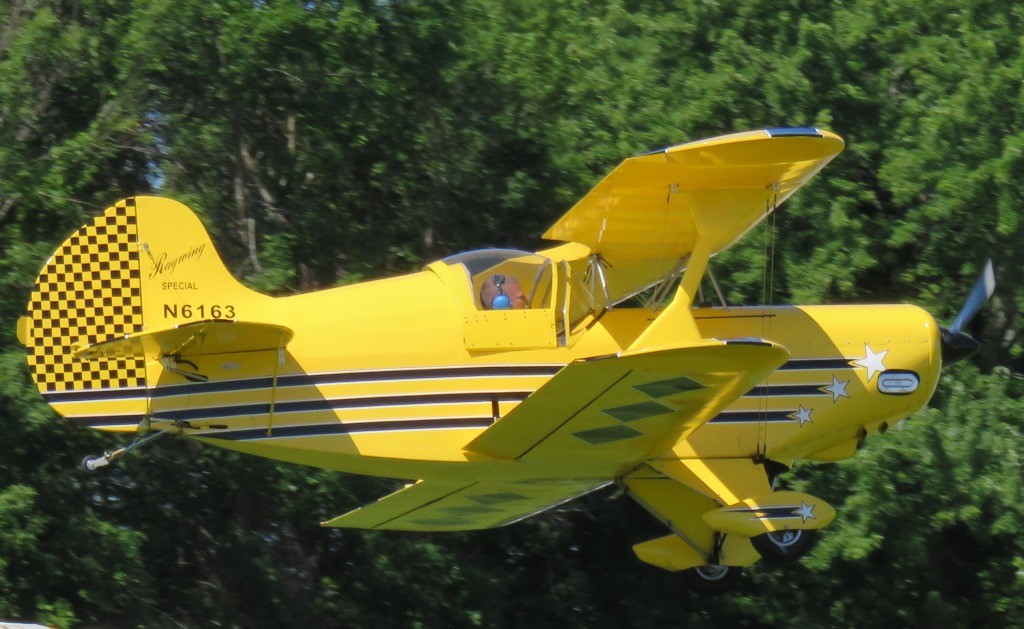
Roger Mann conceived the RW-26 Special 2 as an accessible pathway for homebuilders to experience aerobatic flying in a Pitts Special-inspired design. After founding RagWing Aircraft Designs in 1987 following his departure from the United States Air Force, Mann established a comprehensive aviation services company that offered flight instruction, maintenance, prototype design, and flight testing of homebuilt aircraft. The company marketed its first aircraft design in 1991 and eventually expanded to offer 14 different fixed-wing designs.
The RW-26 represented Mann's vision of democratizing aerobatic aviation through simplified construction methods. Rather than requiring expensive materials and complex manufacturing techniques, the design employed traditional wood-and-fabric construction with a Pratt truss airframe. This approach enabled builders to complete their aircraft in approximately 400 hours for roughly $5,000, including a new engine, according to early 2000s cost estimates.
Technical Configuration
The RW-26 Special 2 accommodated two occupants in tandem seating arrangement, measuring 18 feet in overall length and standing 5.5 feet high. The biplane configuration featured detachable wings for convenient storage and transport, while the conventional tailwheel landing gear incorporated bungee suspension for effective shock absorption during operations from unpaved airfields.
Engine options provided builders with flexibility based on their performance requirements and budget constraints. The standard powerplant was the Rotax 503, a 52-horsepower two-stroke engine that delivered a cruise speed of 85 mph and climb rate of 800 feet per minute. For enhanced performance, builders could specify the Rotax 912S, a 100-horsepower four-stroke engine that increased cruise speed to 110 mph and climb rate to 1,000 feet per minute.
Performance Characteristics
The aircraft's performance envelope varied significantly depending on engine selection. With the Rotax 503 installation, the RW-26 achieved a maximum speed of 135 mph and stalled at 38 mph, providing a wide speed range suitable for training and recreational aerobatics. The more powerful Rotax 912 configuration increased maximum speed to 150 mph while raising the stall speed to 45 mph.
Both engine variants enabled operations from short airstrips, requiring takeoff distances of 300 to 350 feet and landing distances of 450 to 500 feet. The aircraft's service ceiling reached 10,000 to 10,500 feet, adequate for most recreational flying activities. With a fuel capacity of 14 gallons, the RW-26 provided reasonable endurance for local aerobatic practice sessions.
Production and Marketing
RagWing Aircraft Designs initially offered complete kits during the 1990s, excluding engines but providing all other necessary components for construction. The company transitioned its business model when demand patterns changed and operational challenges mounted. In January 2000, RagWing Aircraft Designs ceased operations, ending the availability of complete kits.
Following the company's closure, plans remained available for builders who preferred to source their own materials and components. By 2012, Mann acknowledged that plan sales served primarily historical purposes rather than active construction projects, reflecting the specialized nature of the design and the limited market for tandem-seat aerobatic aircraft.
Builder Community and Production Numbers
The RW-26 attracted a small but dedicated following among homebuilders seeking aerobatic capabilities. Construction records indicate that exactly two aircraft had been completed by December 2007, reflecting the specialized nature of the design and the commitment required for successful completion.
At least one RW-26, registered as N6311N, appeared in Federal Aviation Administration records by 2003, confirming that completed aircraft achieved airworthy status and entered active service. The low production numbers reflected both the specialized aerobatic mission and the relatively brief period during which complete kits remained available.
Legacy and Current Status
The RW-26 Special 2 occupies a unique position in homebuilt aviation history as an affordable interpretation of professional aerobatic aircraft design principles. While production numbers remained minimal, the aircraft demonstrated that complex aerobatic capabilities could be achieved through simplified construction methods and readily available engines.
Today, the RW-26 represents a historical footnote in the broader story of homebuilt aviation, offering insights into the challenges facing small aircraft manufacturers during the 1990s and early 2000s. The design's emphasis on traditional materials and construction techniques reflects the preferences of builders who valued hands-on craftsmanship over modern composite construction methods.
RagWing Aircraft Designs' brief operational period illustrates the difficulties inherent in sustaining small aviation businesses, even when offering innovative designs that address specific market segments. The company's transition from complete kits to plans-only distribution, followed by complete cessation of operations, mirrors the experiences of numerous other homebuilt aircraft manufacturers during this period.