
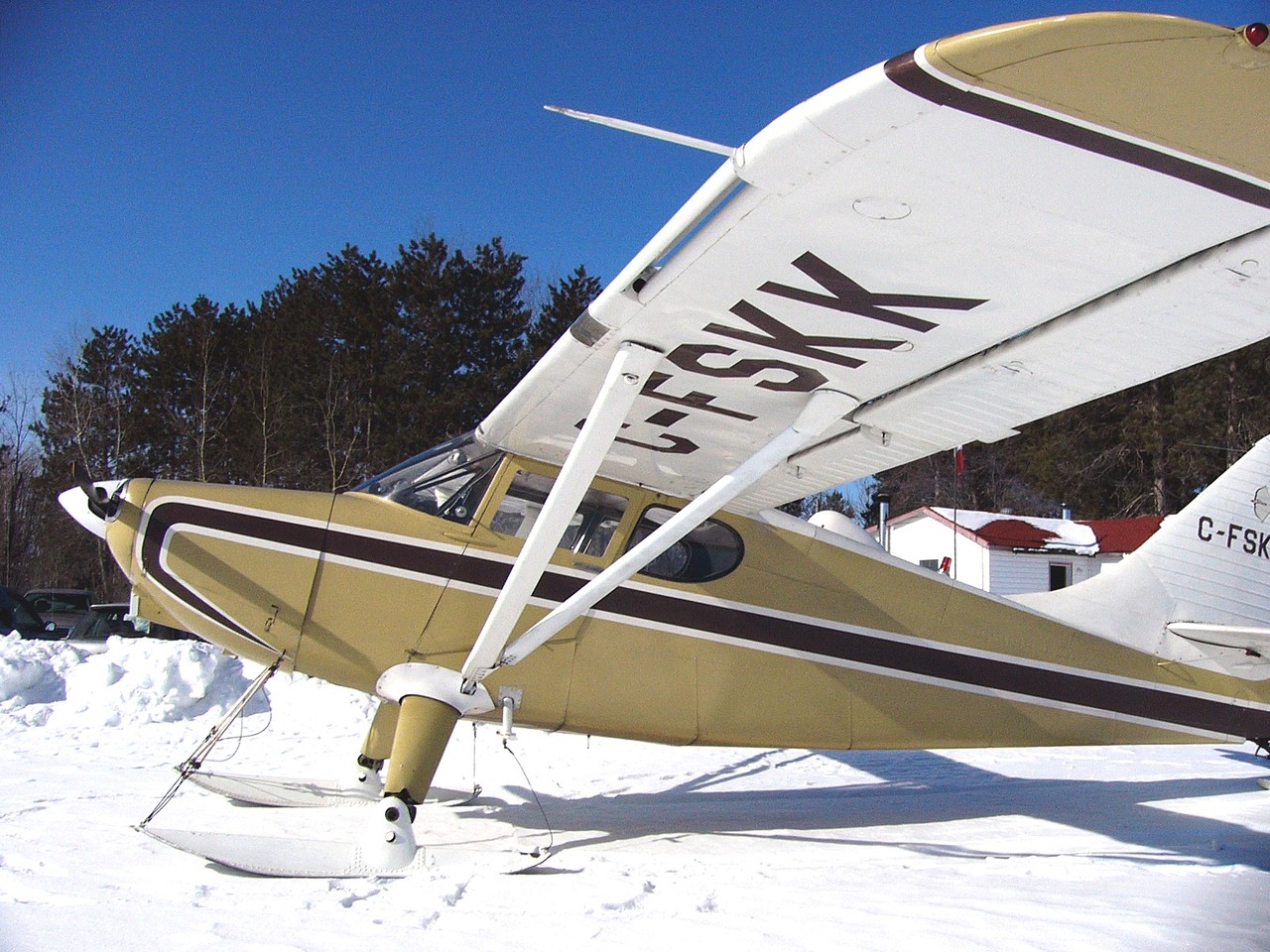
Market Dominance and Production Success
The Stinson 108 achieved remarkable commercial success during America's postwar aviation boom, accounting for nearly half of all four-seat private aircraft sold in the United States during 1947. Production reached its peak in 1946 with 746 units manufactured, demonstrating the intense demand for affordable personal aircraft as veterans returned home with government flight training and GI Bill benefits.
Between 1946 and 1950, manufacturers produced exactly 5,260 Stinson 108 aircraft across all variants, making it one of the most successful light aircraft designs of the immediate postwar era. The Stinson division of Consolidated Vultee built 4,935 units through mid-1948, before Piper Aircraft acquired the remaining inventory and completed an additional 325 aircraft through 1950.
Manufacturing Transitions and Corporate Changes
Stinson Aircraft Corporation's journey to the Model 108 began with founder Eddie Stinson's establishment of the company in 1920. Following Vultee's acquisition of Stinson in 1940 and the subsequent merger creating Consolidated Vultee Aircraft Corporation in 1943, the Stinson division briefly became Convair's only profitable unit in 1947.
However, overproduction and market saturation led to production halt on June 30, 1948, at Stinson's Wayne, Michigan factory. Piper Aircraft purchased the assets, including 200 unsold aircraft, on December 1, 1948, establishing a Stinson division in April 1949 to market remaining inventory as Piper-Stinson models until 1950. The type certificate eventually passed to Univair Aircraft Corporation, which built one final 108-5 variant in 1964.
Design Innovation and Technical Features
Stinson engineers developed the Model 108 as an enlarged, modernized derivative of the prewar Model 10A Voyager, incorporating several innovative safety features that distinguished it from competitors. The most significant advancement was the integration of partial leading-edge wing slots aligned with the ailerons, ensuring continued aileron control even at high angles of attack during stall conditions.
This design innovation created exceptionally forgiving flight characteristics, making the aircraft ideal for newly licensed private pilots transitioning from military training. The high-wing configuration provided inherent stability, while the fabric-covered steel-tube fuselage offered both strength and repairability in remote locations.
Engine Specifications and Performance
Franklin engines powered most Stinson 108 variants, with the air-cooled radial designs providing reliable operation for civilian operators. The 108-1 utilized a 150-horsepower Continental O-200, while the 108-2 featured the 165-horsepower Franklin 6A4-165-B3 or B5 engine. The final 108-5 variant incorporated a 180-horsepower Franklin 6A-335-B1, delivering improved performance and range.
Aftermarket supplemental type certificates later approved Lycoming O-360, Franklin O-350, and Continental O-470 engine installations, allowing operators to modernize their aircraft with more readily available powerplants as Franklin parts became scarce following the company's acquisition changes.
Station Wagon Cargo Variant
Piper Aircraft developed the Station Wagon variant specifically for freight operations, removing the rear passenger seats to accommodate up to 640 pounds of cargo. This configuration featured a lighter empty weight than standard passenger versions and provided crucial cargo capacity for small businesses and remote operations throughout the American frontier regions.
The Station Wagon's large cargo door and spacious cabin made it particularly valuable for Alaska bush operations, ranch work, and small-package delivery services that required reliable, economical transport to short, unpaved airstrips.
Production Variants and Specifications
Manufacturers produced six distinct variants during the production run. The 108-1 accounted for 1,508 aircraft built between 1947 and 1948, featuring an external baggage door. The 108-2 comprised 1,250 units manufactured from May 1948, incorporating rudder trim conversion capability.
Late production included the 108-3 with enlarged fuel tanks and increased vertical tail area, followed by the 108-4 featuring larger baggage compartments, improved soundproofing, and optional auxiliary fuel tanks for extended range operations.
Legacy and Current Status
Federal Aviation Administration records from 1992 documented approximately 2,088 Stinson 108 aircraft remaining on the United States registry, representing nearly 40 percent of original production still active after four decades. This exceptional survival rate demonstrates both the aircraft's robust construction and continued utility for general aviation operations.
Many operators have modernized their aircraft through supplemental type certificates allowing updated avionics, engines, and structural modifications. The type's forgiving handling characteristics and spacious cabin continue attracting pilots seeking affordable vintage aircraft with practical utility for both recreation and light commercial operations.