
Design Heritage and Development
The Spencer S-12 Air Car's story begins with the visionary work of Percival H. Spencer, a self-taught pilot who originally conceived an amphibian design in 1940. After his partnership with Sikorsky engineer Victor Larsen failed on the SL-12C project, Spencer developed his own amphibian that first flew in 1941. World War II interrupted civilian aircraft development, leading Spencer to sell his design rights to Republic Aviation in 1943. Republic transformed Spencer's concept into the RC-3 Seabee, which became the most-produced single-engine civil amphibian in history with 1,060 units manufactured between 1946 and 1948.
The Homebuilder Revolution
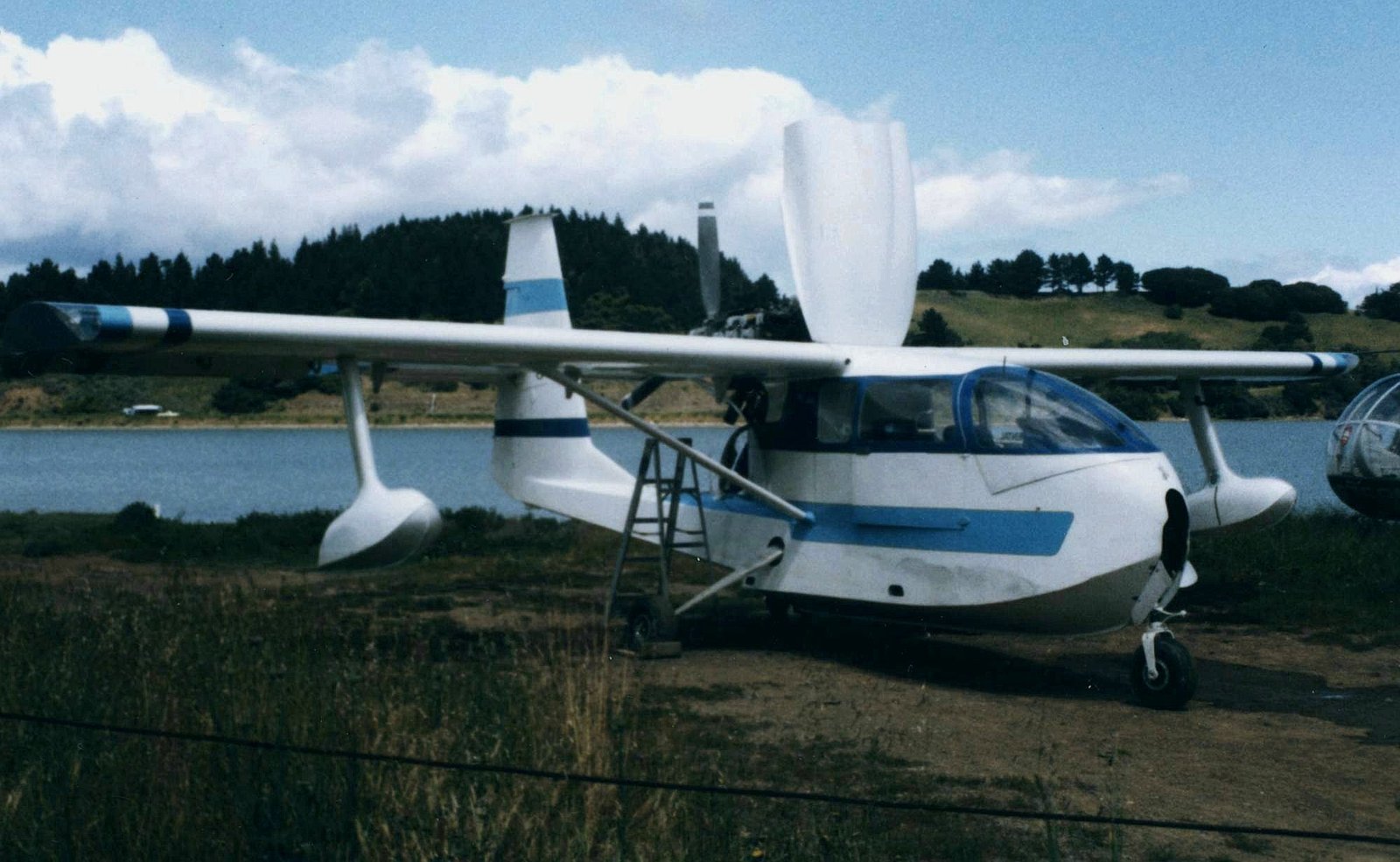
In 1968, at age 72, Spencer partnered with retired U.S. Air Force Colonel Dale L. Anderson to create an improved version specifically for amateur builders. Their collaboration produced the S-12-C prototype, which made its maiden flight at Chino, California in May 1970. This new design retained the proven layout of Spencer's original while incorporating significant improvements including welded steel tube construction, extensive molded fiberglass components, and accommodation for four occupants instead of two.
The first amateur-constructed S-12 took to the skies in September 1974, marking the beginning of a modest but dedicated following among homebuilders. The design progressed through several variants, with the S-12-D becoming the primary version offered to builders, followed by the definitive S-12-E model.
Technical Innovation and Configuration
The S-12 series featured a high-wing amphibian configuration with retractable tricycle landing gear, representing advanced engineering for homebuilt aircraft of the era. The welded steel tube cabane structure provided mounting points for the wing, engine, and retractable undercarriage while maintaining structural integrity during water operations. Most S-12-D aircraft were powered by either Lycoming O-320 or O-540 four-cylinder, horizontally-opposed engines producing 200 to 240 horsepower, delivering 50 percent more power than Spencer's original design.
The S-12-E variant initially used the Continental Tiara engine producing 285 horsepower. However, the Tiara series, despite its innovative high-speed design with 1:0.5 gearing to reduce propeller noise, proved commercially unsuccessful and offered little improvement over conventional engines. Later S-12-E examples switched to the more reliable Continental IO-520 powerplant.
Production and Distribution
Unlike conventional manufactured aircraft, the S-12 existed solely in the homebuilt market. Spencer and Anderson sold more than 300 sets of construction plans worldwide, though only approximately 50 aircraft are known to have reached completion. This completion rate, while seemingly low, was typical for complex homebuilt designs of the era, particularly amphibians requiring specialized construction techniques and water-handling expertise.
In 1991, Spencer and Anderson transferred their design rights to Robert Kearns, ensuring the continued availability of construction plans. The relatively modest number of completed aircraft reflected both the complexity of amphibian construction and the specialized nature of the market rather than any fundamental design flaws.
Notable Examples and Operators
Several completed S-12 aircraft demonstrate the international appeal of Spencer's design. ZK-NMF, an S-12-E built by Neil Falconer of Gore, New Zealand, required 15 years of construction from 1972 to 1987. The aircraft was significant enough to require special dispensation from New Zealand's Department of Civil Aviation due to its size exceeding typical homebuilt parameters. Falconer's dedication produced an airworthy amphibian, though he flew it only 17 hours before his death.
In Australia, VH-IRG3 was registered in May 2003 to Ian Goldie of Port Macquarie, powered by a Continental IO-520 engine, though it remained incomplete as of 2020. More recently, VH-ONE8 was completed in September 2020 for Fly and Boats Pty Ltd of Port Melbourne, demonstrating continued interest in the design fifty years after the prototype's first flight.
Legacy in Personal Aviation
The Spencer S-12 Air Car occupies a unique position in aviation history as both the progenitor of the successful Republic Seabee and a significant homebuilt design in its own right. Spencer's philosophy of creating practical, affordable amphibians influenced decades of light aircraft development. The design's emphasis on simplicity, proven aerodynamics, and accessible construction techniques made amphibian ownership possible for dedicated amateur builders willing to invest years in construction.
While never achieving the commercial success of its Republic-built cousin, the S-12 series provided an alternative path to amphibian ownership during the post-war experimental aircraft movement. The continued availability of construction plans more than five decades after the prototype's first flight testifies to the enduring appeal of Spencer's vision for personal amphibian aircraft.