
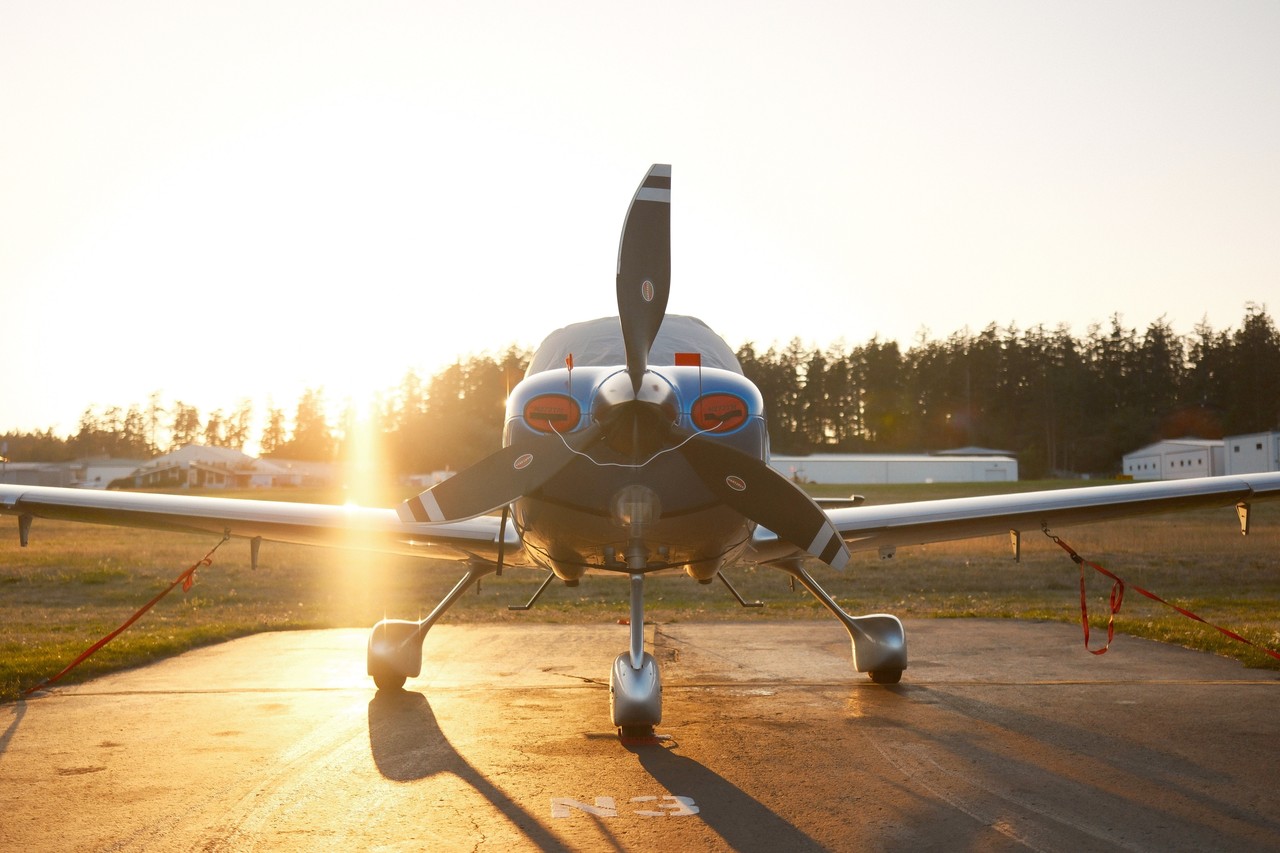
Market Dominance in General Aviation
The SR22T emerged as the pinnacle of the SR22 family's unprecedented success in the general aviation market. Since 2002, the SR22 series has maintained its position as the world's best-selling general aviation airplane every single year, a streak that continued well into the 2020s. The introduction of the turbocharged variant in 2010 expanded the aircraft's appeal to pilots seeking enhanced high-altitude performance and extended range capabilities, addressing limitations of naturally aspirated engines at higher elevations.
Revolutionary Safety Innovation
The SR22T's defining feature remains the Cirrus Airframe Parachute System (CAPS), a whole-aircraft ballistic recovery parachute that fundamentally changed safety expectations in general aviation. This system allows pilots to deploy a parachute that lowers the entire aircraft to the ground in emergency situations, providing an unprecedented safety option when traditional emergency procedures prove insufficient. The integration of CAPS became a selling point that distinguished Cirrus aircraft from all competitors and influenced industry-wide discussions about aircraft safety systems.
Manufacturing Heritage
Cirrus Aircraft Corporation, founded in 1984 in Baraboo, Wisconsin, developed the SR22T as part of their commitment to advancing general aviation technology. The company established a significant manufacturing presence with a 111,000 square-foot facility in Duluth, Minnesota, adjacent to their research and development headquarters. This expansion reflected the company's growth from a small startup to a major force in general aviation manufacturing. Dale Klapmeier, representing the company during the turbocharged variant's development, emphasized how the TSIO-550 engine transformed the aircraft's performance envelope.
Engine Excellence and Performance
The Continental TSIO-550 turbocharged engine that powers the SR22T represents a significant advancement over the naturally aspirated IO-550 series. Continental Motors developed this powerplant as an evolution of what industry experts described as "one of Continental's best-ever powerplants." The turbocharged configuration enables the SR22T to maintain power output at higher altitudes where naturally aspirated engines lose effectiveness, allowing cruise speeds exceeding 200 knots and enhanced high-altitude performance.
The engine's 310-plus horsepower output, combined with the aircraft's composite construction, delivers performance that appeals to both business travelers and aviation enthusiasts. The turbocharging system developed in-house by Cirrus proved successful enough to warrant continued production through multiple aircraft generations.
Technological Leadership
The SR22T pioneered the integration of advanced glass cockpit technology in certified general aviation aircraft through its Perspective by Garmin avionics suite, developed through a strategic partnership between Cirrus and Garmin. This system became an industry standard that other manufacturers subsequently adopted, demonstrating Cirrus's influence on general aviation technology trends.
Later generations incorporated additional technological advances including known-icing certification, synthetic vision systems, enhanced vision capabilities, traffic awareness systems, terrain mapping, satellite weather integration, and entertainment systems. These features transformed the SR22T from a simple transportation tool into a sophisticated flying platform comparable to much larger aircraft.
Pilot Experience and Handling
The SR22T features distinctive side-yoke flight controllers rather than traditional center-mounted control yokes, providing improved cockpit ergonomics and instrument panel visibility. Pilots appreciate the aircraft's composite construction, which includes carbon fiber wing spars in G3 and later generations, contributing to structural strength while maintaining relatively light weight.
With a fuel capacity of 92 gallons in later generations and extended range capabilities compared to naturally aspirated variants, the SR22T enables non-stop flights that were previously impractical in single-engine aircraft. The availability of air conditioning and lightweight composite propellers further enhanced pilot and passenger comfort during extended flights.
Production Evolution and Legacy
The SR22T continues in active production with continuous improvements across multiple generations. The latest G7 generation, unveiled in 2025, demonstrates Cirrus's commitment to ongoing development and refinement. The aircraft's combination of advanced avionics, safety systems, and performance established it as the dominant choice in the single-engine general aviation market.
The SR22T's success reflects broader changes in general aviation, where sophisticated avionics, enhanced safety systems, and turbocharged performance became expected rather than exceptional features. The aircraft's influence extends beyond its direct competitors, as the integration of glass cockpit technology and whole-airframe parachute systems influenced design philosophies across the general aviation industry.
Today, the SR22T represents more than two decades of continuous refinement in general aviation design, maintaining its market leadership through consistent innovation and responsiveness to pilot requirements. The aircraft's ongoing production and regular updates ensure its continued relevance in an evolving general aviation marketplace.