
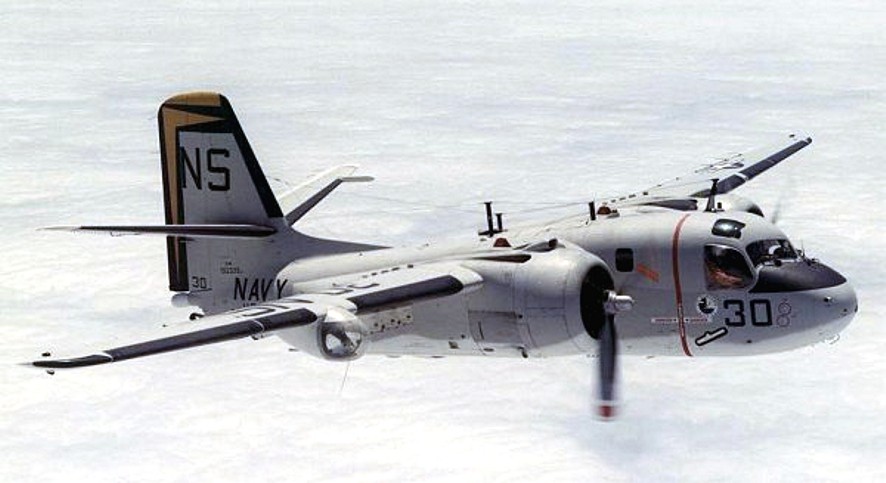
Cold War ASW Operations
The S-2 Tracker entered U.S. Navy service in February 1954 and quickly became the backbone of carrier-based anti-submarine operations during the Cold War. For over two decades, Tracker squadrons like VS-36 and VS-41 operating from NAS Norfolk conducted patrols across the world's oceans, hunting Soviet submarines with unprecedented capability. The aircraft served until August 1976, when advancing technology finally rendered its 1950s-era systems obsolete.
Beyond American service, the Tracker found operators worldwide. The Royal Australian Navy acquired 14 S-2E variants in 1967 for operations aboard HMAS Melbourne, while the Japan Maritime Self-Defense Force and Argentine Naval Aviation also adopted the type. De Havilland Canada manufactured 99 additional aircraft under license for the Royal Canadian Navy, demonstrating the design's international appeal.
Grumman Corporation Legacy
Founded in 1929 as Grumman Aircraft Engineering Corporation, the company established its reputation building rugged carrier aircraft during World War II, including the legendary F4F Wildcat and F6F Hellcat fighters. This expertise in naval aviation made Grumman the natural choice when the U.S. Navy sought a revolutionary ASW platform. The company operated from its Bethpage, New York facility until merging with Northrop Corporation in 1994, forming Northrop Grumman, which continues operations today.
Grumman's design philosophy emphasized reliability and carrier compatibility, traits clearly evident in the Tracker's robust construction and innovative folding wing system that maximized hangar deck efficiency.
Revolutionary Design Approach
When the U.S. Navy awarded Grumman the contract on June 30, 1950, existing ASW operations required separate hunter and killer aircraft working in coordination. Grumman's G-89 design team created an entirely new concept: a single aircraft capable of detecting, tracking, and attacking submarines independently. The high-wing configuration provided excellent visibility and stability for low-altitude maritime patrols, while the spacious fuselage accommodated radar operators and magnetic anomaly detection equipment.
The engine nacelles served dual purposes, housing the main landing gear when retracted and providing storage for up to 32 sonobuoys in later variants like the S-2D. This innovative packaging allowed the Tracker to deploy acoustic sensors across vast ocean areas while maintaining attack readiness.
Wright Radial Power
Two Wright R-1820-82WA nine-cylinder radial engines, each producing 1,525 horsepower, powered the Tracker. Wright Aeronautical's R-1820 series represented proven technology, with over 120,000 engines manufactured from 1933 through the late 1950s. These same engines had powered World War II aircraft like the P-47 Thunderbolt, offering reliability crucial for extended maritime patrols far from friendly airfields.
The twin-engine configuration provided essential redundancy for single-engine carrier approaches, while supercharging optimized performance at the low altitudes where ASW missions occurred.
Operational Capabilities
The four-person crew consisted of pilot, copilot, and two sensor operators who managed the sophisticated detection equipment. Internal bomb bays could accommodate various ordnance including torpedoes, depth charges, and even nuclear weapons for attacking high-value submarine targets. The aircraft's 1,173 nautical mile range and 22,000-foot service ceiling provided flexibility for both carrier operations and shore-based patrol missions.
Cruising at 150 mph, Tracker crews could maintain station for extended periods, using Julie/Jezebel acoustic systems and magnetic anomaly detectors to locate submerged threats. When targets were identified, the same aircraft could immediately transition to attack mode without coordinating with separate platforms.
Production Variants and Evolution
Grumman developed multiple variants throughout the production run. The initial S2F-1 (later redesignated S-2A) entered service first, with 740 aircraft built. The S2F-3 (S-2D) incorporated improved sensors and increased sonobuoy capacity, while 252 S-2E aircraft represented the final production variant. Additionally, 207 aircraft were converted to TS-2A trainers for crew instruction.
The Tracker platform spawned two important derivatives: the C-1 Trader carrier onboard delivery aircraft and the E-1 Tracer airborne early warning platform, both sharing the basic airframe but serving entirely different missions.
Modern Legacy and Preservation
Argentine Naval Aviation maintains the distinction of operating the world's last military Trackers, though most examples have transitioned to civilian roles. California's firefighting services converted numerous S-2As for aerial tanker duties, with aircraft like Tanker 84 serving with the state Department of Forestry before retirement to the Pacific Coast Air Museum.
Museum preservation ensures the Tracker's legacy endures. The MAPS Air Museum in Ohio displays an S-2E accepted by the Navy on March 20, 1956, while the National Naval Aviation Museum in Florida maintains an S2F Tracker representing the type's early service years. These preserved examples remind visitors of an era when carrier-based crews prowled the seas, hunting submarines with innovative technology that revolutionized naval warfare.