
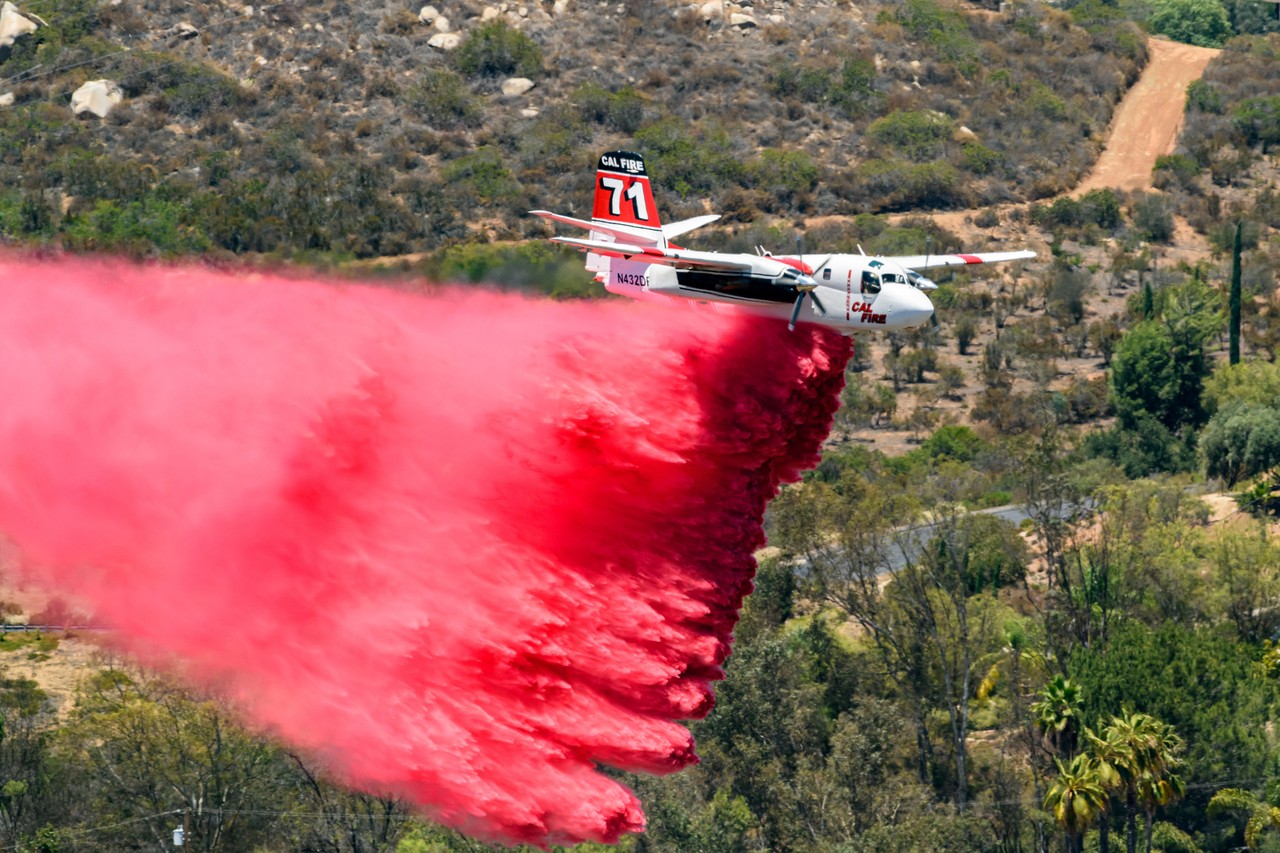
The Modernization Program
The S-2 Turbo Tracker conversion program emerged in the 1980s as operators sought to extend the operational life of their aging piston-powered S-2 aircraft. Beginning in 1987, existing S-2E and S-2G variants underwent comprehensive powerplant conversions, replacing their original 1,525-horsepower Wright R-1820-82WA radial engines with modern Garrett/Honeywell TPE-331-15AW turboprops. Each new engine delivered 1,645 shaft horsepower through four-blade propellers, representing a significant increase in available power while dramatically improving fuel efficiency and reducing maintenance requirements.
The conversion process cost approximately $3 million per aircraft but delivered substantial performance improvements. Beyond the 500-kilogram payload increase, operators gained enhanced reliability, reduced operating costs, and an expected service life extension of at least twenty years. The turboprop engines provided superior performance at the low altitudes and moderate speeds typical of anti-submarine patrol and firefighting operations.
CAL FIRE's Pioneering Adoption
California's Department of Forestry and Fire Protection became the most significant civilian operator of the S-2T conversion. CAL FIRE had begun evaluating surplus military S-2 aircraft for firefighting duties in 1970, recognizing the type's robust construction and generous internal volume as ideal for aerial tanker operations. Throughout the following decade, the agency assembled a substantial fleet of S-2A variants configured as airtankers.
The agency's commitment to the type deepened with the turboprop conversion program launched in 1987. CAL FIRE systematically converted their entire S-2 fleet to S-2T configuration over nearly two decades, completing the final conversion in 2005. This extensive modernization program created one of the world's most capable aerial firefighting fleets, with the turboprop engines providing superior performance during the demanding climb-out phases following retardant drops.
International Applications
Turkish Aerospace Industries ordered an S-2T conversion kit in 1999, successfully modernizing one S-2E aircraft for domestic operations. The converted aircraft proved its worth immediately, participating in firefighting operations during the 1999 Antalya wildfires and responding to the catastrophic Tüpraş Izmit Oil Refinery fire following the devastating İzmit earthquake that same year. Turkish authorities initially planned to convert up to fifteen aircraft, but the program faced cancellation in 2002 for reasons that remained unclear to outside observers.
Original Design Heritage
The foundation for the S-2T conversion lay in Grumman's revolutionary S-2 Tracker design, which first flew on December 4, 1952. Grumman Aircraft Engineering Corporation developed the original Tracker as the United States Navy's first purpose-built anti-submarine warfare aircraft capable of detection, tracking, and attack missions within a single airframe. Previous ASW operations required separate hunter and killer aircraft, making the Tracker's integrated capability a significant tactical advancement.
The conventional design featured twin engines mounted on a high wing that folded for carrier operations, tricycle landing gear for improved ground handling, and extensive internal space for sonobuoys, torpedoes, and detection equipment. Grumman's Bethpage, New York facility produced 1,185 S-2 Trackers, while de Havilland Canada manufactured an additional 99 aircraft under license as the CS2F variant.
Technical Characteristics
The S-2T conversion retained the original airframe's fundamental characteristics while dramatically improving powerplant performance. The Garrett TPE-331 turboprops provided superior altitude performance and fuel efficiency compared to the original Wright radials, particularly beneficial for the extended patrol missions typical of both ASW and firefighting operations. The four-blade propellers optimized thrust production across the aircraft's operational envelope.
Pilots appreciated the turboprop engines' reliability and simplified operation compared to the complex radial powerplants. The conversion eliminated many of the maintenance challenges associated with piston engines while providing more consistent power delivery across varying atmospheric conditions. For firefighting operations, the improved power-to-weight ratio proved especially valuable during heavily loaded takeoffs and the demanding climb performance required after low-level retardant drops.
Operational Legacy
The S-2T conversion program successfully extended the operational careers of numerous Tracker airframes well into the 21st century. While Argentina operated the final military Trackers until November 19, 2025, civilian S-2T variants continued serving with firefighting organizations worldwide. The turboprop conversion proved that thoughtful modernization could transform Cold War-era military aircraft into effective civilian platforms.
CAL FIRE's extensive S-2T fleet demonstrated the conversion's success, providing decades of reliable firefighting service across California's diverse terrain and challenging fire conditions. The program established a template for similar military-to-civilian aircraft conversions, proving that strategic powerplant upgrades could economically extend aircraft service lives while meeting evolving operational requirements.