
Operational Dominance
The S-3 Viking revolutionized carrier-based anti-submarine warfare through its advanced sensor integration and processing capabilities. During its service life from 1974 to 2016, the aircraft equipped 18 Navy squadrons and provided the primary ASW defense for American carrier battle groups. The Viking's sophisticated avionics allowed its four-person crew to effectively counter submarine threats while covering three times the search area of the S-2 Tracker it replaced, carrying twice the warload with only an 8 percent increase in deck footprint.
Combat History and Variants
While designed for anti-submarine warfare, the S-3 proved its versatility in combat operations during Operation Iraqi Freedom. On March 25, 2003, a VS-38 S-3B achieved a historic milestone by conducting the first combat launch of a laser-guided Maverick missile. The aircraft's adaptability led to multiple variant configurations beyond the original 180 S-3A production aircraft. The Navy converted 160 S-3As to the improved S-3B standard between 1987 and 1994, featuring upgraded combat avionics and expanded weapons capability. Specialized variants included 16 ES-3A electronic intelligence aircraft, four US-3A cargo transports, and one KS-3A tanker conversion.
Lockheed Corporation Legacy
Lockheed Aircraft Corporation, founded in 1912, served as the primary contractor for the Viking program, manufacturing all 187 aircraft at their Burbank facility between 1971 and 1978. The company demonstrated exceptional program management efficiency, completing development from contract award to operational service in less than nine years while meeting all milestones ahead of schedule. Key manufacturing partners included LTV, which built the wings, engine pods, tail assembly, and landing gear, while Univac provided the digital computer systems. Following Lockheed's 1995 merger with Martin Marietta to form Lockheed Martin, the combined company became one of the world's largest defense contractors.
Powerplant and Technical Innovation
Two General Electric TF-34-GE turbofan engines, each producing 9,275 pounds of static thrust, powered the Viking's advanced capabilities. The high-bypass turbofan design provided the fuel efficiency necessary for extended patrol missions while maintaining the power required for carrier operations. The aircraft's semi-monocoque construction featured three folding flight surfaces—wings and vertical stabilizer—enabling compact carrier storage. The Viking's computer-based data processing and display systems represented cutting-edge technology for the early 1970s, allowing effective crew coordination between the pilot, COTAC Naval Flight Officer, Acoustic Sensor Operator, and Non-Acoustic Sensor Operator.
Operational Characteristics
Pilots appreciated the S-3's stability during low-speed anti-submarine patrol work and its reliability during carrier operations. The aircraft's nickname "War Hoover" reflected its distinctive engine sound and quiet operation compared to other carrier aircraft. With a range exceeding 2,300 nautical miles, the Viking could conduct extended missions far from the carrier, utilizing sonobuoys, magnetic anomaly detection equipment, and various weapons including AGM-84 Harpoon missiles, AGM-65 Maverick missiles, torpedoes, bombs, and rockets.
Service Introduction and Deployment
The S-3A entered Navy service with training squadron VS-41 at NAS North Island, San Diego, on February 20, 1974, following carrier qualifications that began in November 1973. Operational deployment commenced with squadron VS-21 in 1977. East Coast squadrons operated from NAS Cecil Field near Jacksonville, Florida, later relocating to NAS Jacksonville, while West Coast squadrons remained at NAS North Island in San Diego.
Production Numbers and Current Status
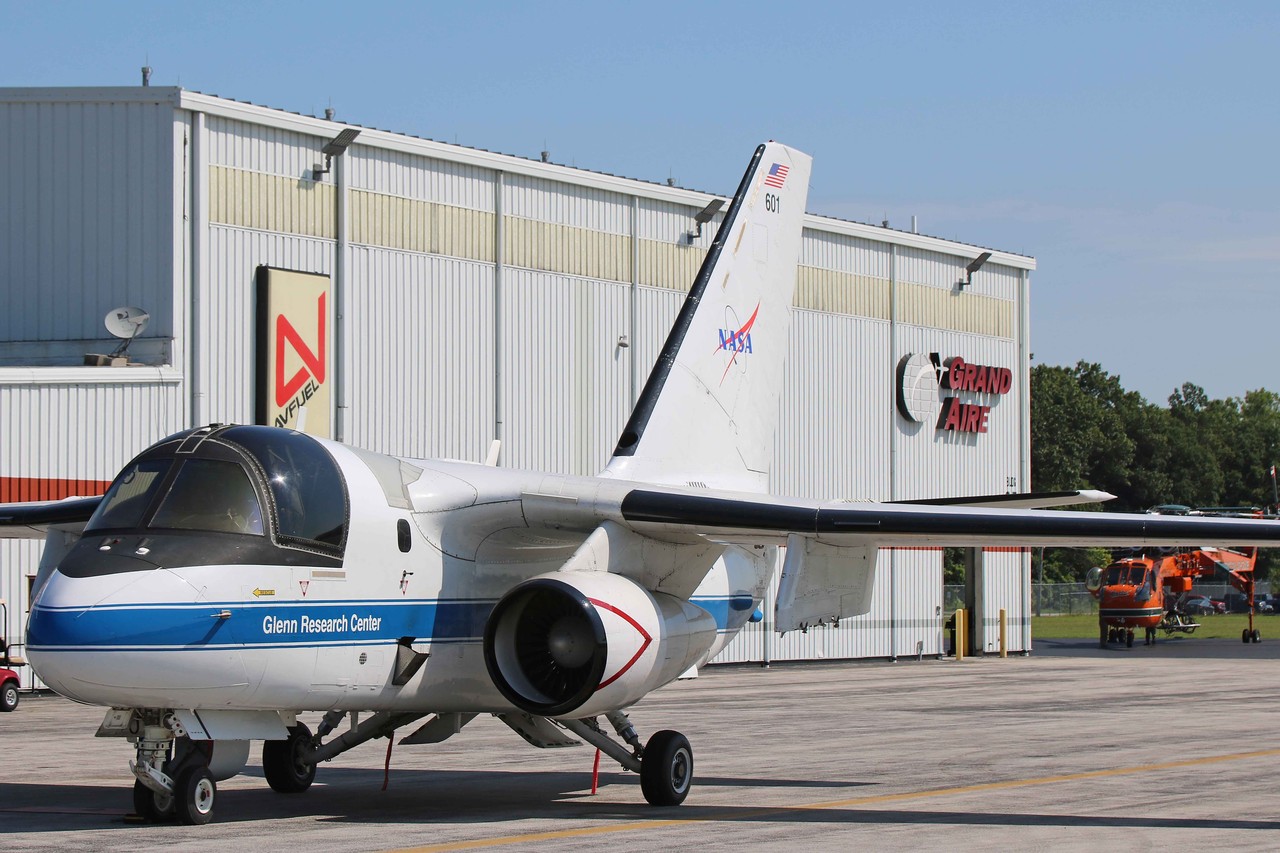
Lockheed delivered 187 S-3 Vikings comprising eight test and prototype aircraft plus 179 operational machines. The Navy began phasing out the S-3B in 2003, completing retirement by 2009, with the final aircraft leaving service in early 2016. One surviving S-3B—the last Viking built in 1978—was transferred to NASA's Glenn Research Center in Ohio in 2004 for continued test duties focusing on icing and air safety research. The National Naval Aviation Museum operates another example, Bureau Number 159387, which served 29 years with Pacific Fleet squadrons and flew combat missions over Iraq, preserving the Viking's legacy for future generations.