
Development and Design Philosophy
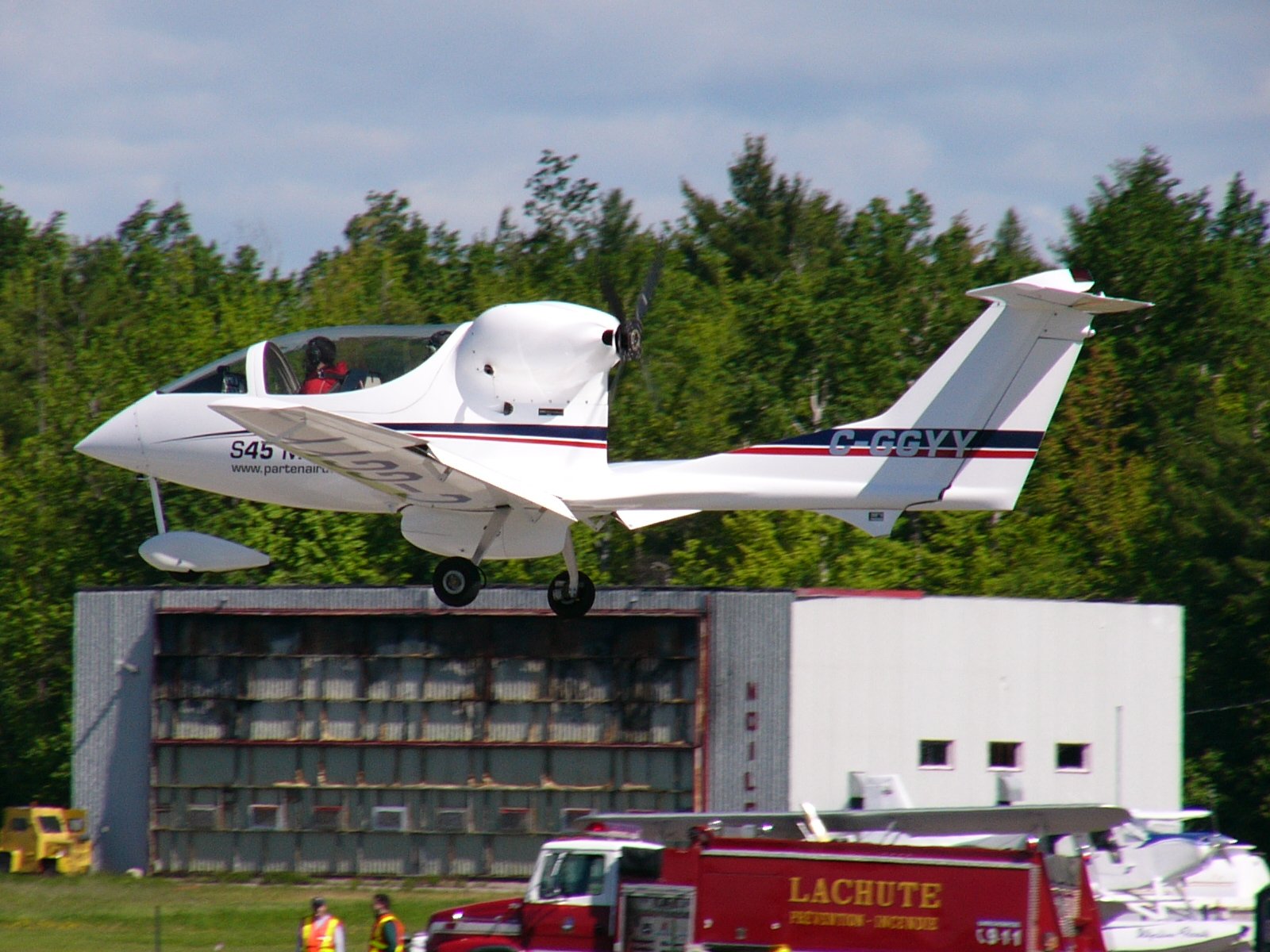
Saleem Saleh conceived the Mystere as a solution to the general aviation market's need for a fast, efficient two-seat aircraft that amateur builders could construct from a kit. The design incorporated several innovative features for its era, including an all-composite airframe utilizing a pod-and-boom configuration that positioned the engine behind the cockpit in a pusher arrangement. This layout provided several advantages: improved forward visibility for pilots, better weight distribution, and enhanced propeller ground clearance during taxi operations.
The aircraft employed NACA 65-218 airfoil sections at the wing root transitioning to NACA 65-215 at the tips, optimized for high-speed cruise performance. The T-tail configuration, mounted high on the vertical stabilizer, kept the horizontal surfaces clear of propeller wash and wing wake turbulence.
The Manufacturer
Partenair Design, Inc. operated from Saint-Jean-sur-Richelieu, Quebec, during the late 1990s and early 2000s. The company focused exclusively on the Mystere project, positioning itself in the growing experimental aircraft market that had emerged following regulatory changes allowing amateur-built aircraft. In 2003, Partenair offered complete kits for $27,900, excluding the engine and avionics package.
The company's business model relied on kit sales rather than factory-built aircraft, targeting experienced homebuilders willing to invest significant time in construction. However, limited market penetration and the complexity of the composite construction techniques required for the Mystere ultimately constrained sales success.
Evolution Through Tragedy
The development program began with the S44 prototype, powered by an 80-horsepower Rotax 912 engine. This initial variant achieved a cruise speed of 140 mph with an empty weight of just 700 pounds. However, on October 24, 1998, the S44 prototype crashed at Montréal/Les Cèdres Airport following an engine failure, killing both occupants aboard.
This tragedy prompted a complete redesign that resulted in the S45 variant. Saleh specified the more powerful and reliable Lycoming IO-320 engine, producing 160 horsepower, despite the significant weight penalty. The new powerplant increased empty weight to 1,151 pounds but provided substantially improved performance and reliability margins.
Technical Specifications and Performance
The production S45 configuration featured fixed tricycle landing gear and dual flight controls in both cockpit positions. The fuel system incorporated 55 US gallons of capacity, providing extended range capabilities. Maximum gross weight reached 1,898 pounds, with the aircraft capable of cruising at 160 to 180 mph depending on engine configuration and atmospheric conditions.
Partenair subsequently developed the Mark II variant, which incorporated a raised engine installation and reshaped cowling designed to reduce cabin noise levels—a common complaint with pusher-configured aircraft. This version maintained the 180 mph cruise speed while achieving a maximum gross weight of 1,925 pounds.
Plans for a Mark III RG variant included retractable landing gear and provisions for engines up to 250 horsepower, promising even higher performance figures. However, this advanced version never progressed beyond the conceptual stage.
Limited Production and Public Exposure
Despite its innovative design, only three Mystere aircraft were ever completed. Beyond the two prototypes, a single customer successfully built an S45 from a kit, conducting its maiden flight on November 10, 2015—more than a decade after kit production had ceased.
The type gained modest exposure within the experimental aircraft community, with prototypes displayed at significant aviation events including AirVenture 2002 in Oshkosh, Wisconsin. Aviation publications, particularly Kitplanes magazine, featured the design in technical articles highlighting its composite construction techniques and performance potential.
Engine Integration
The Lycoming IO-320 represented a significant upgrade from the original Rotax installation. This four-cylinder, air-cooled engine had established an excellent reliability record across thousands of installations in certified and experimental aircraft since its introduction in 1962. Partenair paired the engine with a three-bladed PAC metal propeller, optimized for the pusher configuration's unique airflow characteristics.
The engine's 160-horsepower output provided adequate performance for the Mystere's mission profile, though some pilots noted that the aircraft's clean aerodynamic design could have benefited from additional power for improved climb rates and high-altitude performance.
Legacy and Current Status
The Mystere project concluded when Partenair Design ceased operations, with kits no longer available to prospective builders. The final known prototype activity occurred in 2004 when the S45 registered as C-GGYY was photographed during landing operations at Lachute Airport in Quebec.
No examples are confirmed as currently airworthy, though the 2015-built customer aircraft may remain in flying condition. The type's legacy rests primarily in its demonstration of advanced composite construction techniques and the challenges facing small manufacturers attempting to establish themselves in the competitive kit aircraft market.
While the Mystere never achieved commercial success, it represented the ambitions of independent designers seeking to advance general aviation technology through innovative engineering solutions. The project's emphasis on high-speed cruise performance and composite construction presaged trends that would become increasingly common in the experimental aircraft community during the following decades.