
Commercial Aviation Pioneer
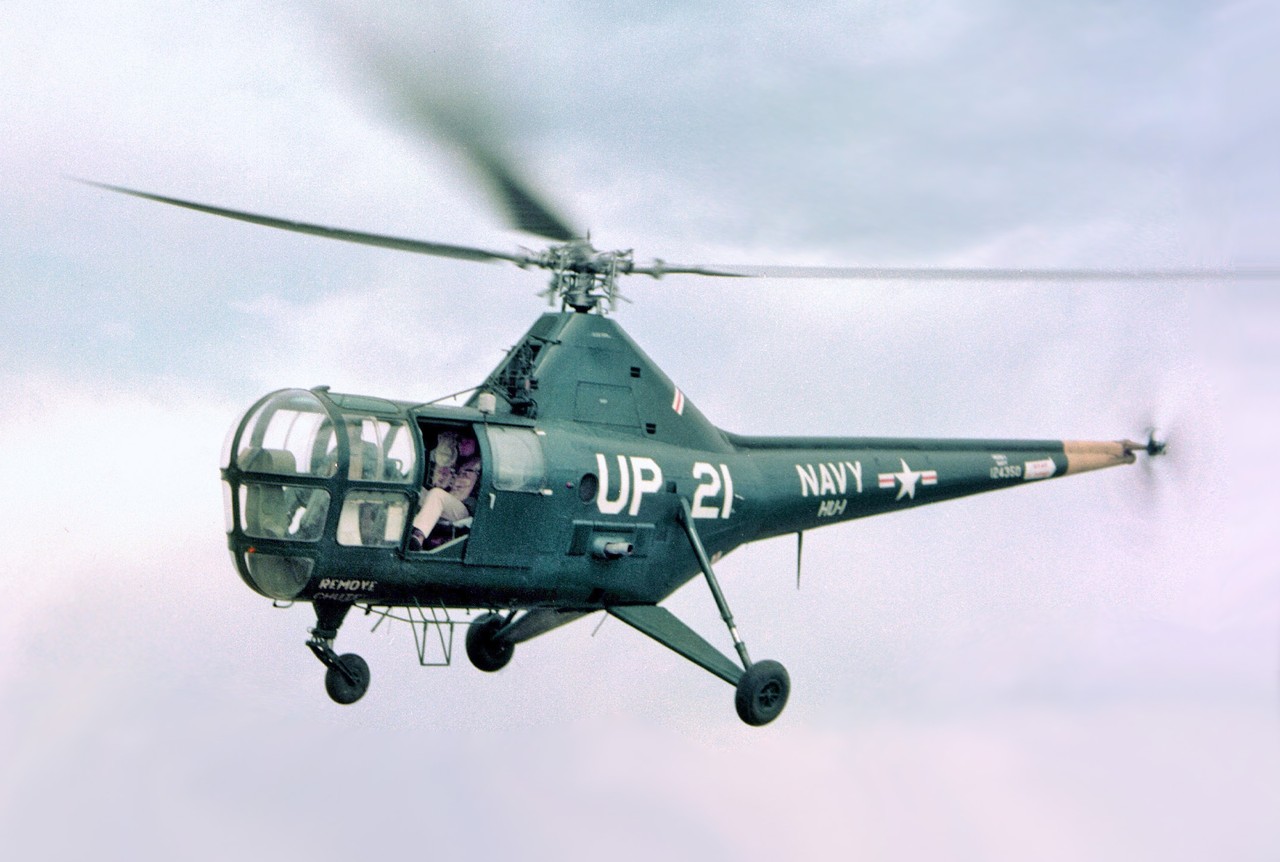
The S-51 revolutionized commercial aviation by proving helicopters could operate profitably in passenger and cargo service. On July 29, 1946, Helicopter Air Transport received the first commercial delivery in Camden, New Jersey, paying $48,500 per aircraft. Los Angeles Helicopter Airway launched operations on October 1, 1947, connecting the San Fernando Valley with downtown post offices and airports. British European Airways established daily Liverpool-Cardiff service in June 1950 using Westland-built Dragonfly variants, demonstrating international commercial viability.
The aircraft earned Civil Aeronautics Administration Type Certificate H-2 on March 26, 1946, becoming the first helicopter certified for commercial operations. By 1950, approximately 50 S-51s served in civilian roles, carrying passengers, freight, and establishing the world's first helicopter airmail routes that continued until 1955.
Military Heritage and Korean War Service
Developed from the military H-5/R-5 series, the S-51 retained strong military connections throughout its service life. During the Korean War (1950-1953), military variants performed the first naval helicopter rescue operations and established airmail service to front-line units. The U.S. Army Air Forces initially ordered 26 YR-5A aircraft in March 1944, with first deliveries in February 1945, followed by orders for 100 R-5 variants equipped with external litter racks for medical evacuation.
Westland Helicopters produced 133 Dragonfly variants for the Royal Navy and Royal Air Force, powered by the more powerful 520-horsepower Alvis Leonides radial engine. These aircraft achieved superior performance with top speeds of 103 mph and service ceilings of 14,000 feet, compared to the American version's capabilities.
Design Innovation Under Igor Sikorsky
Igor Sikorsky personally led the design team, developing the S-51 to overcome the earlier R-4's limitations in payload, speed, and operational ceiling. The prototype NX92800 first flew with test pilot Dimitry "Jimmy" Viner, Igor Sikorsky's nephew, at the controls on February 16, 1946. Key innovations included a larger 48-foot fully articulated main rotor system, extended fuselage for improved passenger accommodation, and robust tricycle landing gear suitable for commercial operations.
The aircraft featured tandem seating with a pilot and three-passenger bench configuration, representing a 300% increase in passenger capacity over the earlier R-4. The three-bladed tail rotor and increased gross weight capabilities made it the first helicopter truly suitable for commercial passenger service.
Sikorsky Aircraft Corporation
Sikorsky Aircraft built all 220 American S-51s at its Bridgeport, Connecticut facility between 1946 and 1951. Founded by Igor Sikorsky in 1923, the company had been acquired by United Aircraft Corporation in 1929, providing the financial resources necessary for helicopter development. During the 1940s, Sikorsky produced a series of pioneering rotorcraft including the S-47 (R-4), S-48 (R-5), and S-51, establishing American leadership in helicopter technology.
United Aircraft became United Technologies in 1975, and following the 2015 corporate merger, the helicopter division now operates as Lockheed Martin Sikorsky, continuing rotorcraft production and development.
Powerplant and Performance
The reliable Pratt & Whitney R-985-AN-5 nine-cylinder air-cooled radial engine produced 450 horsepower, providing the S-51 with a top speed of approximately 100 mph. This engine, manufactured by Pratt & Whitney (part of United Aircraft), had entered production in the 1930s and powered thousands of aircraft through the 1950s, earning recognition for exceptional reliability in demanding operational environments.
Westland's Dragonfly variants used the 520-horsepower Alvis Leonides 521/1 radial engine, delivering superior performance with higher speed and altitude capabilities. The additional power enabled better performance in European operating conditions and military requirements.
International Production and Variants
Westland Helicopters Ltd. in Yeovil, England, manufactured 159 WS-51 Dragonfly helicopters under license beginning in 1946. Combined with Sikorsky's production, more than 379 helicopters of the R-5/S-51 family were manufactured between 1944 and 1951, including all military variants. This international production partnership demonstrated early aerospace industry cooperation and technology transfer.
Military designations included YR-5A, R-5, H-5, and HO3S-1 for various service branches. Post-war military surplus aircraft were frequently converted for civilian operations, extending the type's commercial service life.
Legacy and Current Status
No S-51 helicopters remain in flying condition today, though several are preserved in museums including The Hangar Flight Museum in Calgary, Canada. The S-51 achieved numerous aviation firsts: first helicopter operations in Antarctica, first naval helicopter rescue, and establishment of the world's first helicopter airmail services. These pioneering operations, supported by 70,000 flight hours of wartime experience, informed all subsequent civilian helicopter development.
The S-51's commercial success directly led to larger helicopters like the S-55, which replaced S-51s in airline service by 1955. Captain "Bunny" Pearce of the South African Air Force flew S-51s on the first helicopter flights across Africa in October 1948, though he died in July 1951 during operations against Tsetse fly pandemics, illustrating the aircraft's global reach and humanitarian applications.