
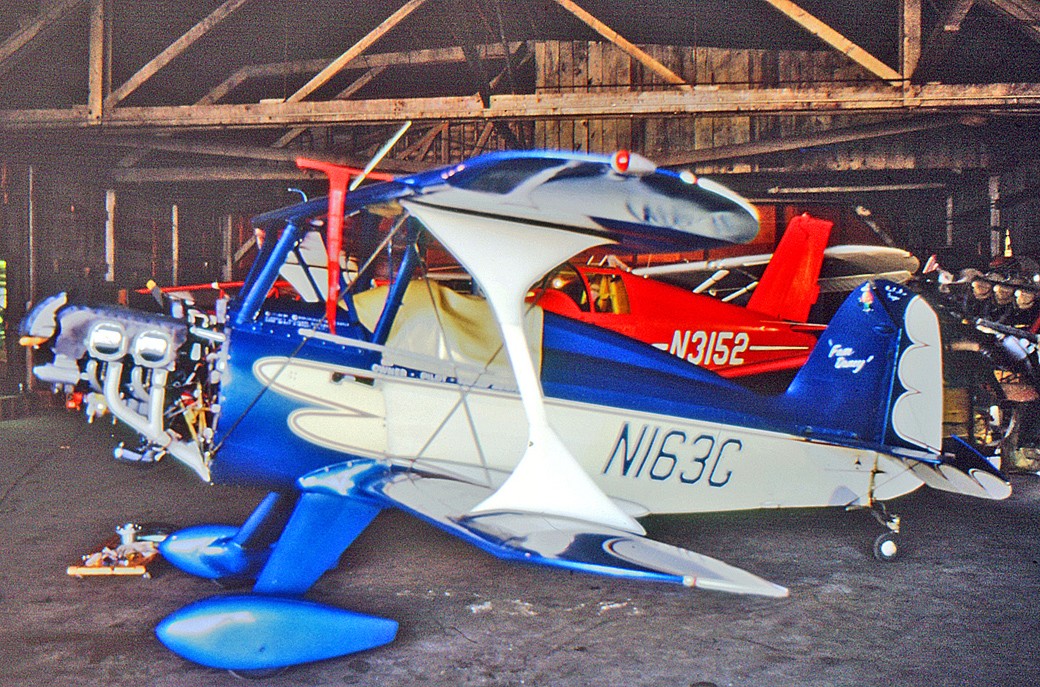
Design Philosophy and Development
Louis A. Stolp and George M. Adams conceived the SA-100 Starduster with a specific mission: creating a sport biplane that amateur builders could construct from plans while achieving the forgiving flight characteristics of the legendary Piper Cub. The November 1957 first flight validated their approach, launching a design that would remain available to builders for more than five decades.
The designers prioritized accessibility over complexity, selecting proven construction methods and materials. The single-bay biplane configuration featured fabric-covered, wooden-framed staggered wings braced by wide-chord interplane struts and supporting wires. This traditional approach kept construction within the capabilities of home builders while delivering the classic biplane aesthetic that appealed to sport aviation enthusiasts.
The Starduster Corporation
Stolp established the Starduster Corporation in Corona, California, later relocating operations to Flabob Airport in Rubidox, now Jurupa Valley. Rather than manufacturing complete aircraft, the company supported builders by providing welded fuselage assemblies, fiberglass components, windshields, and specialized hardware that exceeded typical homebuilder capabilities.
At its operational peak, Starduster Corporation competed directly with Aircraft Spruce & Specialty Co. in the aviation supply business, demonstrating the design's commercial success. Aircraft Spruce eventually became the primary distributor of Starduster plans, ensuring continuity for the builder community. This unique distribution model proved more sustainable than traditional manufacturing, allowing the design to survive economic downturns that eliminated many aircraft companies.
Technical Excellence and Performance
The SA-100's standard powerplant, a Lycoming O-290-D-1 producing 125 horsepower, drove a two-bladed Sensenich M74DM61 fixed-pitch propeller. However, builders adapted the airframe to engines ranging from 85 to 170 horsepower, often incorporating constant-speed propellers for enhanced performance.
With an empty weight of 700 pounds and maximum takeoff weight of 1,247 pounds, the Starduster achieved impressive performance metrics. The aircraft cruised at 130 miles per hour, stalled at a gentle 55 miles per hour, and climbed at 2,000 feet per minute. Its 400-mile range, fed by 24 gallons of fuel, provided adequate cross-country capability for a sport aircraft.
The NACA 4412 airfoil contributed to the aircraft's docile handling characteristics, while the 110 square feet of wing area and 6.33 aspect ratio optimized the balance between performance and stability. These specifications produced an aircraft that rewarded both novice and experienced pilots with predictable, confidence-inspiring flight behavior.
Builder Community and Notable Examples
FAA records documented 64 registered SA-100 aircraft and one SA-101 variant, though dedicated registers identified 27 completed SA-100s and three SA-101 Super Stardusters actually built or under construction. This discrepancy reflects the challenges of tracking amateur-built aircraft, where registration often precedes completion by years.
Dan Bookwalter's 1963 Starduster exemplified the type's competitive potential, completing construction on December 29, 1963. This aircraft competed in the 1968 sport biplane consolation race at Cleveland's Lakefront Airport and participated in International Aerobatic Club competitions for five years. The same aircraft attended the final two EAA fly-ins at Rockford and the inaugural gatherings at Oshkosh, later earning the Paul Poberezny Founders Award for Best Classic Homebuilt.
International appeal emerged through examples like Frank Thrush's 1963 New Zealand-built Starduster, construction number 14, which received registration ZK-SDI on January 22, 2008. Such global distribution demonstrated the design's universal appeal among sport aviation enthusiasts.
The Super Starduster Evolution
The SA-101 Super Starduster addressed builders seeking enhanced performance through increased size and power. This variant incorporated longer wings with symmetric M6 airfoils eliminating dihedral, accommodating a 180-horsepower Lycoming IO-360-A1A engine. The modifications produced maximum speeds exceeding 170 miles per hour, representing a significant performance increase over the standard SA-100.
These engineering refinements attracted builders prioritizing speed over the original design's emphasis on gentle handling characteristics, expanding the Starduster family's appeal across different pilot preferences and mission requirements.
Enduring Legacy
The Starduster's survival through multiple decades of changing aviation regulations, economic cycles, and shifting homebuilder preferences validates Stolp and Adams' original design philosophy. The aircraft's combination of classic biplane aesthetics, manageable construction complexity, and reliable flight characteristics created a timeless appeal that transcends generational changes in sport aviation.
Builder testimonials consistently emphasize the aircraft's "charisma" alongside its technical merits, suggesting the design succeeded in capturing intangible qualities that statistics cannot measure. This emotional connection, combined with practical advantages like excellent visibility and forgiving stall characteristics, ensures the Starduster's continued relevance in contemporary amateur aviation.
The design's longevity—with plans remaining available more than 65 years after first flight—represents a remarkable achievement in an industry where most aircraft designs fade within decades. This persistence reflects both the fundamental soundness of the original concept and the dedication of the builder community that has sustained the Starduster tradition across multiple generations.