
The Amateur Aviation Pioneer
Ray Stits revolutionized homebuilt aviation when he completed his SA-3A Playboy prototype in 1952, proving that amateur constructors could build high-performance aerobatic aircraft in their own workshops. Working from Flabob Airport in California, Stits accomplished what seemed impossible at the time - designing and constructing a complete aircraft in just three months of part-time work. The Playboy became his third design and most successful creation, establishing principles that would influence homebuilt aviation for decades.
Design Innovation and Construction
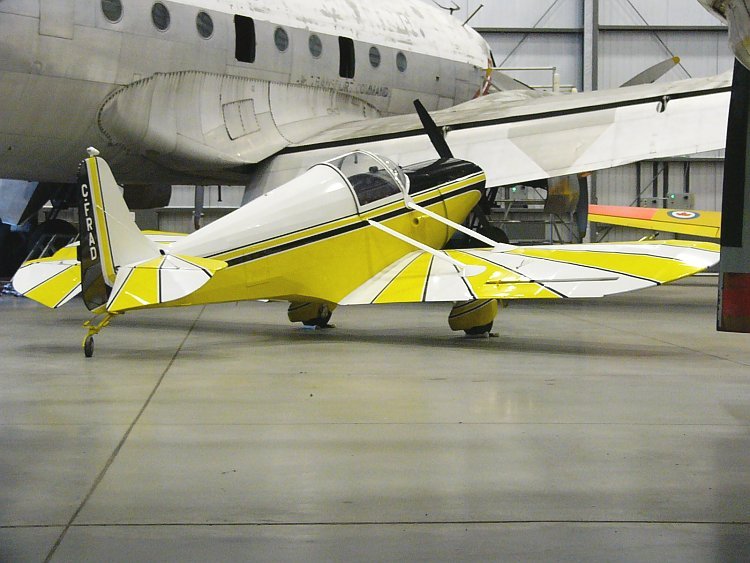
The SA-3A Playboy broke new ground with its strut-braced low-wing configuration, unusual for homebuilt aircraft of the early 1950s. Stits chose this layout to achieve maximum performance from a lightweight package, enabling the small aircraft to compete with factory-built designs. The mixed construction approach combined a welded steel tube fuselage with wooden wings, all covered in fabric and topped with a sliding canopy for pilot access.
Powered by engines in the 65 to 90 horsepower range, including the Continental O-200 four-cylinder horizontally-opposed engine, the Playboy delivered impressive performance for its class. The Continental O-200, which powered many examples, was a proven powerplant that entered production in 1940 and remained in manufacture until 2012, with over 32,000 units produced across the series.
International Impact and Production
Stits began selling plans and partial kits for the SA-3A in 1953, immediately following the prototype's successful first flights. Unlike factory-produced aircraft, the Playboy was built individually by amateur constructors worldwide, making exact production numbers impossible to determine. However, registration records from March 2010 documented at least 49 active examples globally: 41 in the United States, six in Canada, and two in the United Kingdom.
The design achieved particular significance in Canada, where Keith Hopkinson's modified SA-3A became the country's first licensed amateur-built aircraft in 1955. Registered as C-FRAD and nicknamed "Little Hokey," this aircraft now resides in the Canada Aviation and Space Museum, acquired in 1978 as a testament to the homebuilt movement's origins.
The Designer's Legacy
Ray Stits, born in 1921, emerged as a leader in post-World War II homebuilt aviation. His career spanned from at least 1948, when he created the SA-1A and SA-2A designs, through the 1960s when he transitioned from aircraft design to developing Polyfiber aircraft coverings and paints. Over his career, Stits created 15 different aircraft designs, but the SA-3 series remained his most influential contribution.
Stits' operation remained a personal venture throughout his lifetime, never involving formal company structures, mergers, or buyouts. He continued his work until his death in 2015 at age 94, having witnessed the homebuilt movement grow from a handful of enthusiasts to a major segment of general aviation.
Variants and Development
Following the single-seat SA-3A's success, Stits developed the SA-3B variant featuring side-by-side seating for two occupants. This expanded the design's appeal to pilots wanting to share the flying experience while maintaining the original's aerobatic capabilities and high-performance characteristics.
Operational History and Safety Record
Accident databases document at least 25 incidents involving SA-3A and SA-3B variants between 1964 and 2014, indicating continued active use of these aircraft well into the 21st century. The fact that accidents were still occurring as late as 2014 demonstrates the type's longevity and the dedication of owners to keep these pioneering homebuilts airworthy.
Examples of the type spread across multiple continents, with notable registrations including N4985E in the United States, CF-PEE and C-FRAD in Canada, VH-AOL in Australia, and G-BVVR in the United Kingdom. This international distribution reflected the universal appeal of Stits' design philosophy and the growing global interest in amateur aviation.
Cultural and Historical Significance
The SA-3 Playboy arrived at a crucial moment in aviation history, when wartime pilots were returning to civilian life and seeking affordable ways to continue flying. Stits proved that sophisticated aircraft could be built by individuals rather than large corporations, inspiring the formation of organizations like the Experimental Aircraft Association and influencing countless future designers.
The Playboy's rapid development timeline - from concept to flying prototype in three months - demonstrated the potential for innovation outside traditional aerospace manufacturing. This achievement encouraged other designers and builders, contributing to the explosion of homebuilt designs that followed in the 1960s and beyond. Today, the SA-3 Playboy stands as a monument to the ingenuity and determination of amateur aviation pioneers who refused to accept that advanced aircraft design was beyond the reach of individual enthusiasts.