
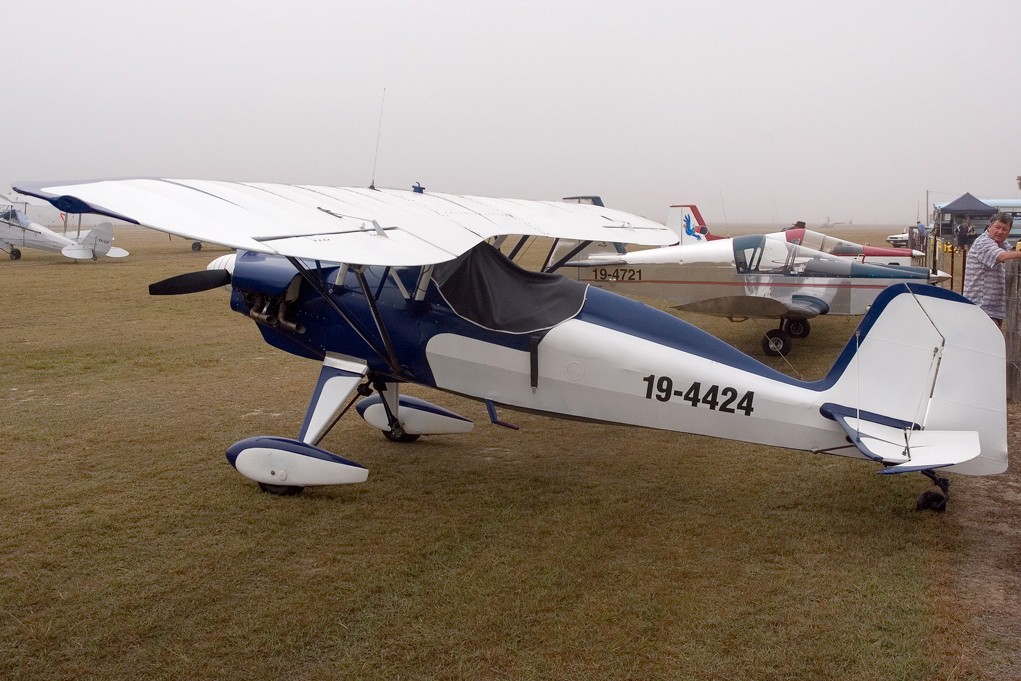
Design Philosophy and Development
Lou Stolp conceived the SA-500 Starlet as a streamlined evolution of his successful Starduster biplane series, targeting builders who desired the performance and simplicity of a single-wing aircraft without the structural complexity of a lower wing. Drawing inspiration from 1930s racing aircraft like the Focke-Wulf Fw 56, Stolp emphasized clean aerodynamics and versatile power plant options to create an accessible sport aircraft for rough turf or paved runways.
The design incorporated proven construction techniques using welded 4130 steel tubing for the fuselage and traditional spruce spars with plywood ribs for the wing structure. The 25-foot elliptical parasol wing employed a Clark YH high-lift airfoil and doped fabric covering, providing excellent short-field performance with a stall speed of just 45 mph. The generous 20-inch-wide cockpit offered comfort unusual for single-seat homebuilts of the era.
Manufacturing and Distribution
Stolp Starduster Corporation began offering SA-500 plans and kits around 1970 from their Oroville, California facility. The company had established its reputation through the 1960s with the highly successful SA-300 Starduster TOO biplane, which sold over 1,000 sets of plans. The estimated construction time of 1,400 hours made the Starlet an attractive project for amateur builders seeking a relatively straightforward build.
When Stolp Starduster Corporation ceased operations in the early 1980s, Aircraft Spruce & Specialty Company in Corona, California acquired the rights to distribute plans. As of 2015, complete plans remained available for $156.75, ensuring the design's continued accessibility to new generations of builders. This transition preserved the Starlet's availability while leveraging Aircraft Spruce's established distribution network throughout the homebuilt community.
Engine Flexibility and Performance
The Starlet's design accommodated a remarkable range of powerplants, from 65 to 125 horsepower, making it adaptable to builders' budgets and performance requirements. The original design centered around the Volkswagen 1,500cc air-cooled engine producing 65 horsepower, capitalizing on the automotive conversion trend popular among cost-conscious homebuilders. This engine choice provided reliable, economical operation with readily available parts and service.
More powerful installations included the Rotax 912UL at 80 horsepower, various Subaru automotive conversions producing 100 horsepower, and traditional aircraft engines like the Franklin 4AC-199 E-3 at 90 horsepower. The Corvair conversion proved particularly popular among performance-oriented builders, with some examples tested to speeds of 230 mph in diving flight. Standard cruise performance with typical engines delivered 105 mph at economical fuel consumption rates.
Construction and Flying Characteristics
Builders praised the Starlet's straightforward construction and forgiving flight characteristics. The parasol wing configuration provided inherent stability while maintaining good visibility from the open cockpit. Test pilots noted the aircraft's neutral longitudinal stability, where the control stick remained in position when released, reducing pilot workload during extended flight.
The fixed conventional landing gear with tailwheel configuration suited the aircraft's intended role as a grass-strip airplane, though it performed equally well on paved surfaces. Maximum gross weight of 1,060 pounds with an empty weight around 500-700 pounds provided a useful load adequate for pilot, fuel, and baggage for extended cross-country flights.
Production Numbers and Global Reach
By 1998, builders had completed and flown 35 SA-500 Starlets worldwide, with examples registered in countries including the United States, United Kingdom, and Australia. Notable aircraft include N23ME, completed by Bill Prokes in November 2016 with a Franklin engine, and G-AZTV, photographed at Old Warden, England in August 1974, demonstrating the design's international appeal.
Recent estimates suggest at least 12 Starlets remained active in the early 2010s, with ongoing construction projects maintaining the type's presence in the experimental aircraft community. The continued availability of plans through Aircraft Spruce ensures new examples will join the flying population as builders discover this classic design.
Legacy and Influence
The SA-500 Starlet occupies a unique position in homebuilt aviation history as an elegant single-seat design that captured the aesthetic appeal of pre-war racing aircraft while remaining accessible to amateur builders. Its success contributed to the broader acceptance of plans-built aircraft and demonstrated the viability of automotive engine conversions in sport aviation.
One notable variant, the White WW-1 Der Jäger D.IX, modified the basic Starlet design into a World War I fighter replica, showcasing the airframe's adaptability. The aircraft's appearances in aviation publications like Kitplanes and Plane & Pilot magazines helped maintain interest in traditional fabric-covered construction methods among modern builders seeking authentic flying experiences reminiscent of aviation's golden age.