
Development and Design
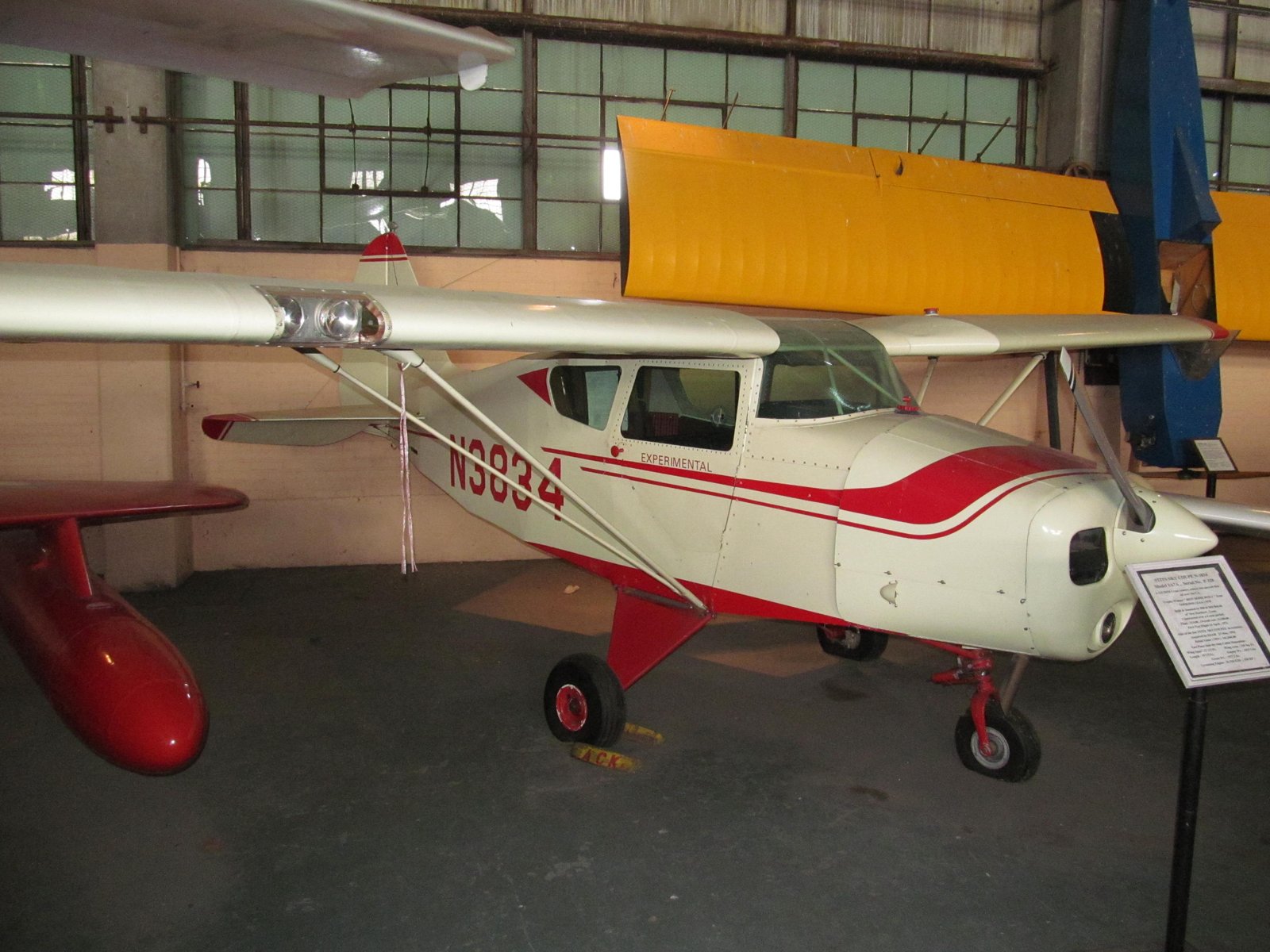
Ray Stits conceived the SA-7 Sky-Coupe as part of his mission to democratize aviation through affordable homebuilt aircraft kits. Working alongside engineer Harold Dale, Stits designed the Sky-Coupe with specific objectives: simplicity of construction, economical operation, and reliable touring capability for the average pilot. The aircraft featured a mixed-construction approach with wooden wings, a chrome-molybdenum steel tube fuselage and tail assembly, all covered in fabric.
The original design emphasized practicality over performance. The high-wing configuration provided inherent stability and excellent visibility, while the side-by-side seating arrangement made it ideal for training or recreational flying. An unusually large baggage compartment distinguished it from many contemporary designs, making it suitable for cross-country touring.
The Manufacturer and Designer Legacy
Stits Aircraft operated from 1948 to at least 1965, initially based in Battle Creek, Michigan, before relocating to FlaBob Airport in Riverside, California around 1951. Ray Stits became legendary in aviation circles not just for the SA-7, but for his complete portfolio of 14 to 15 different aircraft kits that made amateur aviation accessible to the general public.
Stits gained particular fame for his record-breaking miniature aircraft designs. His Stits Junior claimed the title of world's smallest monoplane with an 8-foot 10-inch wingspan in 1948, followed by the Stits SA-2A Sky Baby, which became the world's smallest biplane with a mere 7-foot 2-inch span in 1951. These achievements, along with the Stits Baby Bird, established his reputation as an innovative designer willing to push conventional boundaries.
Production and Variants
Kit production began in 1957, with Stits Aircraft selling Sky-Coupe kits "in some numbers" before discontinuing kit manufacturing around 1957 to focus on type-certified aircraft development. The company produced several distinct variants to meet different market needs.
The SA-7A represented the first production kit version, followed by the improved SA-7B which featured trim-tab elevators, a redesigned fuselage and tail section, dual doors for improved access, increased fuel capacity, and tricycle landing gear. The SA-7C remained unique as a single example powered by a 125-horsepower Lycoming engine. The SA-7D became the definitive kit version, incorporating a distinctive squared, swept tail design and offering builders the option of either tricycle or tailwheel landing gear configurations.
Engine Options and Performance
The Sky-Coupe's versatility stemmed partly from its ability to accommodate various Continental engines in the 60 to 90 horsepower range. The SA-7B typically used the reliable Continental C85 producing 85 horsepower, while other variants could be equipped with the Continental A65 (65 hp) or the Continental O-200A (100 hp). These air-cooled, horizontally-opposed engines provided the ideal combination of reliability, power-to-weight ratio, and operating economy for the amateur-built market.
With an empty weight ranging from 650 to 750 pounds and a maximum gross weight of 1,175 to 1,300 pounds depending on the variant, the Sky-Coupe offered respectable performance for its power range. Maximum speeds reached 138 mph, with comfortable cruise speeds of 115 mph and a practical range of 400 miles from its 18-gallon fuel capacity. The aircraft could climb at 1,000 feet per minute and reach a service ceiling of 12,000 feet.
Operational History and Impact
The SA-7 Sky-Coupe served exclusively in civilian roles, operated primarily by private individuals who built the aircraft from kits. Notable examples include VH-FPE, the first Sky-Coupe registered in Australia on July 9, 1975, and VH-ACH, an SA-7D imported in the early 1970s but not completed until August 1992, demonstrating the extended construction timelines often associated with amateur-built aircraft.
The Sky-Coupe's influence extended far beyond its production numbers. As one of the first homebuilt aircraft kits sold in significant quantities to the American public, it helped establish the experimental amateur-built category that would grow into a major segment of general aviation. The pre-fabricated steel tube fuselage kits pioneered construction techniques that reduced building time and complexity for amateur constructors.
Legacy and Current Status
While exact production totals remain undocumented, examples of the SA-7 continued appearing in aircraft registrations as late as 1992, indicating the design's longevity and the dedication of amateur builders. The Sky-Coupe's most significant contribution lies in its role as a foundational design in the homebuilt aircraft movement that Ray Stits helped create.
Stits Aircraft ceased kit production around 1957 and is no longer in business today. However, the principles established by the SA-7 Sky-Coupe—affordable construction, reliable performance, and practical utility—continue to influence homebuilt aircraft design. The aircraft represents a pivotal moment when aviation transitioned from an exclusive pursuit to an accessible hobby for dedicated amateur builders, helping establish the vibrant experimental aircraft community that exists today.