
Design and Development
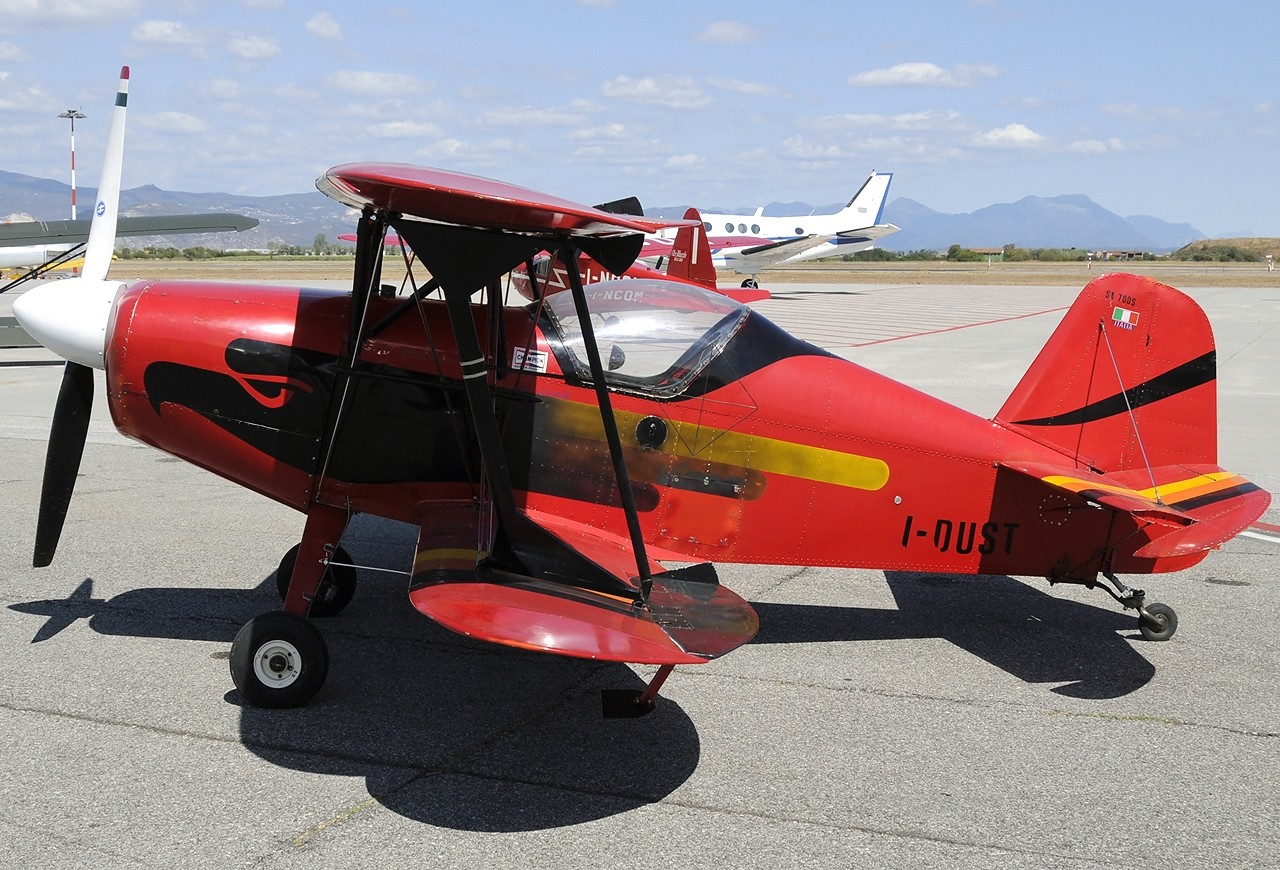
The SA-700 Acroduster emerged from the drawing board of designer Jim Osborne in 1973, representing Stolp Starduster Corporation's ambitious attempt to democratize high-performance aerobatic flying. Osborne's design philosophy centered on creating a single-seat homebuilt that could challenge the dominance of the Pitts Special in aerobatic competition while remaining accessible to amateur builders. The aircraft featured distinctive elliptical wings reminiscent of the earlier Stolp Starduster designs, combined with innovative aluminum fuselage construction that departed from the traditional tube-and-fabric approach common among homebuilt biplanes of the era.
The first kit-built Acroduster I took to the skies in April 1975, validating Osborne's design concepts and launching what would become a modest but dedicated following among aerobatic enthusiasts. The aircraft's design incorporated influences from the Midget Mustang while maintaining the classic biplane configuration that appealed to traditional aerobatic pilots.
The Stolp Legacy
The Stolp Starduster Corporation had established itself as a pioneer in homebuilt aviation following Lou Stolp's original SA-100 Starduster debut in 1957. By the time the Acroduster entered the scene, Stolp had already achieved remarkable success with the Starduster Too (SA-300), which first flew in the early 1960s and eventually saw between 700 and 1,000 completed examples worldwide.
The company maintained an active relationship with its builder community through the Starduster Magazine, published from 1957 through 1994, creating a network of enthusiasts who shared technical knowledge and modifications. This community approach proved essential for the Acroduster's development, as builders contributed real-world experience that refined the design over its production run.
Stolp Starduster Corporation continued operations through at least the 1990s, with registered Acrodusters built as late as 1996. When the original company ceased operations, Aircraft Spruce acquired the design rights, though they have maintained the plans in their original form without modification.
Technical Excellence
The SA-700 Acroduster's performance specifications reflected its serious aerobatic intentions. Powered typically by Lycoming O-360 engines producing 180 horsepower, the aircraft achieved a cruise speed of 143 knots (165 mph) while maintaining a relatively gentle stall speed of 61 knots (70 mph). The design's 12,000-foot service ceiling and impressive 3,000 feet per minute initial climb rate demonstrated capabilities that exceeded many contemporary homebuilts.
The aircraft's most remarkable performance characteristic was its roll rate of 240 degrees per second, placing it firmly in competition-grade territory. This agility, combined with the aircraft's +9G and -9G load factors (as demonstrated in the related SA-750 variant), made it suitable for unlimited aerobatic competition.
Lycoming's O-360 engine family, first introduced in 1955 and still in production today, provided the reliability essential for aerobatic operations. With tens of thousands produced across numerous variants, the O-360 offered Acroduster builders a proven powerplant with excellent parts availability and service support.
Production and Builders
Unlike factory-produced aircraft, the Acroduster existed solely as a plans-built design, with individual homebuilders constructing their aircraft in garages and workshops across the United States. Stolp supplied comprehensive plans and, later, partial kits to support builders, but no factory-completed aircraft ever rolled off a production line.
Approximately 130 Acroduster SA-700 and SA-750 variants were completed worldwide, with 2 examples reaching the Australian aircraft register. This relatively modest production reflected both the specialized nature of aerobatic aviation and the significant commitment required for homebuilt construction.
The amateur-built nature of Acroduster construction meant that each aircraft reflected its builder's skills and modifications, creating subtle variations within the basic design parameters. Some builders incorporated updated avionics, modified control systems, or engine alternatives within the 125- to 200-horsepower range specified in the plans.
Operational Legacy
Acroduster operations began appearing in Aviation Safety Network records from 1976 onward, indicating active use in the aerobatic community. Early incidents involving aircraft such as N181J on May 1, 1976, and N91FF on July 4, 1976, reflected the learning curve associated with high-performance homebuilt operations during the type's early service years.
Despite normal attrition expected in aerobatic aircraft operations, numerous Acrodusters remain active today. Examples with documented low flight time, including aircraft rebuilt as recently as 2013 with fewer than 700 total hours, demonstrate the type's continued appeal to aerobatic pilots seeking vintage biplane performance.
The Acroduster's cultural significance extends beyond its modest production numbers. It represented a philosophical shift in homebuilt aviation, proving that amateur builders could construct aircraft capable of professional-level aerobatic performance. This democratization of high-performance flight influenced subsequent homebuilt designs and helped establish the foundation for today's thriving experimental aircraft community.
While the Acroduster never achieved the widespread recognition of designs like the Pitts Special or the production numbers of simpler homebuilts, it fulfilled its creator's vision of bringing competition-grade aerobatic capability within reach of dedicated amateur builders. Today, the sight and sound of an Acroduster performing at airshows continues to validate Jim Osborne's belief that exceptional performance and homebuilt construction could successfully coexist.