
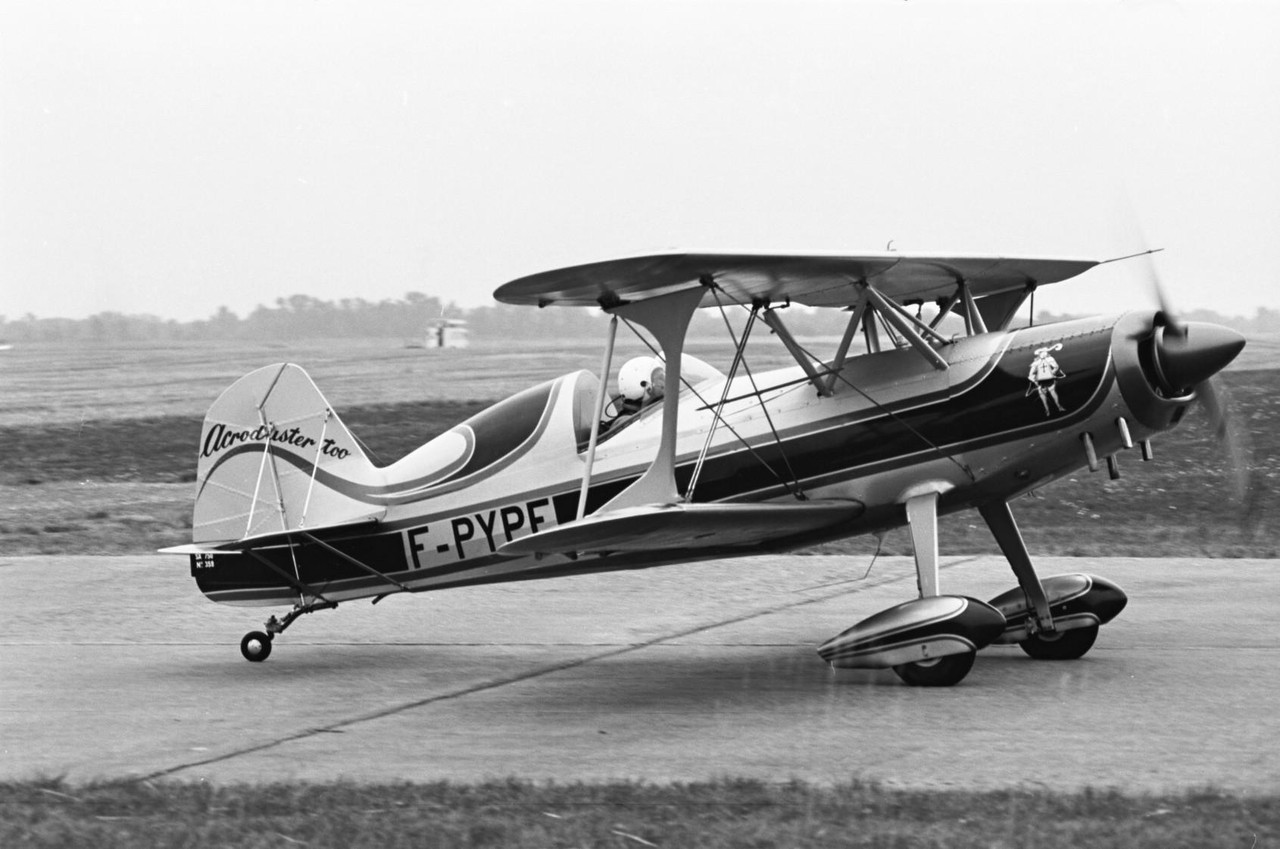
Design Origins and Development
The SA-750 Acroduster Too emerged from the collaborative efforts of Lou Stolp and Morgan "Bud" Schrack in the early 1970s as an evolution of the successful Starduster Too line. Introduced as a plans-built design in 1971, the aircraft addressed the growing demand among homebuilders for a capable two-seat aerobatic machine that could handle competition-level maneuvers. The prototype, designated N5462 and initially called the Super Starduster Too, was constructed at Starduster facilities and served as the foundation for the production plans that would follow.
The first plans-built example took to the skies in January 1975, marking the beginning of a modest but dedicated following among aerobatic enthusiasts. Unlike mass-produced aircraft, the Acroduster Too was available solely as a set of construction plans, requiring builders to source materials and components independently—a approach that kept costs manageable while ensuring each aircraft reflected its builder's craftsmanship.
Engineering Excellence
The Acroduster Too's design prioritized structural integrity and aerobatic performance above all else. Its steel spaceframe construction aft of the firewall provided exceptional crash survivability while handling the extreme loads of competition aerobatics. The aircraft was certified for +/-9g maneuvers, with rapid roll rates that allowed aileron roll entry at 140 mph and a never-exceed speed of 200 mph at 2,400 rpm without exceeding propeller limitations.
Powered by the reliable Lycoming O-360-A1D engine producing 180 horsepower, the aircraft featured inverted fuel capability accessed from the front seat position. This inline air-cooled powerplant, manufactured by Lycoming Engines and first produced in 1956, proved ideal for aerobatic applications with over 35,000 units of the O-360 series eventually manufactured across all variants.
Stolp Starduster Corporation
Stolp Starduster Corporation operated from Oroville, California, during the golden age of homebuilt aviation in the 1970s. The company was acquired by Jim Osborne in the early 1970s, who continued the tradition of producing plans for sporting biplanes that had made the Starduster name synonymous with amateur-built aerobatic aircraft. Beyond the SA-750, the company offered plans for related designs including the Starduster Too, Super Starduster (SA-101), and Skybolt MK II, creating a comprehensive family of aerobatic biplanes for the homebuilt community.
The company's business model reflected the homebuilt aviation philosophy of the era—rather than manufacturing complete aircraft, they provided detailed construction plans that allowed dedicated builders to create their own high-performance machines. This approach made advanced aerobatic capability accessible to pilots who might otherwise have been priced out of the market for factory-built aerobatic aircraft.
Global Distribution and Performance
Despite its niche market position, the Acroduster Too found builders across multiple continents. Documented registrations span from the United States to the United Kingdom, Australia, and Canada, with examples like N4KJ (1978), G-BUGB (1997), VH-YEL (first flight 1981), and C-GTUJ (active as of 2025) representing the international appeal of the design.
The aircraft delivered impressive performance characteristics that justified its reputation among aerobatic pilots. Cruise speeds ranged from 120 to 140 knots, while the robust construction and powerful engine combination provided the thrust-to-weight ratio necessary for unlimited category aerobatic competition. The tandem seating arrangement optimized weight and balance for aerobatic flight while allowing for instruction or passenger flights.
Operational Challenges and Legacy
The Acroduster Too's high-performance nature came with inherent risks typical of aerobatic aircraft. Accident records document more than ten write-offs between 1978 and 2021, often during aerobatic maneuvers such as the 2008 G-BUGB incident during a barrel roll and the 2021 VH-YEL in-flight breakup. These incidents, while tragic, reflected the demanding nature of aerobatic flight rather than fundamental design flaws.
The aircraft's center of gravity limits of +20.5 to +26.5 inches aft of datum required careful attention to loading, as demonstrated in accident investigations that revealed the critical importance of proper weight and balance calculations in high-performance homebuilt aircraft.
Current Status
While exact production numbers remain undocumented due to the plans-built nature of the aircraft, accident databases and registration records suggest at least 20 examples were completed and flown over nearly five decades. As of 2025, some airframes remain active, evidenced by the June 2025 substantial damage accident involving C-GTUJ, indicating the type's continued presence in the aerobatic community.
The SA-750 Acroduster Too represents a significant chapter in homebuilt aviation history, demonstrating how dedicated designers and builders could create aircraft rivaling factory-produced machines in capability and performance. Its legacy continues to influence modern homebuilt aerobatic designs, proving that the combination of sound engineering, quality materials, and skilled craftsmanship could produce truly exceptional aircraft.