
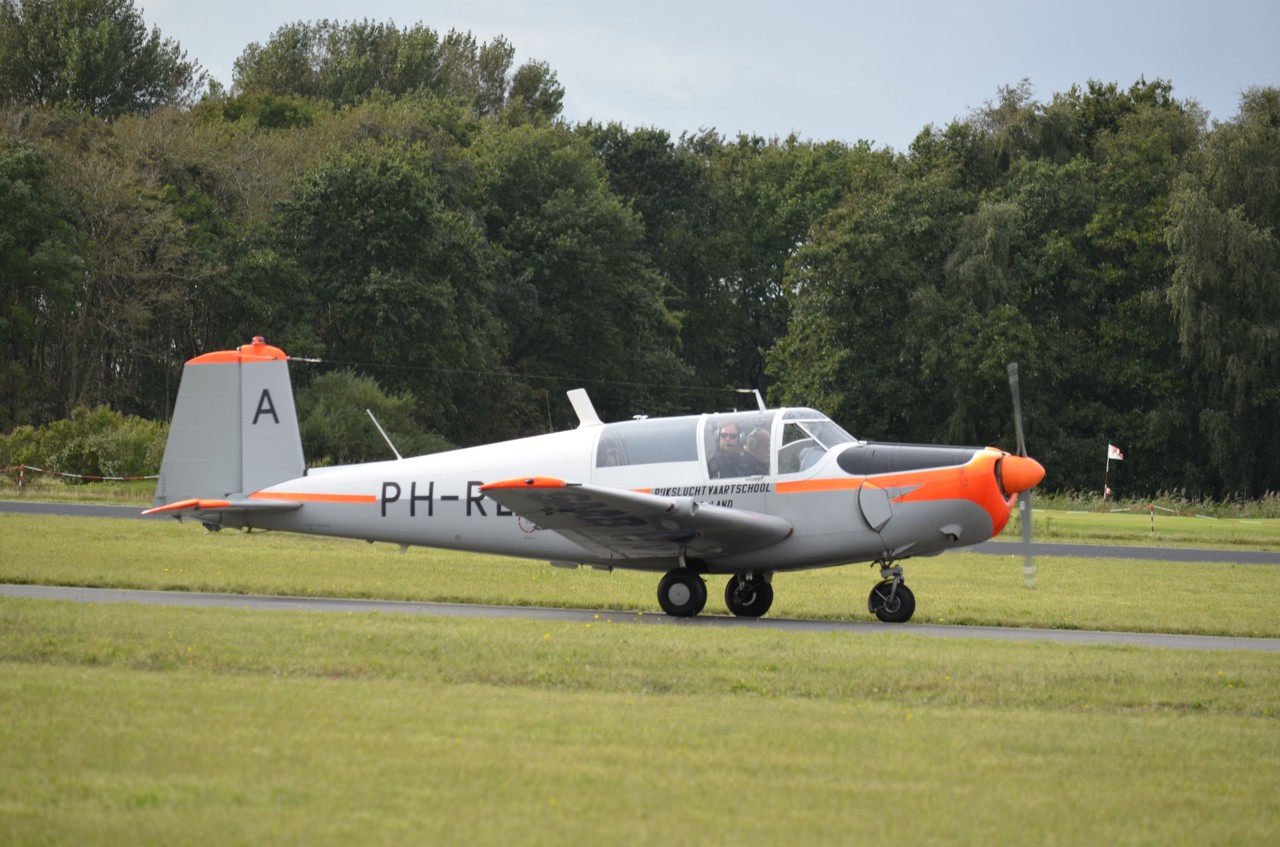
Service History
The Safir achieved remarkable success in both military and civilian markets, with 323 aircraft delivered to operators in 21 countries. The Swedish Air Force became the primary military operator, acquiring 99 aircraft including 10 early TP-91 transports and 75 SK-50 basic trainers between 1952 and 1954. The type served Swedish military aviation until retirement in 1960, establishing a foundation for pilot training during the early Cold War period.
Military exports proved equally successful, with the Ethiopian Air Force purchasing 48 aircraft beginning in 1946 - the largest single export order. These aircraft supported Emperor Haile Selassie's aviation school at Bishoftu under the leadership of Swedish pilot Carl-Gustaf von Rosen. Other significant military operators included the Finnish Air Force with 16 aircraft serving from 1958 to 1983, some equipped with cameras for reconnaissance missions, and the Austrian Air Force, which operated 24 aircraft from 1964 to 1965 split between basic and navigation training roles.
Production and Manufacturing
Saab's production capacity constraints during development of the Saab 29 Flygande Tunnan led to an unusual manufacturing arrangement. While primary production occurred at Saab's Linköping facility, 120 aircraft - all Swedish Air Force SK-50 series models - were outsourced to the De Schelde shipyard in the Netherlands, where production continued until 1955. This partnership demonstrated the international demand for the aircraft and Saab's innovative approach to meeting delivery commitments.
The production run from 1944 to 1966 encompassed four main variants: the 91A, 91B, 91C, and 91D, each representing evolutionary improvements in powerplant and capability. Total production of 323 aircraft made the Safir Saab's largest aircraft export success, establishing the company's reputation in international markets decades before its jet fighters gained prominence.
The Manufacturer
Svenska Aeroplan AB was founded in 1937 as Sweden's primary aircraft manufacturer, expanding into automobiles and defense systems following World War II. The company's transition from wartime fighter production to peacetime trainers like the Safir reflected Europe's post-war demilitarization and the need for civilian aviation development. Saab used the Safir program as more than just a trainer - the aircraft served as an aerodynamic testbed, with swept-wing prototypes contributing to early jet fighter development research.
Saab underwent significant corporate evolution, with its aircraft division becoming part of Saab AB, which continues today specializing in aerospace and defense. The automotive division was sold to NEVS in 2012, but the aerospace heritage established with aircraft like the Safir remains central to the company's modern defense focus.
Design and Technical Innovation
A.J. Andersson led the design team, drawing from his previous experience with the Bücker Bü 181 Bestmann at Bücker Flugzeugbau in Germany. This influence appeared in design elements including the low-wing configuration and fabric-covered control surfaces. However, the Safir represented a significant advancement with its aluminum construction and retractable tricycle landing gear - modern features for a 1940s trainer.
The aircraft evolved through multiple engine installations, beginning with the 147-horsepower de Havilland Gipsy Major in the 91A variant. The Swedish Air Force found this powerplant insufficient, leading to adoption of the 190-horsepower Lycoming O-435-A in the 91B and 91C models. The final 91D variant featured the 180-horsepower Lycoming O-360-A1A, which despite lower power proved more reliable and included improvements such as a new brake system and rudder trim.
Performance and Pilot Experience
The Safir's aerobatic capabilities set it apart from contemporary trainers, with the 91D variant certificated for +6g and -3g maneuvers. This robust construction made it suitable for advanced training beyond basic instruction, while the tricycle landing gear provided safer ground handling characteristics compared to conventional tailwheel trainers of the era.
With a range of 700 miles on 160 liters of fuel, the 91D variant offered substantial cross-country capability for training missions and civilian travel. The manual landing gear operation, while requiring pilot effort, proved reliable and reduced maintenance complexity - crucial factors for training aircraft operating from austere airfields.
Civilian Operations
Major European airlines recognized the Safir's training value, with operators including KLM's Dutch RLS division, Sabena, Lufthansa, and Air France utilizing the type for pilot instruction. The Netherlands Air Transport School purchased eight 91A aircraft, while flying schools across Europe adopted the type as a step-up trainer from basic aircraft like the Tiger Moth and Harvard.
Seating capacity varied by model, with early 91A and 91B variants accommodating three occupants plus luggage, while the 91C and 91D expanded capacity to four seats. This flexibility made the aircraft attractive to both training organizations and private owners seeking a capable cross-country aircraft.
Legacy
Today, a small number of Safirs remain airworthy, including preserved examples like G-XCID, a 1962 91D registered in the United Kingdom with only 21 total flight hours. The aircraft's significance extends beyond its operational record - it represented Saab's successful transition from wartime production to peacetime exports, establishing relationships that would benefit the company's later military aircraft programs. The Safir influenced Ethiopian aviation development and helped bridge the gap between World War II wooden construction and the all-metal trainers that followed, while contributing to Saab's jet aircraft development through its role as an aerodynamic research platform.