
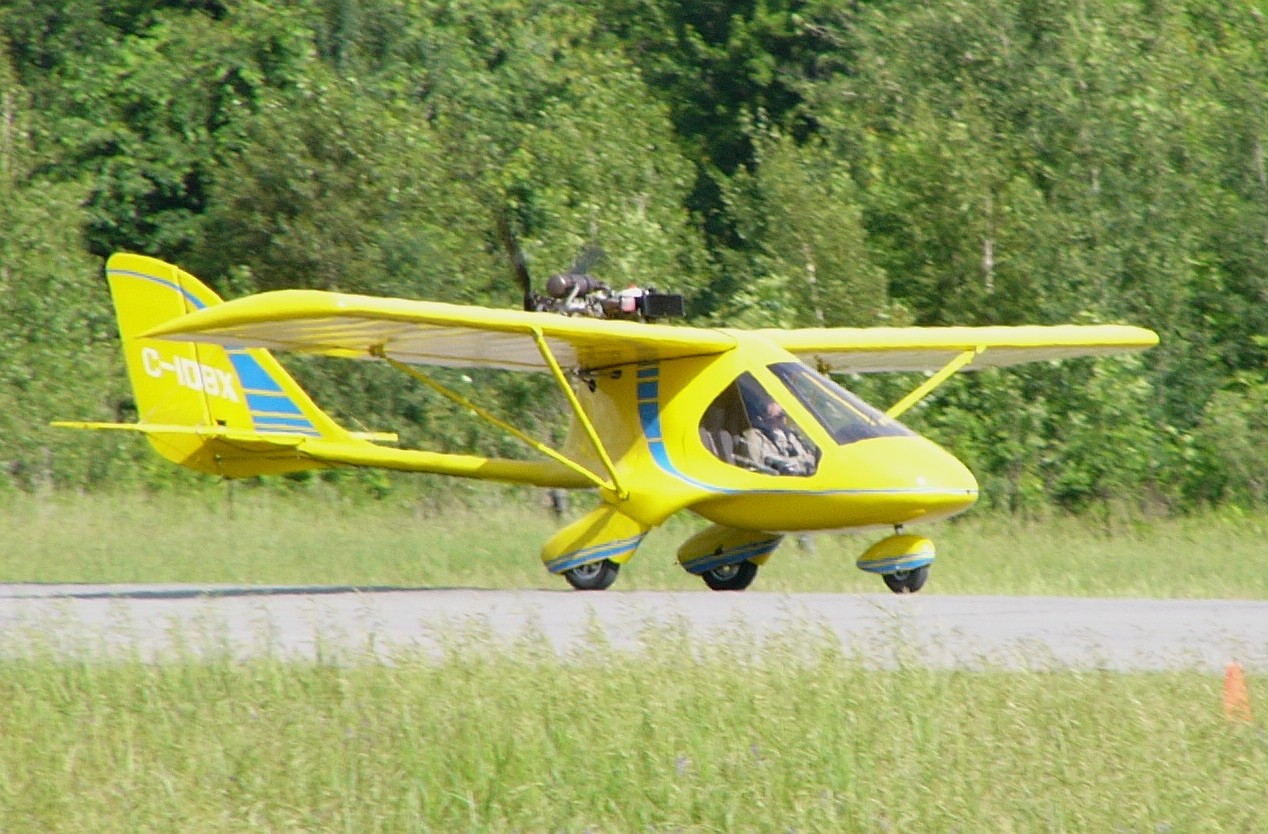
Development and Manufacturing
The Skyboy emerged from the newly established Interplane Aircraft sro, founded in 1992 during the Czech Republic's transition to a market economy. As the company's second design following the Griffon ultralight, the Skyboy represented an ambitious attempt to capture the growing light sport aircraft market with innovative engineering solutions.
Production commenced in 1994 at Interplane's facilities in Zbraslavice, Czech Republic, following the successful 1993 maiden flight of the prototype. The company positioned itself as a specialist manufacturer of ultralight aircraft, producing both kit-form and ready-to-fly aircraft that complied with diverse international regulations including US FAR 103 Ultralight Vehicles rules, European microlight standards, and American light-sport aircraft categories.
Design Innovation
The Skyboy's most distinctive feature was its foldable wing design, addressing one of general aviation's persistent challenges: hangar space and storage costs. The high-mounted constant-chord wing could be folded for compact storage, making aircraft ownership more accessible to pilots without permanent hangar facilities.
The aircraft employed mixed construction techniques typical of 1990s ultralight design philosophy. An aluminum tube framework provided structural integrity, while fiberglass components and fabric covering reduced weight and manufacturing costs. The tail boom configuration, mounting the empennage on an extended structure behind the cabin, maximized interior space while maintaining proper center of gravity balance.
The enclosed cabin featured adjustable seats in side-by-side configuration, departing from the tandem seating common in many ultralights. This arrangement enhanced the aircraft's appeal for training applications and recreational flying, allowing better communication between occupants and shared flight controls.
Powerplant Options
The Skyboy's versatility extended to its engine options, accommodating various Rotax powerplants to meet different performance and regulatory requirements. The standard configuration utilized the Rotax 582UL-2V, a two-cylinder, two-stroke, fan-cooled engine producing 48 kilowatts (64 horsepower). This Austrian-manufactured engine became the backbone of ultralight aviation worldwide due to its reliability and power-to-weight ratio.
Additional engine options included the smaller Rotax 503, 462, and 618 variants, as well as the four-stroke Rotax 912UL and 912ULS engines for operators seeking improved fuel economy and smoother operation. Interplane also offered compatibility with Hirth 2706 and Verner SVS 1400 engines, providing customers with unprecedented choice in powerplant selection.
Variants and Market Positioning
Four distinct variants addressed different market segments and regulatory environments. The original Skyboy established the basic design template with Rotax 503 or 582 engine options. The Skyboy S incorporated structural reinforcements for higher gross weights and offered wingspan variations to optimize performance characteristics.
The 1999 Skyboy EX targeted European and Australian markets with specific modifications for local certification requirements. Meanwhile, the Skyboy UL variant shed weight to achieve an empty weight of 496 pounds, specifically designed to meet stringent US FAR ultralight regulations.
Performance Characteristics
With a loaded weight of 992 pounds and 42-liter fuel capacity, the Skyboy delivered respectable performance for its class. Maximum speed reached 87 miles per hour, while economical cruising speed of 56 miles per hour provided a range of 186 miles. The aircraft's short-field capabilities impressed operators, requiring only 495 feet for takeoff and 330 feet for landing.
The 150-meter-per-minute rate of climb and 40-mile-per-hour stalling speed in landing configuration made the Skyboy suitable for training operations and recreational flying from smaller airfields. These performance figures positioned it competitively against other European ultralight designs of the era.
Operational History and Safety
The Skyboy achieved certification as a US light-sport aircraft and Canadian Advanced Ultralight Aeroplane, opening significant North American markets. Unlike many ultralight manufacturers who relied primarily on kit sales, Interplane marketed the Skyboy as a complete ready-to-fly aircraft, appealing to customers seeking immediate flight capability.
Safety records reveal typical challenges faced by ultralight aircraft operations. A documented 2012 accident involving a Skyboy EX highlighted carburetor icing issues during takeoff, leading to partial engine power loss. The National Transportation Safety Board's investigation noted the absence of carburetor heat systems in the aircraft's design, a common limitation in ultralight powerplants of that generation.
Company Decline and Legacy
Interplane Aircraft sro's 21-year operational history ended in 2013 when the company ceased operations after seeking unsuccessfully to sell its business, hangar facilities, and manufacturing assets. The closure reflected broader challenges facing small aircraft manufacturers in an increasingly competitive and regulated market environment.
Despite limited production numbers totaling approximately 100 aircraft, the Skyboy earned recognition in aviation publications, including multiple features in EAA Sport Aviation magazine between 2000 and 2001. The aircraft represented Czech engineering capabilities during the country's emergence as a significant player in general aviation manufacturing, alongside companies like Evektor and Atec.
Today, the Skyboy remains a notable example of innovative ultralight design from the 1990s, demonstrating how small manufacturers could compete through creative engineering solutions like foldable wings and multi-engine compatibility.