
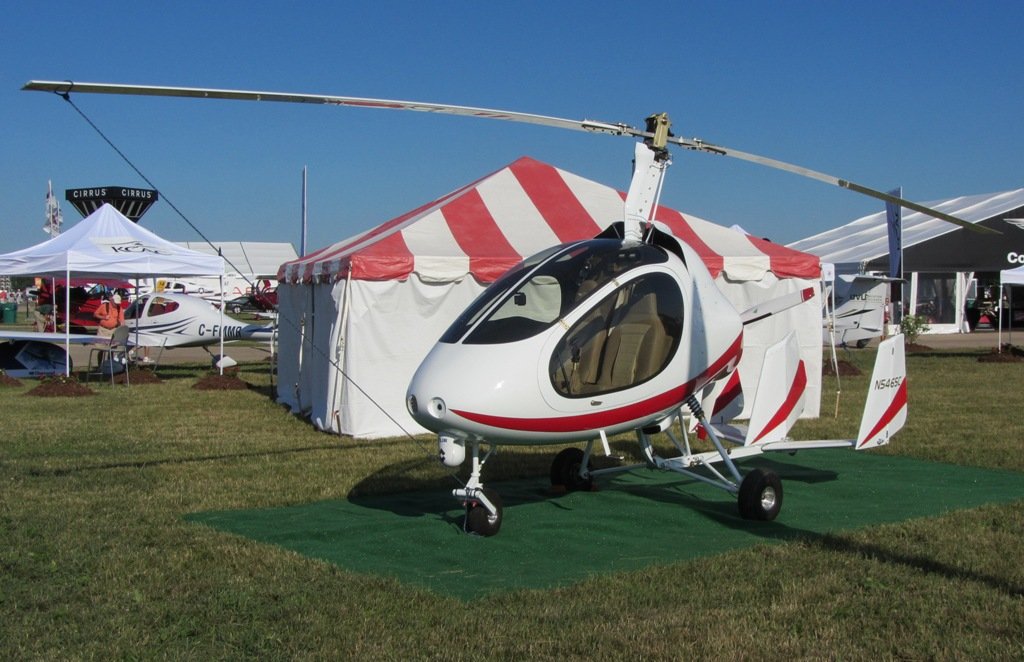
Design Evolution and Development
The SportCopter II emerged from extensive market research conducted by Sport Copter International, which revealed strong preference for side-by-side seating over the tandem configuration of their earlier Sport Copter 2. The original Sport Copter 2, developed in the late 1990s with only three kits delivered by 1998, demonstrated the viability of two-seat gyroplane design but failed to capture significant market share due to its tandem seating arrangement.
Following the September 11, 2007 maiden flight, Sport Copter committed to two years of intensive flight testing and refinement. During this period, engineers upgraded the powerplant to the more reliable Lycoming IO-360 and completely redesigned the tail section to enhance flight characteristics. The aircraft earned recognition at AirVenture Oshkosh in 2011, where judges selected the SportCopter II design among the Top Ten Best Designs.
The Manufacturer Heritage
Sport Copter International represents a second-generation family enterprise with roots extending back to 1958. The company's founder pioneered the Vancraft gyroplane designs, including the world's first successful two-place gyroplane that captured the prestigious Charles Lindbergh award at the 1985 Oshkosh Airshow. This exclusive focus on gyroplane technology has positioned Sport Copter as a specialized manufacturer in the autogyro market, maintaining continuous operations for over six decades.
The Oregon-based company continues active kit production today, offering customers the ability to reserve specific serial numbers for their aircraft. This production approach allows Sport Copter to maintain quality control while keeping costs manageable for the specialized gyroplane market.
Technical Specifications and Performance
The SportCopter II achieves its performance through a robust 230-horsepower Lycoming IO-360 four-cylinder, horizontally-opposed piston engine. This powerplant provides substantial performance margins, particularly beneficial for operations in high-density altitude conditions. The aircraft maintains a 1,700-pound gross weight with 500-600 pounds of useful load capacity.
Performance characteristics include a 100 mph cruise speed, 120 mph maximum speed, and exceptional slow-speed capabilities with minimum airspeeds between 10-20 mph. The aircraft demonstrates remarkable short-field performance with takeoff distances of 50-200 feet and landing distances of zero to 20 feet. Service ceiling reaches 18,000 feet with a 1,000 feet-per-minute rate of climb and 300 statute mile range at cruise power.
Design Innovations
The SportCopter II incorporates several advanced design features that distinguish it from earlier gyroplanes. The 49-inch-wide cabin provides exceptional interior space for a two-seat aircraft, with generous cargo area behind the seats and integrated forced-air ventilation and heating systems. The cabin width of 49 inches compares favorably to many four-seat general aviation aircraft.
A sophisticated suspension system represents perhaps the most innovative aspect of the design, providing maximum vertical travel to absorb extreme landing impacts. This system enables "drop-in" landings from altitudes as high as 15 feet, a capability that proves valuable for law enforcement and surveillance operations requiring access to confined areas.
The triple vertical stabilizer and rudder configuration provides enhanced stability across the flight envelope while reducing pilot workload during both slow-speed maneuvering and high-speed cruise flight. An improved caster nosewheel design prevents rollover incidents during crosswind or sideways landings, addressing a common concern with conventional gyroplane designs.
Construction and Variants
Kit construction requires 200-400 hours depending on selected options and builder experience. The design employs a metal frame structure with fully assembled composite monocoque shell, eliminating complex adhesive work or exotic material handling typically required for composite construction. Builders complete metal preparation and painting, following standard aircraft kit construction practices.
Sport Copter offers three distinct variants to address different market segments. The Quick Build High Performance Kit features a pre-fabricated one-piece cabin requiring no adhesive work. The Law Enforcement variant targets governmental and surveillance applications with specialized equipment provisions. The LSA Version utilizes a Rotax 914 engine to meet Light Sport Aircraft certification requirements.
Operational Applications
The SportCopter II serves diverse roles including private recreation, law enforcement patrol, aerial surveillance, and flight training applications. The side-by-side configuration proves particularly advantageous for instruction and two-person surveillance missions. Law enforcement agencies appreciate the aircraft's ability to operate from confined areas while maintaining excellent visibility and quiet operation characteristics.
Pilots consistently report favorable handling characteristics, with the robust suspension system making landings straightforward even for less experienced gyroplane operators. The steady rotor system and comprehensive flight envelope provide confidence-inspiring flight characteristics across varied operating conditions.