
Design Innovation and Early Success
The Scooter emerged from Kenneth Flaglor's workshop in Asheville, North Carolina, during the mid-1960s experimental aircraft boom. Flaglor, who earned his private pilot license in 1948 and built ten full-size aircraft throughout his career, designed the Scooter with specific objectives: create an affordable ultralight homebuilt featuring simple wooden construction and wire bracing that amateur builders could successfully complete.
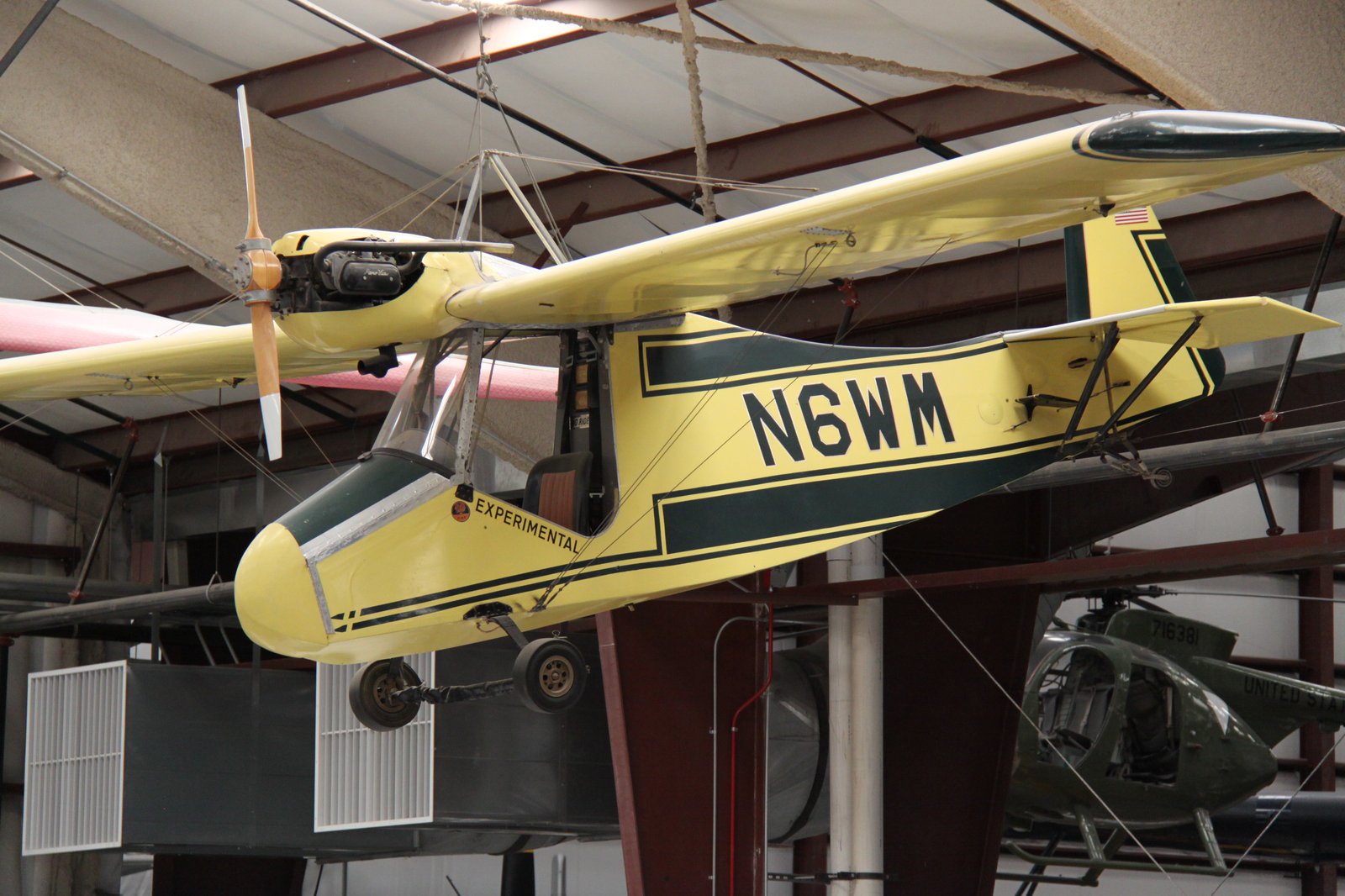
The aircraft's most distinctive feature was its engine placement—mounted on the wing's leading edge ahead of the open cockpit, providing pilots with unobstructed forward visibility. This unconventional arrangement, combined with the aircraft's lightweight wooden fuselage covered in fabric and dual-spar wooden wings, created a unique appearance that earned it the "Scooter" nickname from Flaglor's brother Charlie, who observed its characteristic runway "scooting" behavior.
Award Recognition and Market Introduction
The Scooter made its public debut at the 1967 EAA Convention in Rockford, Illinois, where it captured immediate attention by winning both the Outstanding Ultralight and Outstanding Volkswagen-powered Aircraft awards. This recognition validated Flaglor's design philosophy and established the aircraft's reputation within the experimental aviation community.
Flaglor began marketing construction plans in 1967, choosing the plans-built approach over traditional manufacturing. This decision made the Scooter accessible to amateur builders while keeping costs minimal—a critical factor in the experimental aircraft market of the era.
Engine Evolution and Performance
The Scooter's powerplant underwent significant development during its early phase. Initial prototypes used an inadequate 18-horsepower Cushman golf cart engine, which proved insufficient for the aircraft's performance requirements. Flaglor upgraded to the Huggins Volkswagen automotive conversion, a 40-horsepower inline four-cylinder engine specifically adapted for aviation use.
This Volkswagen conversion became integral to the Scooter's success, providing reliable power that enabled the 650-pound gross weight aircraft to achieve a 90 mph maximum speed, 175-mile range, and 600 feet-per-minute climb rate. The automotive engine's affordability and parts availability made it particularly attractive to homebuilders working within tight budgets.
The Designer's Legacy
Kenneth Flaglor maintained active involvement in aviation throughout his life, operating Flaglor Airport (WI86) in Kenosha County, Wisconsin, until his death on January 12, 2019, at age 90. Beyond the Scooter, Flaglor built numerous aircraft including gliders and continued rebuilding aircraft and constructing radio-controlled models well into his later years, earning what colleagues described as "countless awards" for his craftsmanship.
Flaglor's approach to aircraft design emphasized practicality and buildability over complexity. The Scooter's 15-foot 8-inch length, 7-foot height, and 115 square feet of wing area created manageable proportions for garage construction while providing adequate performance for recreational flying.
Plans Ownership and Continued Support
Following Flaglor's death, the Scooter plans passed through multiple owners, reflecting the ongoing demand for this classic design. The intellectual property changed hands seven times before Adams Aeronautics Company of Jasper, Georgia, acquired the rights on December 17, 2024, from Steven Speidel of Crystal River, Florida.
Adams Aeronautics has modernized support for active builders, providing updated construction manuals, enhanced photographs, optional rib designs, and comprehensive weight and balance forms. This contemporary support structure ensures that new builders can access current technical guidance while maintaining the aircraft's original design integrity.
Global Impact and Museum Presence
While exact production numbers remain undocumented due to the plans-built nature of construction, sources indicate that "many examples" exist in museums worldwide, with "a good number still flying all around the world." This global presence demonstrates the design's enduring appeal and successful adaptation to various building standards and regulations across different countries.
The Scooter's influence extended beyond individual aircraft construction. It demonstrated that innovative design could emerge from individual designers rather than large corporations, inspiring other homebuilders to pursue their own aircraft projects. The success of Volkswagen engine conversions in the Scooter helped establish automotive powerplants as viable options for experimental aircraft.
Technical Significance
The Scooter represented several important developments in experimental aviation. Its open cockpit design maximized the pilot's connection with the flying environment while minimizing weight and complexity. The short conventional landing gear provided adequate ground clearance while keeping the aircraft's center of gravity low for improved handling characteristics.
The aircraft's 28-foot wingspan and high-wing configuration provided inherent stability, making it suitable for pilots with varying experience levels. This combination of forgiving flight characteristics and straightforward construction requirements helped establish the Scooter as an ideal entry point into experimental aviation for many builders and pilots throughout the late 20th century.