
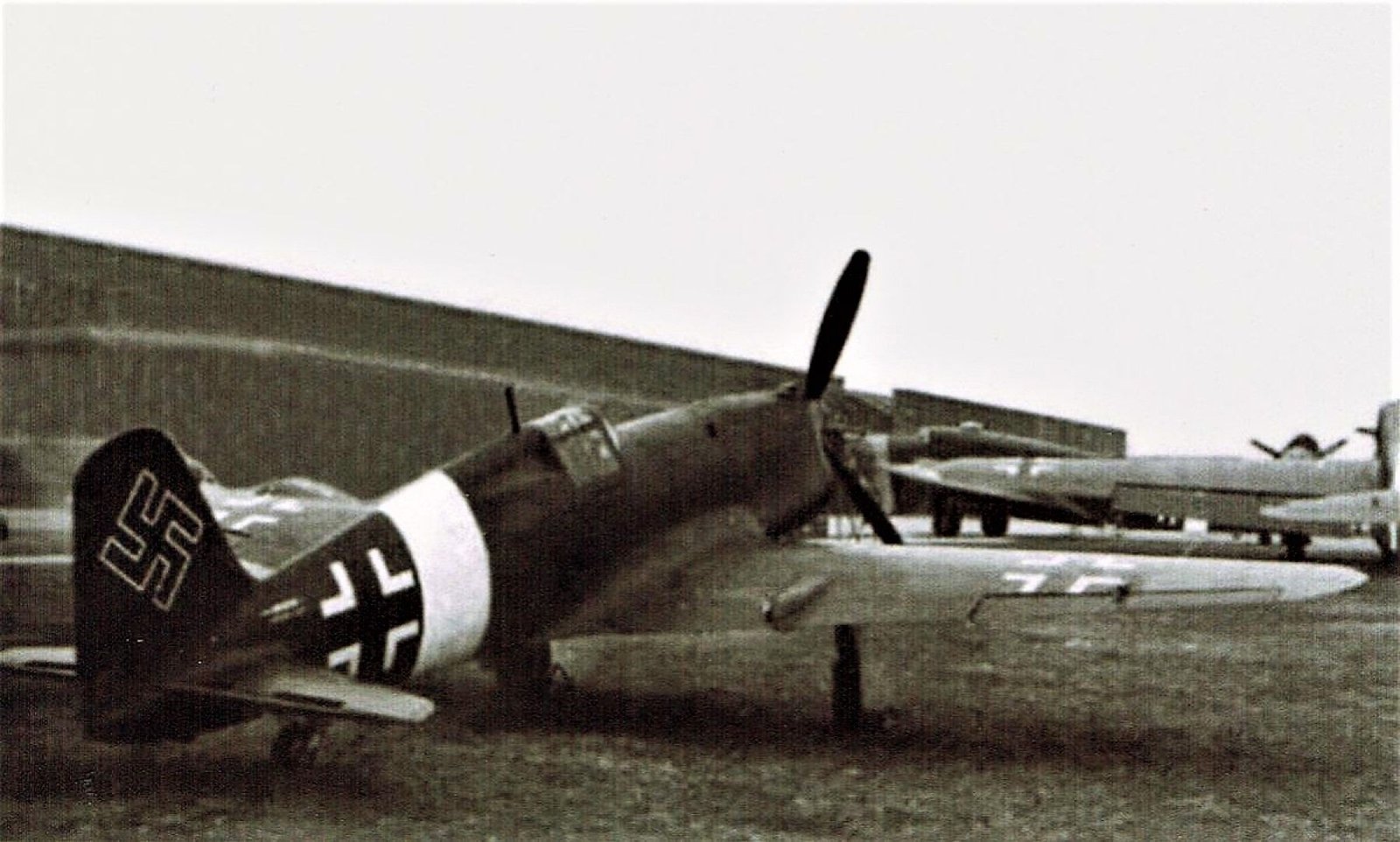
The SAI Ambrosini SAI.403 Dardo was developed as a heavily refined successor to the SAI.207 fighter, specifically intended to resolve the handling deficiencies of the earlier model while enhancing overall performance. Designed during a period when Italy faced severe shortages of strategic metals, the Dardo was notable for its all-wood construction. This material choice was viewed as a strategic advantage, as it reduced reliance on rare metals and allowed for the dispersal of manufacturing across various smaller workshops, making the aircraft highly suitable for mass production.
The prototype was completed in late 1942 or early 1943 and conducted its first flight in January 1943. It was powered by a single Isotta-Fraschini Delta R.C.21/60 series piston engine, producing 750 hp. This powerplant enabled the Dardo to achieve a maximum speed of 648 km/h at an altitude of approximately 7,200 meters, with cruising speeds ranging between 490 and 512 km/h. The aircraft featured a wingspan of 9.8 meters, a length of 8.2 meters, and a wing area of 14.42 square meters. Its loaded weight was recorded between 2,640 kg and 2,643 kg. Performance specifications included a rate of climb of 15.9 m/s (or 800 m/min) and a range of approximately 935 to 937 km, with service ceiling estimates varying between 9,800 meters and 12,135 meters.
Intended for service with the Regia Aeronautica, the SAI.403's performance attracted significant international interest. Following successful testing, the Italian Ministry placed an order for 3,000 aircraft, to be split among three manufacturers: 800 from Ambrosini, 1,000 from Caproni, and 1,200 from Savoia-Marchetti. Additionally, Germany and Japan expressed interest in licensed production. After the armistice of September 8, 1943, the prototype was seized by German forces and evaluated by the Luftwaffe at Vergiate. Reports indicate that Japanese pilots stationed in Germany also flew the aircraft, and production orders were reportedly placed with Heinkel and Mitsubishi, though no operational aircraft were built before the war's end. The fate of the sole prototype remains uncertain; some accounts suggest it was destroyed in flight shortly before the armistice, while others state it disappeared from records by 1944.