
The Original Legacy
The S.E.5a earned its reputation as one of the Royal Flying Corps' most formidable weapons during World War I. Designed by Henry Folland at the Royal Aircraft Factory in 1916, the original aircraft combined exceptional stability with superior maneuverability, making it a favorite among pilots who needed both accuracy for gunnery and agility for dogfighting. Between 1917 and the 1918 Armistice, six manufacturers produced 5,265 examples of the S.E.5 series, with Austin Motors leading production at 1,650 aircraft and Vickers contributing 2,164 units.
Modern Reproduction Efforts
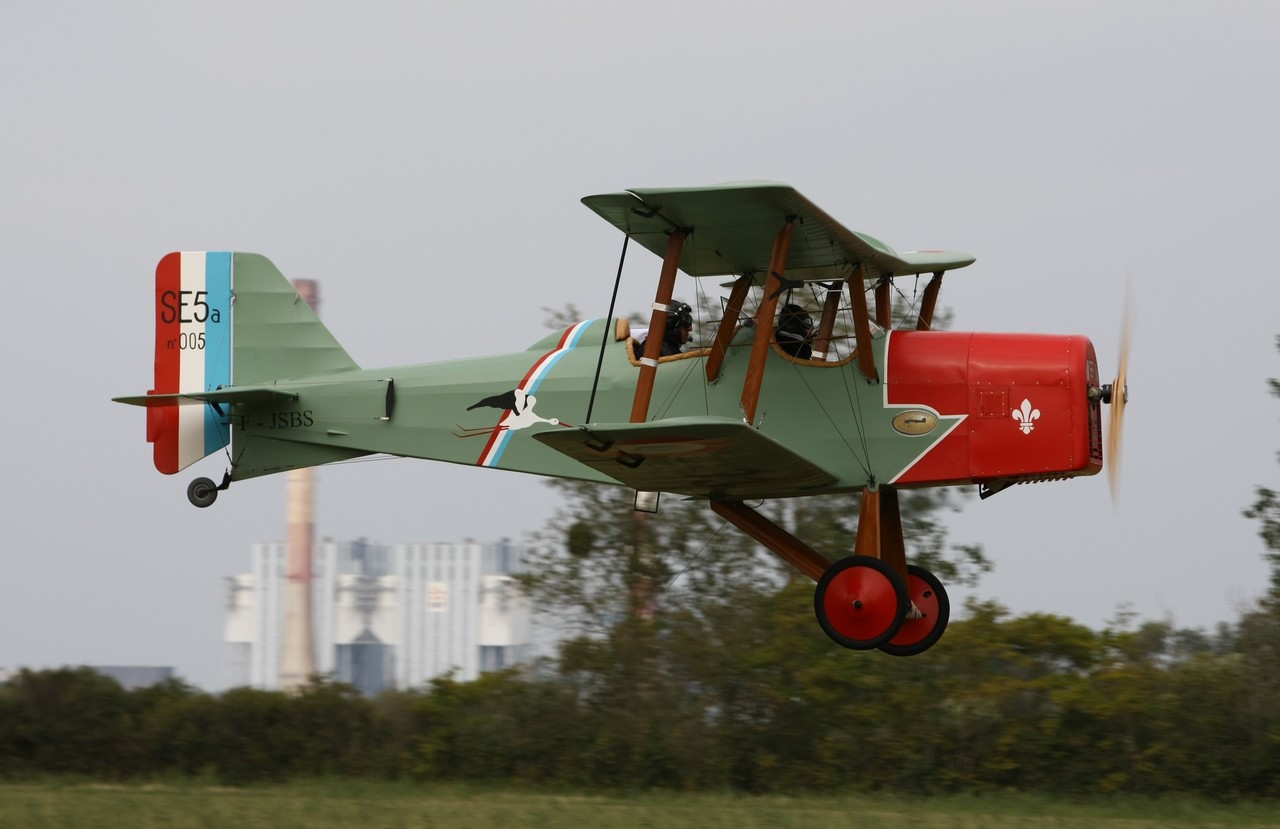
The first notable replica project emerged in 1965 when Miles Aircraft constructed two full-scale S.E.5a reproductions for the war film "The Blue Max." These aircraft were subsequently transferred to the Irish civil aircraft register in 1967, establishing a precedent for historically accurate reproductions that could actually fly in front of cameras.
The Vintage Aviator Limited in New Zealand undertook the most ambitious replica program, constructing three airworthy reproductions designated SE5a-1, plus one static display example. The company combined authentic components, including original Hispano-Suiza engines, with newly fabricated parts based on archived Royal Aircraft Factory drawings. This approach ensured both historical accuracy and airworthiness under modern aviation regulations.
American Replica Construction
In Florida, Bobby Strahlmann, Tom Davis, and Gil Bodine began work on S.E.5a reproductions in 1971. One of their aircraft, registered N910AV, was completed in 1988 and delivered to the Champlin Fighter Museum at Falcon Field, Mesa, Arizona. Like other serious replica projects, this aircraft features an original Hispano-Suiza 8 engine, maintaining the authentic sound and performance characteristics that made the original so distinctive.
Technical Specifications and Performance
Replica S.E.5a aircraft typically match the original's dimensions and performance envelope. The aircraft measures 26 feet 7.5 inches in wingspan and 20 feet 11 inches in length, with a maximum weight of 1,400 pounds. Powered by 200-horsepower Hispano-Suiza or Wolseley Viper V-8 engines, replicas achieve maximum speeds of approximately 138 miles per hour, matching the performance that made the original so effective in combat.
The biplane configuration features fabric-covered wings and fuselage, traditional wire bracing, and the characteristic single-seat cockpit positioned well aft of the engine. Replica builders must source or manufacture hundreds of components, from wooden propellers to brass fittings, often requiring years of dedicated work and substantial financial investment.
Challenges of Authentic Reproduction
Constructing accurate S.E.5a replicas presents unique challenges in the modern aviation environment. Original Hispano-Suiza engines, while occasionally available, require extensive restoration and ongoing maintenance expertise that few facilities possess. Many replica builders have turned to modern alternatives that approximate the original's power output while providing greater reliability for airshow and demonstration flying.
Federal Aviation Administration certification for experimental amateur-built aircraft requires extensive documentation and inspection, adding complexity to replica projects. Builders must demonstrate that their aircraft meet modern safety standards while maintaining historical accuracy, often requiring compromises in materials or construction techniques.
Surviving Originals and Museum Displays
Only one original S.E.5a remains airworthy today, maintained by the Shuttleworth Collection at Old Warden, England. Originally serial F904 of No. 84 Squadron RAF, this aircraft flew commercially as G-EBIA from 1923 to 1932 before entering storage. The Royal Aircraft Establishment restored it to flying condition in 1955, and it received extensive refurbishment in 2007.
This surviving original provides an invaluable reference for replica builders, offering authentic details in construction techniques, materials, and proportions that archival drawings cannot fully convey. The aircraft continues flying demonstrations, allowing audiences to experience the sight and sound of an authentic World War I fighter.
Legacy and Continuing Interest
S.E.5a replicas serve multiple purposes in preserving aviation history. Beyond their value for film production and airshow demonstrations, these aircraft provide pilots with hands-on experience in early aviation techniques and challenges. The combination of relatively low power, direct mechanical controls, and demanding handling characteristics offers insights into the skills required of Great War pilots.
The continuing construction of new S.E.5a replicas demonstrates enduring fascination with World War I aviation and the craftsmanship required for wooden aircraft construction. Each project represents thousands of hours of research, fabrication, and testing, ensuring that the legacy of Folland's successful fighter design continues to inspire new generations of aviation enthusiasts.