
Design Philosophy and Innovation
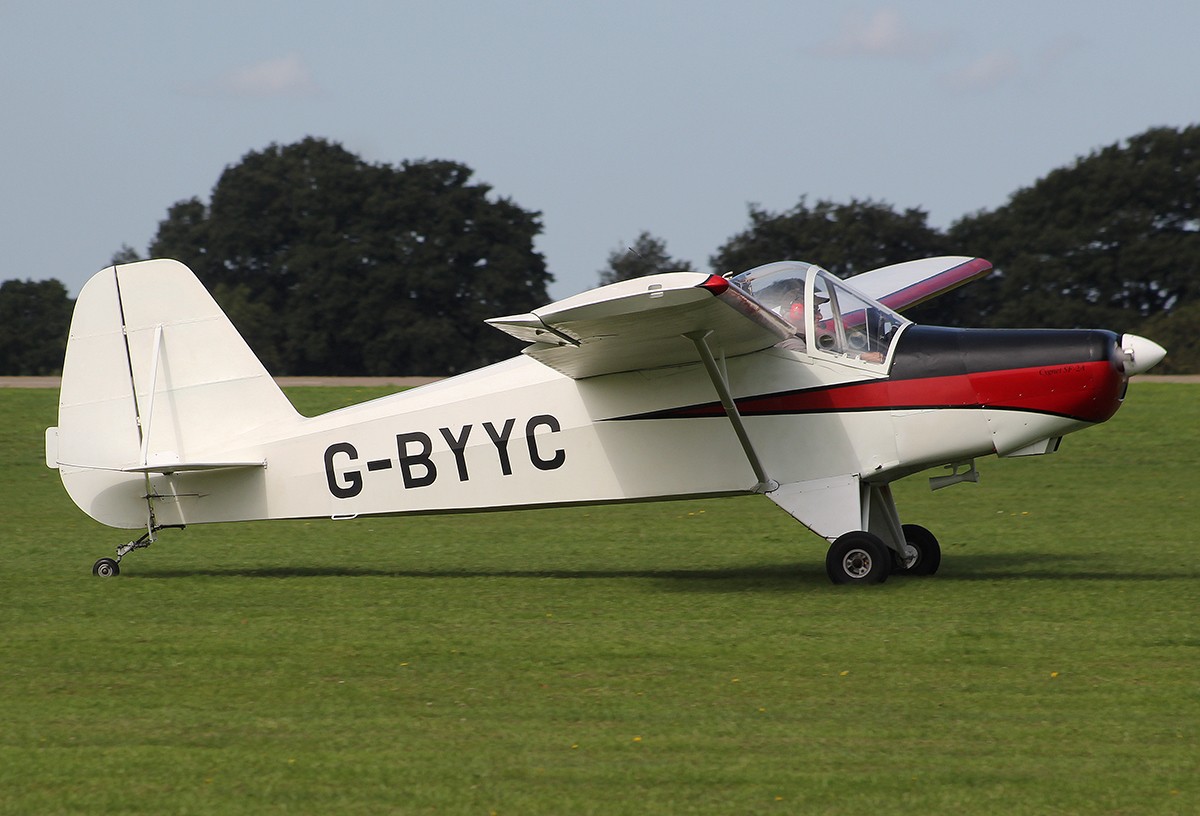
The SF-2 Cygnet emerged from the engineering mind of Albert "Bert" Sisler, a mechanical engineer and retired Boeing 747 captain who first soloed in 1941. Sisler's design philosophy centered on creating "a practical, safe, easy, and fun-to-fly machine for the occasional pilot," addressing a specific gap in recreational aviation. The aircraft's most distinctive feature—its forward-swept, shoulder-mounted wing configuration—was deliberately engineered to position the center of lift ahead of the wing root for proper center of gravity balance while providing pilots with an unobstructed field of view above and below the wing.
The prototype, initially designated SF-2 Whistler, underwent refinement before emerging as the SF-2A Cygnet. Following its maiden flight in 1973, the aircraft earned an Outstanding Design Contribution award at the EAA Oshkosh convention that same year, validating Sisler's innovative approach to homebuilt aircraft design.
Construction and Manufacturing Approach
Unlike factory-produced aircraft, the Cygnet is marketed exclusively as amateur-built aircraft plans rather than completed airframes or kits. Viking Aircraft LLC, owned and operated by Patrick and Robin Taylor, currently manages production and sales of the plans. The Taylor family's connection to the aircraft began in 1981 when Rex Taylor, founder of HAPI Engines, acquired the prototype and design rights from Sisler.
The construction package consists of 20 sheets measuring 24×18 inches, including full-size rib drawings, sold for $200 per set. Builders can expect to invest between 1,700 and 1,800 hours in construction, though some have completed their aircraft faster. Alvin Sager built his Cygnet in 1,200 hours, while Sisler himself completed the prototype in 1,600 hours over an 18-month period. Jerry Folkerts of Bowling Green, Missouri, represents the dedication of many builders, completing a 20-year construction project in 2011 while serving as a U.S. Air Force officer and helicopter pilot, finishing his aircraft for less than $13,000.
Technical Specifications and Performance
The Cygnet employs a mixed construction approach, combining wood, 4130 steel tubing, and doped aircraft fabric. The wing incorporates a NACA 3413 airfoil with strut-bracing and jury strut support, spanning 30 feet with a total wing area of 125 square feet. The aircraft accommodates two occupants in side-by-side configuration within a 39-inch-wide cockpit topped by a bubble canopy.
Engine options range from 60 to 82 horsepower, with the Volkswagen four-stroke conversion serving as the traditional powerplant choice. The 1835cc, air-cooled, four-cylinder automotive engine produces 82 horsepower and has demonstrated exceptional reliability in service. More recent installations have featured the Jabiru 2200 engine, producing 85 horsepower. Performance varies with engine selection: the 60-horsepower Volkswagen enables cruise speeds of approximately 90 mph while consuming 3.5 gallons per hour, while the 85-horsepower Jabiru increases cruise speed to 100 mph at 4.5 gallons per hour consumption.
Operational History and Reliability
With an empty weight of 585 pounds and gross weight of 1,100 pounds, the Cygnet achieves a maximum speed of 108 mph and stalls at just 48 mph. The aircraft climbs at 580 feet per minute and offers a range of 390 miles with its 15-gallon fuel capacity. These performance characteristics have made it suitable for both licensed pilots and student pilots earning their wings.
Patrick Taylor earned his Private Pilot certificate in the prototype in 1980 and continues to operate it from Burlington Municipal Airport in Wisconsin. One owner reported exceptional reliability over 370 hours of flying across six years and more than 500 landings, requiring only one spark plug replacement and minimal maintenance—performance equaling or surpassing factory-built aircraft.
Production Success and Global Reach
By January 2003, 100 examples had been completed and flown worldwide. As of 2016, Viking Aircraft had sold more than 500 sets of plans, with more than 100 Cygnets flying globally. Registration records from July 2016 showed 19 SF-2A Cygnets registered with the FAA in the United States, four with Transport Canada, and seven with the United Kingdom's Civil Aviation Authority.
Continuing Legacy
The Cygnet's enduring appeal lies in its combination of distinctive appearance, practical performance, and reasonable construction requirements. The aircraft serves as a testament to Sisler's vision of creating accessible aviation for occasional pilots, while the Taylor family's continued stewardship ensures the design remains available to new generations of builders. The prototype's continued airworthiness after nearly five decades demonstrates the soundness of Sisler's original engineering, making the SF-2 Cygnet a respected member of the amateur-built aircraft community.