
Design Philosophy and Development
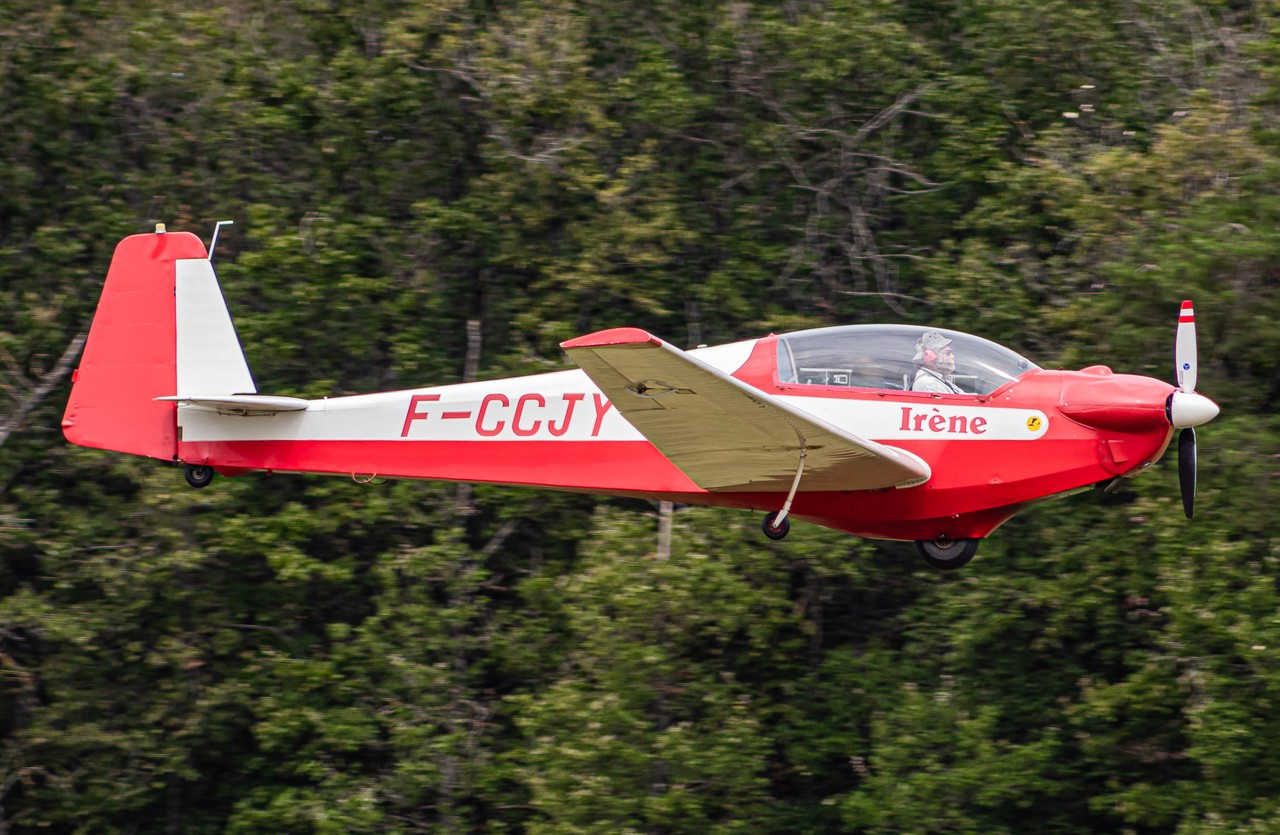
Egon Scheibe conceived the SF-28 in 1970 as a direct evolution of his successful SF-25 Falke series, with the primary objective of improving gliding performance through aerodynamic refinement. The tandem seating arrangement marked a departure from conventional side-by-side motor glider layouts, reducing fuselage cross-section and drag while maintaining the aircraft's dual role as both powered aircraft and high-performance glider. This configuration change proved crucial in achieving the aircraft's exceptional 26:1 glide ratio at 85 km/h, with a remarkably low sink rate of just 0.9 meters per second at 69 km/h.
The aircraft employed a steel-tube fabric-covered fuselage combined with wooden fabric wings mounted on a single main spar, reflecting proven construction techniques from Scheibe's earlier designs. The large perspex canopy provided excellent visibility for both occupants, essential for spotting thermals and other aircraft during soaring flight. The non-retractable monowheel undercarriage with steerable tailwheel and outrigger wheels simplified ground operations while keeping weight to a minimum.
Manufacturing and Market Position
Scheibe Flugzeugbau established itself as a pioneer in motor glider development, with company roots extending back to Egon Scheibe's pre-World War II designs including the Mu 13 series. By 1963, the company had introduced the SF-25A Motorfalke, followed by the SF-25B in 1967 and the SF-27M from 1966 to 1969, creating a comprehensive family of motor gliders before launching the SF-28 program.
Production began following the May 1971 first flight and continued through 1980, with manufacturing serial number 57114 representing one of the final examples built. The company marketed the SF-28A aggressively, advertising the aircraft for sale at DM 49,800 FOB Hamburg in 1974. This pricing positioned it as a premium motor glider, targeting serious soaring enthusiasts and flying clubs seeking competition-capable aircraft.
Technical Specifications and Performance
The Limbach SL 1700 engine provided the SF-28 with reliable power for self-launching operations. This four-cylinder air-cooled horizontally-opposed powerplant delivered 49 kW (66 hp), sufficient to achieve a maximum speed of 180 km/h and climb to a service ceiling of 5,000 meters. With a total fuel capacity supporting a range of 520 kilometers, the aircraft offered genuine cross-country touring capability.
Measuring 8.1 meters in length with a 16.3-meter wingspan and standing just 1.55 meters high, the SF-28 achieved excellent proportions for its dual role. The 18.5 square meter wing area resulted in an aspect ratio of 14.5, utilizing the proven Göttingen 533 airfoil section. With an empty weight of 410 kilograms and maximum takeoff weight of 610 kilograms, the aircraft maintained a wing loading of 32.99 kg/m², contributing to its gentle handling characteristics.
Operational History and Military Service
While primarily serving civilian operators, the SF-28 found limited military application. The Spanish military acquired at least one example, designated UE 16-1, which served in training or utility roles until its demobilization in April 2008. This military service demonstrated the aircraft's reliability and suitability for professional operations beyond recreational flying.
Scheibe recognized the SF-28's competitive potential, entering at least one aircraft in the German Motor Glider Competition of 1977. These competitions validated the design's performance capabilities and helped establish its reputation among serious soaring pilots. The aircraft's combination of powered convenience and pure glider performance made it attractive to pilots seeking to maximize their soaring opportunities regardless of local soaring conditions.
Legacy and Current Status
Production totals remain undocumented, though evidence suggests limited numbers were manufactured during the aircraft's nine-year production run. Several examples continue flying today, including EC-DKJ operated by the Real Aeroclub de Toledo and F-CEYF photographed at Abbeville in 2017. The aircraft holds EASA type certificate EASA.A.107, enabling continued operation under current European regulations.
The SF-28 represents an important evolutionary step in motor glider development, demonstrating how aerodynamic refinement could significantly enhance gliding performance without sacrificing powered flight capabilities. While never achieving the commercial success of some contemporaries, it established principles that influenced subsequent motor glider designs and maintained Scheibe's reputation for innovative engineering in the specialized world of self-launching gliders.