
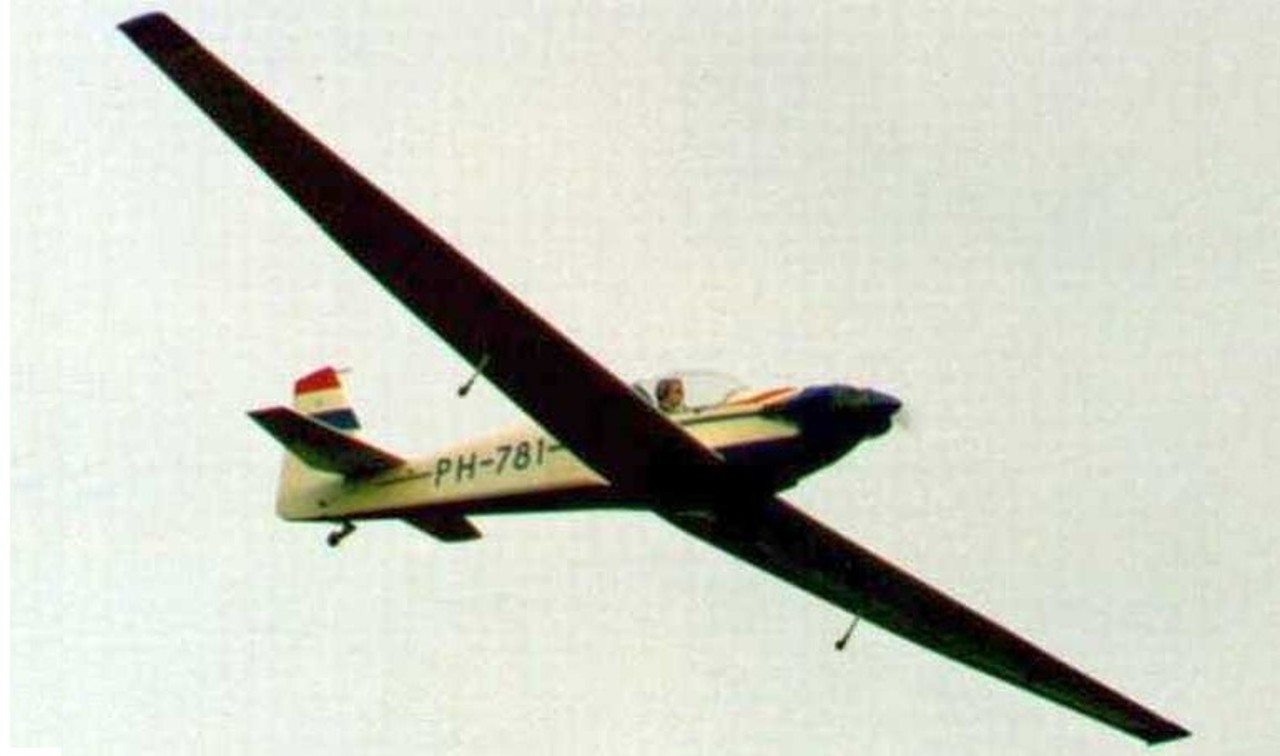
The Collaborative Design Approach
The SFS-31 Milan represented a unique approach to aircraft development through international collaboration. The aircraft's designation itself told the story of this partnership—"S" for Sportavia, "F" for Fournier, and "S" for Scheibe, with the number 31 derived from adding the model numbers of the Fournier RF-4 and Scheibe SF-27M (27+4=31). This collaborative design philosophy allowed each manufacturer to contribute their proven expertise rather than developing entirely new components.
The engineering marriage proved highly successful. The RF-4's sleek fuselage, already optimized for motorglider operations, provided an ideal foundation for mounting the SF-27M's efficient 15-meter wing. This combination created an aircraft with exceptional gliding performance while maintaining adequate powered flight capabilities.
Sportavia-Pützer: The German Connection
Sportavia-Pützer GmbH was established by Alphons Pützer specifically to manufacture Fournier designs under license in West Germany. The company had already demonstrated its manufacturing capabilities by building Fournier aircraft at impressive production rates, eventually exporting them to approximately 30 countries. This established infrastructure made Sportavia the logical choice to lead the Milan project.
The company's facilities in West Germany provided the technical expertise necessary to integrate components from three different sources while maintaining the quality standards required for motorglider certification. However, despite their previous success with Fournier aircraft, Sportavia-Pützer would not survive long beyond the Milan's production run, with no indication the company continued operations into the modern era.
Technical Innovation Through Adaptation
The Milan's powerplant represented practical engineering rather than cutting-edge technology. The 39-horsepower Rectimo 4 AR 1200cc engine was essentially a converted Volkswagen Beetle automotive engine, demonstrating how proven automotive technology could serve aviation needs. While modest in power output, the engine proved well-matched to the aircraft's low-drag design and lightweight construction.
This automotive-derived powerplant enabled remarkable fuel efficiency. At economy cruise settings of 90 km/h, the Milan consumed merely 3.5 liters per hour, while faster cruise speeds of 150 km/h required only 8 liters hourly. These figures made the aircraft extremely economical to operate, a crucial factor for the training and recreational markets it targeted.
Performance and Handling Characteristics
The Milan's performance statistics revealed an aircraft optimized for efficiency rather than speed. With an empty weight of just 661 pounds and a gross weight of 946 pounds, the aircraft carried a useful load of 285 pounds. The 15-meter wingspan generated exceptional lift efficiency, resulting in a stall speed of only 43.5 mph and a service ceiling reaching 19,700 feet.
The aircraft's 29:1 lift-to-drag ratio placed it firmly in the high-performance glider category, allowing pilots to soar efficiently when thermals were available while maintaining the ability to motor to altitude or return to base under power. Maximum range reached 415 miles, sufficient for cross-country flights while maintaining comfortable fuel reserves.
Limited Production and International Operation
Despite its innovative design approach and solid performance, the Milan achieved only limited commercial success. Total production numbered between 12 and 13 aircraft, all built during the brief period from 1969 to the early 1970s. The prototype, registered D-KORO with construction number 6601, completed its maiden flight on August 31, 1969, but market conditions or manufacturing challenges prevented large-scale production.
The small production run found international buyers, with at least three examples reaching the United States market. This geographic distribution demonstrated the aircraft's appeal beyond its German origins, though insufficient demand prevented expanded production runs that might have reduced unit costs and improved market penetration.
Operational History and Safety Record
The Milan's operational history included both successful service and notable accidents. On June 14, 1986, aircraft G-AYRL crashed near Bincombe, north of Weymouth in Dorset, seriously injuring the pilot. The aircraft, construction number 6606, was permanently withdrawn from service and deregistered on March 26, 1987. Another Milan, D-KABM, was destroyed in an accident on July 23, 2014, near Gliderairfield Oppenheim, indicating that at least some examples remained active well into the 21st century.
Legacy of Collaborative Design
The SFS-31 Milan's brief production run should not obscure its significance in demonstrating successful international collaboration in aircraft design. By combining proven components rather than developing everything from scratch, the project achieved remarkable efficiency in both development time and performance characteristics. The aircraft proved that modest engines could power effective motorgliders when matched with optimized aerodynamics and lightweight construction.
While the Milan never achieved commercial success comparable to other motorglider designs, it established principles of component sharing and international cooperation that would influence future aircraft development programs. The surviving examples continue to represent an interesting chapter in the evolution of European motorglider design during the late 1960s and early 1970s.