
Service History
The Saab 340 dominated the regional airline market throughout the 1980s and early 1990s, capturing significant market share in the post-deregulation era. American Eagle operated the largest fleet with 115 aircraft at peak strength, while Crossair of Switzerland became the launch customer in June 1984. By the mid-1980s, the 340 had secured orders from operators across four continents, benefiting directly from the 1978 U.S. Airline Deregulation Act which created unprecedented demand for regional connectivity.
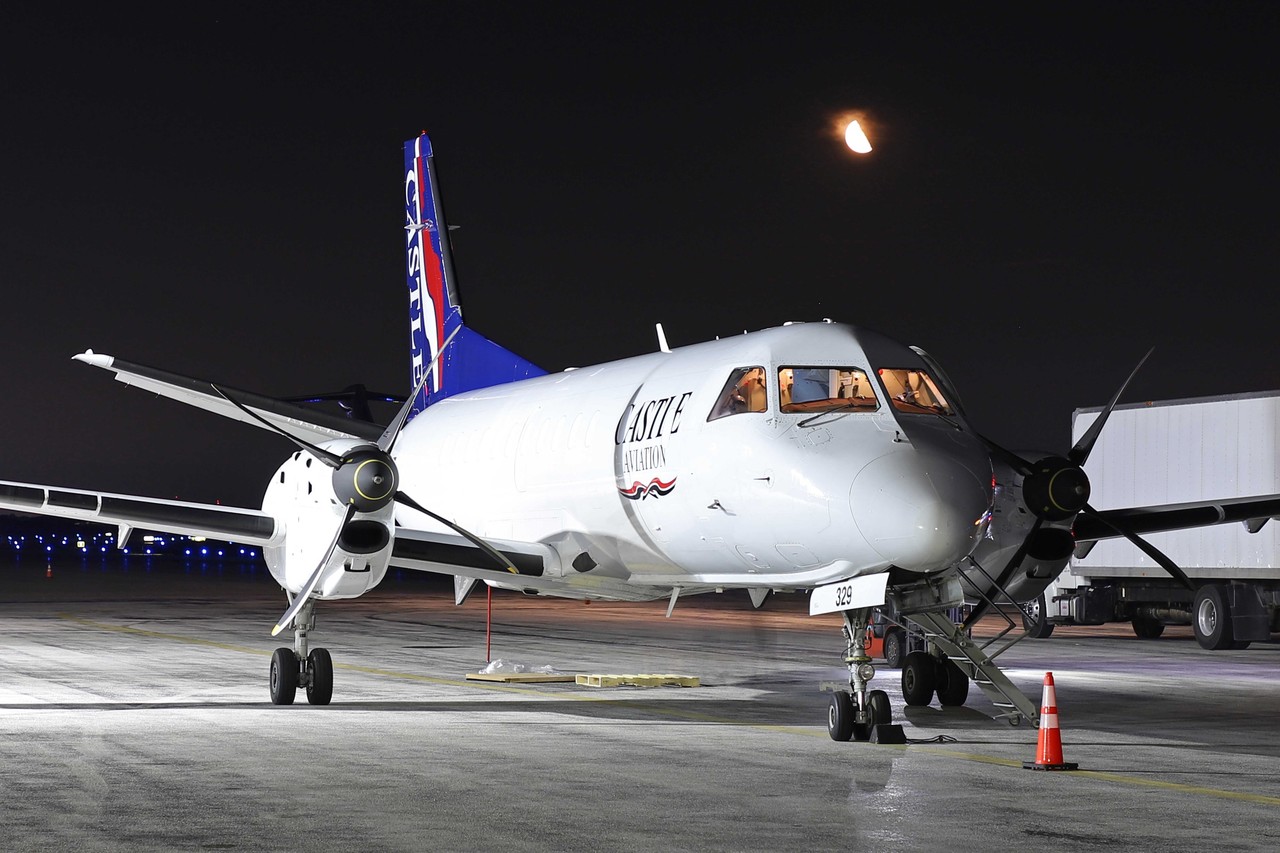
Today, 150 Saab 340s remain in active service with 34 different airlines worldwide. Australia's REX currently operates the largest active fleet with 58 aircraft, demonstrating the type's continued viability in regional markets. The aircraft's exceptional durability has proven its designers correct—fatigue testing exceeded 200,000 cycles, equivalent to 75 years of typical operations, meaning most examples remain at only half their design life despite being over 30 years old.
The Manufacturer
Saab AB transformed from a defense contractor into a civilian aircraft manufacturer during the 1970s, with the 340 representing their ambitious entry into commercial aviation. The company partnered with Fairchild Aircraft of the United States in January 1980, with Saab shouldering 75 percent of development costs while Fairchild contributed 25 percent and manufactured wings, tail sections, and engine nacelles.
This transatlantic partnership dissolved in 1985 when Fairchild withdrew from the program, forcing Saab to relocate all component production from the United States to Linköping, Sweden. Fairchild ceased all aircraft activities by 1987, leaving Saab as sole proprietor of the 340 program. The Swedish manufacturer ultimately abandoned civilian aircraft production in 2005, marking the end of an era that had produced nearly 500 regional airliners.
Engine & Technical Details
Two General Electric CT7 turboprops powered the Saab 340, providing reliable performance for short to medium-haul routes. The aircraft incorporated advanced manufacturing techniques borrowed from Saab's military programs, particularly the JAS 39 Gripen fighter development. Most significantly, engineers eliminated rivets from aluminum structures, employing diffusion bonding instead to reduce weight and improve structural integrity.
The 340's low-wing configuration and 70-foot 4-inch wingspan provided excellent short-field performance essential for regional operations. Final assembly occurred at Saab's Linköping facility, where the first prototype completed its maiden flight after an intensive development program launched in September 1980.
Development & Testing
The prototype's first flight on January 25, 1983, initiated an aggressive test program that demonstrated Saab's commitment to certification excellence. Test pilots completed 24 flights within four weeks of the maiden flight, ultimately accumulating 1,731 test flights totaling more than 585 hours to achieve Joint European Certification.
This exhaustive testing regime validated the aircraft's robust design and established confidence among early operators. The certification process proved the 340's capabilities across diverse operating conditions, from Scandinavian winters to tropical climates, establishing its reputation for reliability that continues today.
Military Variants
Saab leveraged the 340's proven airframe for military applications, developing the TP100 for VIP transport duties with the Swedish Air Force. The S100 Argus airborne early warning platform, introduced in 1997, featured the distinctive dorsal radar dome that transformed the civilian airliner into a sophisticated surveillance aircraft.
The 340 AEW&C variant demonstrated the airframe's adaptability beyond passenger service, with the Swedish military operating these platforms for national defense missions. These military derivatives extended the 340's operational life and showcased Saab's systems integration capabilities developed through decades of defense contracting.
Production & Legacy
Production concluded in 1999 after 459 aircraft had rolled off the Linköping assembly line, coinciding with American Eagle's decision to phase out its entire 340 fleet. Market conditions had shifted decisively toward jet-powered regional aircraft, reducing demand for turboprop airliners despite their operational efficiency on shorter routes.
The 340's commercial success validated Saab's engineering philosophy and manufacturing quality, establishing the Swedish company as a legitimate competitor to established American and European manufacturers. Though Saab abandoned civilian aviation, the 340's continuing service with operators worldwide testifies to its enduring design merit. Many aircraft purchased in the 1980s continue revenue service today, their structural integrity undiminished after four decades of operation.