
Training Origins and Limited Production
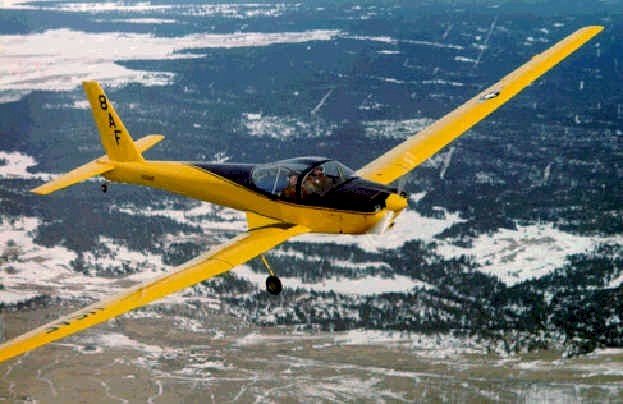
The SGM 2-37 emerged from Schweizer Aircraft Corporation's specialized expertise in glider manufacturing, representing their entry into the motor glider market during the early 1980s. Of the 12 aircraft built during the six-year production run, nine went directly to the United States Air Force Academy under the military designation TG-7A, where they served as advanced training platforms for cadet pilots. The remaining three aircraft found their way into civilian hands, including one that later became part of the Tuskegee Airmen National Historical Museum collection in February 2005.
The Schweizer Legacy
Schweizer Aircraft Corporation brought decades of glider expertise to the SGM 2-37 project. Founded in 1939 by brothers Paul, William, and Ernest Schweizer, the company had established itself as America's premier glider manufacturer with successful models like the SGS 1-23, which flew from 1948 until 1967, and the popular SGS 1-26. The company's reputation extended beyond gliders through their production of 2,455 Grumman Ag-Cat agricultural aircraft from 1957 to 1981, making them one of the most diversified light aircraft manufacturers in the United States.
The company's ownership changed hands multiple times after the SGM 2-37 production ended. Sikorsky Aircraft, a United Technologies subsidiary, acquired Schweizer in 2004 but ceased operations in 2012. However, the Schweizer name lived on when Schweizer RSG purchased the company in 2018 and relocated helicopter production to Fort Worth, Texas, where they continue manufacturing the 300C, 300CBI, and 333 models.
Engineering and Performance
The SGM 2-37's design centered around quiet operation and extended endurance capabilities. Its Textron Lycoming IO-540-W3A5D flat-six engine produced 235 horsepower while driving a McCauley three-blade constant-speed propeller. In "quiet mode" operation at reduced power settings of just 52 horsepower, the aircraft became inaudible at altitudes of 2,000 feet, a characteristic that would prove valuable in later surveillance applications.
The aircraft carried 52 gallons of fuel as standard equipment, with an optional 67-gallon capacity available for extended missions. This fuel capacity, combined with the efficient Lycoming powerplant, provided impressive endurance for training sorties and reconnaissance work. The aircraft met Federal Aviation Regulation Part 23 certification standards for both day and night instrument flight rules operations.
Military Service and Variants
While the basic SGM 2-37 served primarily in training roles, it spawned the more successful SA 2-37A surveillance variant, which first flew in 1985. The military designated this reconnaissance version as the RG-8A, and it featured significant modifications including drooped wing leading edges, wing fences, and a 65-cubic-foot payload bay for sensors and surveillance equipment.
The SA 2-37A found service with multiple military organizations. The U.S. Army initially operated three aircraft, though one was lost in an accident and the remaining two transferred to the U.S. Coast Guard in 1987. The Central Intelligence Agency acquired between five and seven aircraft for covert operations, while international customers included the Colombian Air Force with six aircraft, plus additional operators in Jordan and Mexico.
These surveillance variants participated in notable operations including serving as airborne relay platforms for General Atomics Gnat 750 unmanned aerial vehicles over Yugoslavia in 1994, supporting NATO strike operations. The aircraft also provided reconnaissance support during the 1997 Japanese embassy hostage rescue operation in Peru.
Operational Challenges and Legacy
Despite its specialized capabilities, the SGM 2-37 faced limitations that restricted its broader success. The small production run of just 12 aircraft reflected the narrow market for such specialized motor gliders. Training requirements at the Air Force Academy could be met with conventional aircraft, while the surveillance mission rapidly evolved toward more sophisticated platforms.
Accidents plagued both the basic SGM 2-37 and its surveillance derivatives. Notable incidents included the loss of one U.S. Army SA 2-37A and a Mexican Air Force SA 2-37A that crashed on March 20, 2003. A civilian SGM 2-37 registered as N61474 to Pegasus Technologies was involved in an accident on February 19, 1998.
Current Status
Today, the number of airworthy SGM 2-37 aircraft remains unclear, though at least one example preserves the type's history at the Tuskegee Airmen National Historical Museum. The aircraft's most significant legacy lies in establishing Schweizer's credentials in the quiet surveillance aircraft market, leading to the more successful SA 2-38 Condor series, which the military designated as RU-38A and RU-38B and continued producing until 2008.
The SGM 2-37 represents a footnote in American aviation history, bridging the gap between traditional gliders and modern unmanned surveillance systems while serving the specialized training needs of military aviation during the 1980s.