
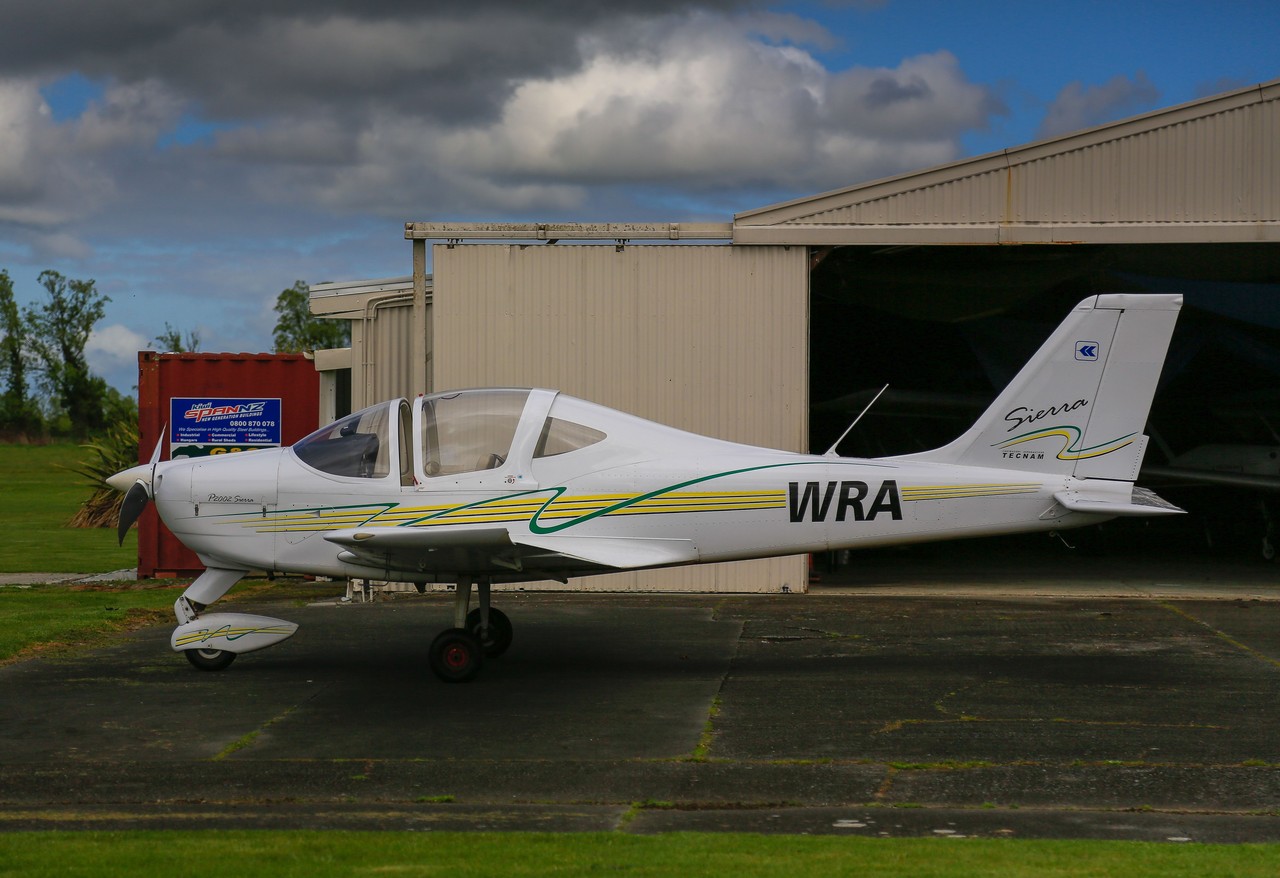
Training Revolution
By 2005, just three years after entering production, the P-2002 Sierra comprised 70 percent of Tecnam's total manufacturing output, with the Italian company producing six aircraft per week to meet demand. With approximately 180 aircraft delivered by mid-2005 and a six-month order backlog, the Sierra had established itself as a cornerstone of modern flight training in both Europe and the United States.
Regulatory Pioneer
The Sierra's success stemmed from its dual certification under European Very Light Aircraft (VLA) regulations and U.S. Light Sport Aircraft (LSA) rules, making it one of the first designs to capitalize on these new regulatory categories. This dual approval opened markets on both sides of the Atlantic, providing flight schools with a modern alternative to aging trainers like the Cessna 150. The aircraft's maximum takeoff weight of 600 kilograms placed it squarely within both regulatory frameworks.
Military Adoption
Despite its civilian origins, the P-2002 Sierra attracted military attention as a cost-effective primary trainer. The Argentine Air Force ordered eight P-2002 JF models in 2016, followed by the Hellenic Air Force's order for 12 aircraft in 2018, with the final Greek delivery completed in April 2019. These military variants featured fixed tricycle landing gear and variable-pitch propellers optimized for training operations.
The Pascale Brothers' Legacy
Tecnam, founded in 1957 by brothers Luigi and Giovanni Pascale, both World War II-era pilots, had been building light aircraft for nearly half a century before launching the Sierra. The family-owned company, operating from facilities in Capua, Italy, had produced over 4,000 aircraft across its entire lineup by the time the Sierra entered production. The brothers' emphasis on simple, reliable trainer designs found its ultimate expression in the P-2002 series.
Rotax Partnership
The Sierra's heart is the Austrian-built Rotax 912 S2, a four-cylinder, four-stroke engine producing between 73.5 and 100 horsepower depending on variant. This powerplant, consuming approximately 17 liters per hour of automotive or aviation gasoline, drives either two- or three-bladed propellers manufactured by companies like Sensenich. The engine's 2,000-hour time between overhauls and liquid-cooled cylinder heads provided the reliability essential for intensive training operations.
Engineering Excellence
Tecnam's in-house engineering team designed the Sierra with benign handling characteristics crucial for student pilots. The aircraft features stall strips on its wing leading edges that provide pre-stall buffeting, while maintaining roll control even after the stall break. Its aluminum construction withstands loads of +4/-2g in normal category operations, with some variants certified to +6/-3g. The steerable nosewheel and straightforward systems reduce maintenance complexity for training fleets.
Performance Superiority
With a cruise speed of 138 mph at 75 percent power, the Sierra outperformed the venerable Cessna 150 in most flight regimes while maintaining a docile stall speed of just 44 mph with flaps extended. Its service ceiling of 13,110 feet and initial climb rate of 1,220 feet per minute provided adequate performance for primary training, while takeoff and landing runs of 761 and 610 feet respectively allowed operations from shorter airfields.
Evolution and Variants
Production evolved beyond the original Sierra Mk I to include the updated Mk II introduced in the 2010s, with major improvements implemented in December 2016. Specialized variants include the P2002 JF (military trainer), JR, EA, and RG models, each tailored for specific operational requirements. The company's ability to offer "ready-to-go" configurations helped flight schools standardize their training fleets.
Continuing Legacy
Today, the P-2002 Sierra remains in active production at Tecnam's Italian facilities, with examples operating across 39 documented locations worldwide. The aircraft appears in modern flight simulation software, introducing virtual pilots to its handling characteristics. As light sport aviation continues expanding globally, the Sierra's combination of modern systems, proven reliability, and regulatory compliance positions it as a bridge between traditional general aviation and emerging pilot training methodologies. Its success demonstrates how specialized manufacturers can compete effectively against established aviation giants by focusing on specific market segments and regulatory opportunities.