
Design and Development
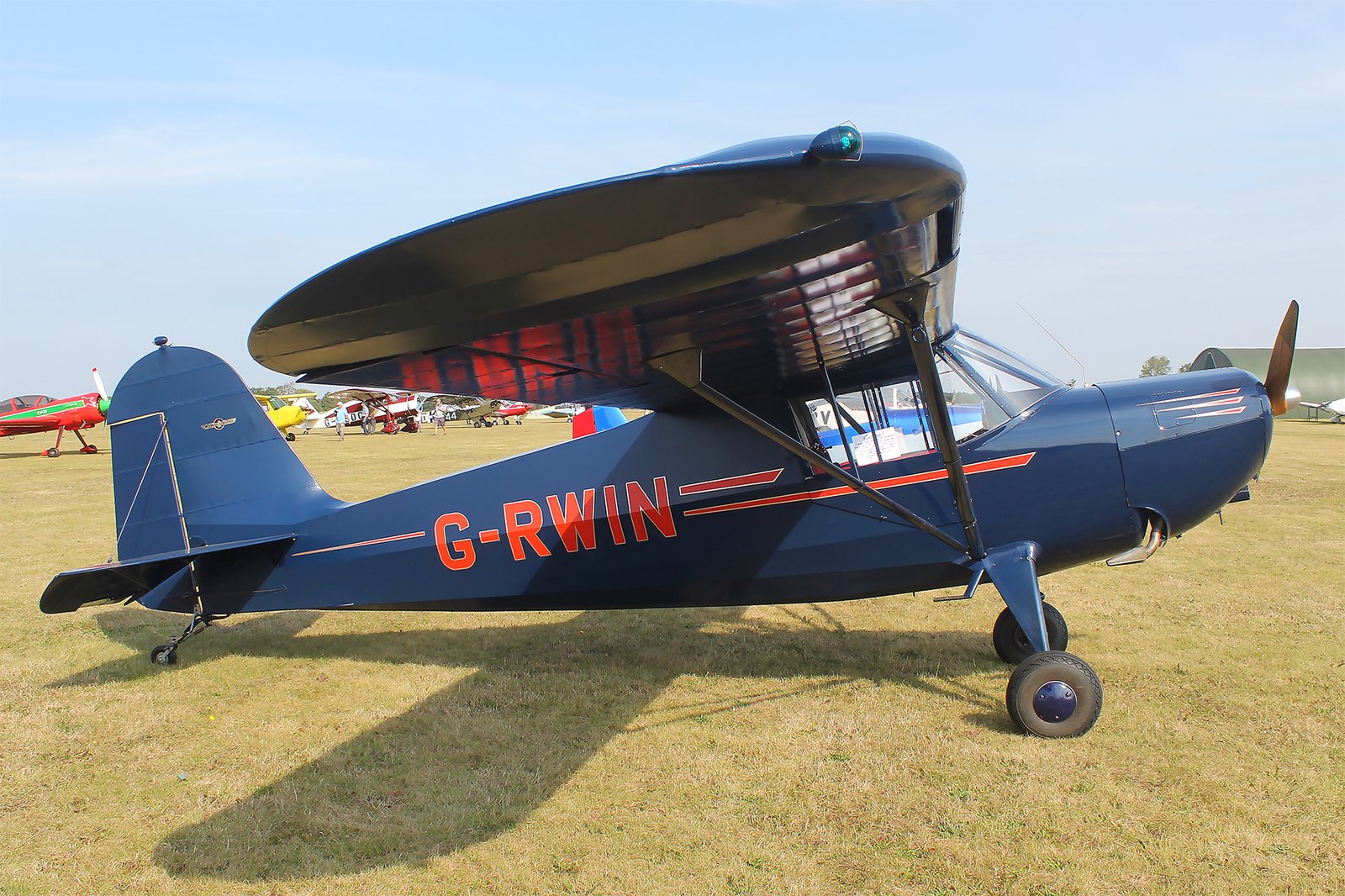
The Skyranger emerged from the drawing boards of engineers Gene Slvay and George A. Stark as Rearwin Aircraft's answer to the growing sport aviation market of the late 1930s. The company, founded by Rae Rearwin and operating from Fairfax Airport in Kansas City, Missouri, had previously specialized in radial-engine aircraft like the Sportster and Cloudster. The Skyranger represented a significant departure from this tradition, employing small horizontally opposed engines instead of the radials that had defined Rearwin's earlier designs.
Initially designated the "Rearwin Model 165" and called simply the "Ranger," the aircraft was quickly renamed Skyranger after Ranger Engines protested the use of their trademark. The prototype earned FAA Type Certificate #729 in 1940, validating a design that emphasized quick delivery times within 10 weeks of order placement. This rapid production schedule was made possible through simplified construction techniques using a fabric-covered steel-tube fuselage paired with wooden wings featuring a semi-symmetrical airfoil.
Production Challenges and Variants
Rearwin entered production in 1940 with ambitious plans to compete against established competitors like the Piper Cub. The aircraft was specifically targeted at sport pilots and flying businessmen who needed reliable two-seat transportation. However, the Skyranger proved too challenging for the U.S. Civilian Pilot Training Program, which rejected it in favor of more docile alternatives.
Six distinct variants emerged during the aircraft's brief production run. The original Model 165 prototype featured a 65-horsepower Continental A65 engine. Production variants included the Skyranger 175 with a 75-hp Continental A75, the Skyranger 180 powered by an 80-hp Continental A80, and the Skyranger 180F equipped with an 80-hp Franklin 4AC-176-F3. The most powerful variant was the Skyranger 190F, mounting a 90-hp Franklin 4AC-199-E3 engine, though only one example was constructed.
Wartime Interruption and Corporate Changes
World War II effectively ended Rearwin's aircraft ambitions after producing just 82 Skyrangers by 1942. Unlike many light aircraft manufacturers that found military contracts during the war, Rearwin ceased aviation production entirely to support the war effort. The company underwent significant changes during this period, with reorganization and purchase occurring in 1941, though some sources place this transition as late as 1943.
Post-War Revival and Final Chapter
In 1945, the newly formed Commonwealth Aircraft Corporation attempted to revive Skyranger production at the original Fairfax plant. The venture faced immediate challenges when wartime material shortages forced the scrapping of original tooling, requiring the first 12 post-war aircraft to be hand-built. Commonwealth relocated operations to Valley Stream, New York in 1946 and introduced the Skyranger 185 variant with an 85-hp Continental engine.
Despite these efforts, Commonwealth struggled against formidable competition from war surplus aircraft flooding the civilian market and new designs from established manufacturers. The company declared bankruptcy in March 1947, permanently ending Skyranger production after fewer than 100 total aircraft had been completed across both manufacturers.
Technical Specifications and Performance
The Skyranger's conventional configuration featured a high-wing design with fixed tailwheel landing gear and side-by-side seating for pilot and passenger. Typical specifications for the 80-hp Continental-powered variant included a gross weight of 1,450 pounds against an empty weight of 910 pounds, providing a useful load of 540 pounds. The aircraft carried 48 gallons of fuel, enabling a range of 500 to 600 miles at cruise speeds of 103 mph.
Performance figures reflected the aircraft's sport aviation mission, with a top speed of 114 mph and gentle stall characteristics at 40 mph. Initial climb rate reached 650 feet per minute, while service ceiling extended to between 12,000 and 14,000 feet depending on engine variant and loading conditions.
Legacy and Survivors
The Skyranger's brief production run and limited numbers ensure its status as a rare aircraft today. At least one 1942 example survives on display at the Fargo Air Museum in North Dakota, representing one of the few remaining examples of Rearwin's final design effort. The aircraft's historical significance lies not in operational success, but as a symbol of the challenges facing small aircraft manufacturers during the transition from Depression-era innovation to post-war market realities.
The Skyranger's failure to achieve commercial success highlighted the difficulties inherent in shifting from established radial engine designs to newer horizontally opposed powerplants, while also demonstrating how World War II permanently altered the light aircraft landscape through surplus military trainers that undercut new civilian production.