
Design Innovation and Recognition
Mark Brown of San Antonio, Texas began developing the Star-Lite SL-1 on January 15, 1980, targeting ultralight enthusiasts who demanded more sophistication than traditional open-cockpit designs offered. The aircraft represented a significant advancement in amateur-built aviation, combining composite construction techniques with an enclosed cockpit in a market dominated by fabric-covered, open-air ultralights.
The prototype's maiden flight in May 1983 validated Brown's innovative approach. That same year, the SL-1 captured the Outstanding New Design award at the Experimental Aircraft Association's prestigious Oshkosh gathering, confirming its technical significance within the homebuilt aircraft community.
Manufacturing and Production
Star-Lite Aircraft, based in Englewood, Ohio, launched kit production immediately following the prototype's successful debut in 1983. The company later relocated operations to San Antonio, Texas, before ceasing production in 1990 after seven years of manufacturing. While exact production figures remain undocumented, examples were constructed across three continents, with builders completing aircraft in the United States, United Kingdom, and Australia.
The end of factory production in 1990 did not eliminate support for existing aircraft. A dedicated community of builders and owners established an ongoing parts supply network, ensuring continued airworthiness for completed examples.
Technical Specifications and Performance
The SL-1's Rotax 447 powerplant, a two-cylinder horizontally-opposed air-cooled engine, delivered 44 horsepower to drive the aircraft's impressive performance envelope. With a 19-liter fuel capacity, the aircraft achieved a never-exceed speed of 110 mph and service ceiling of 12,000 feet. Its 40 mph stall speed provided benign low-speed handling characteristics essential for ultralight operations.
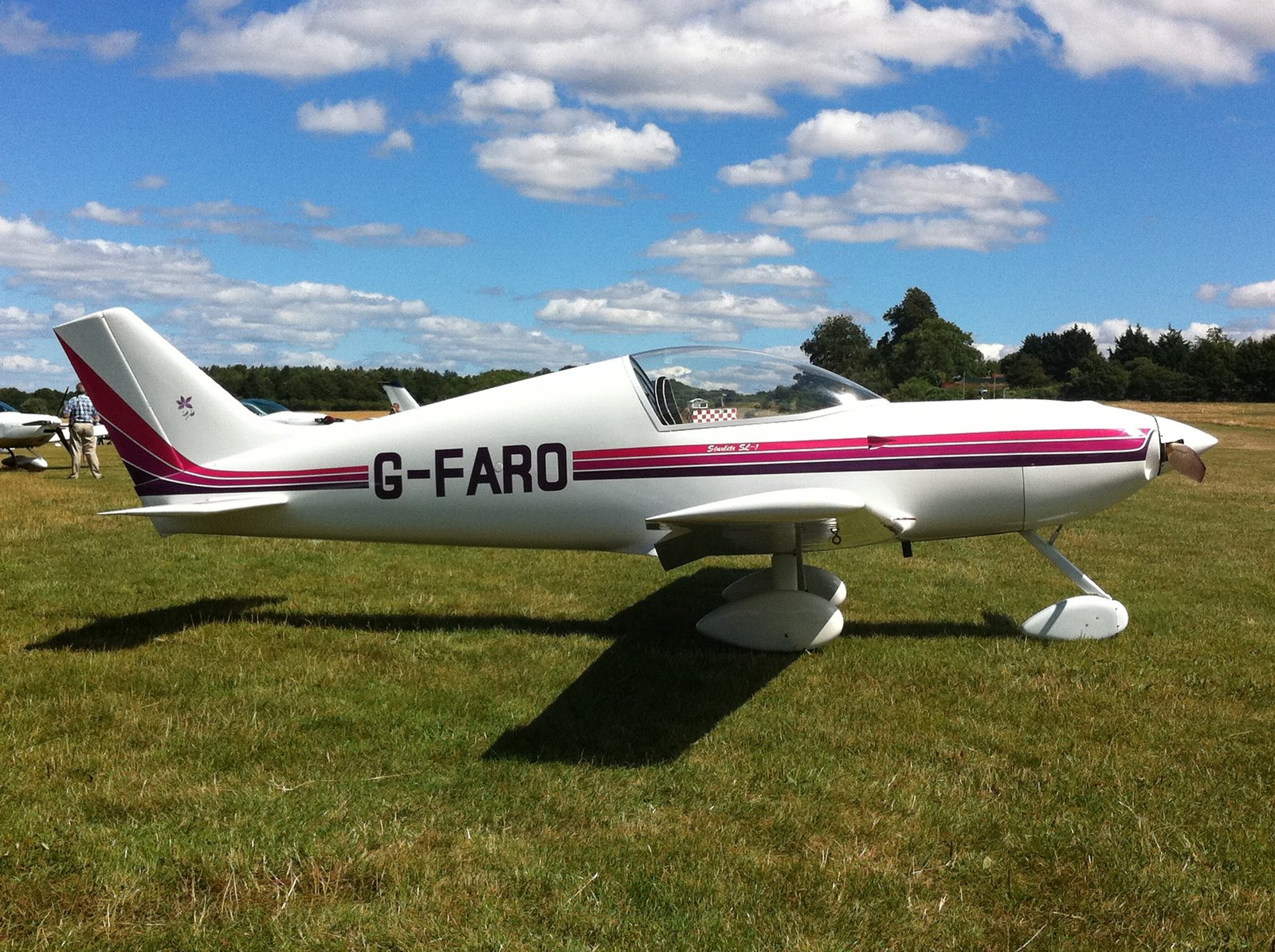
The aircraft's cantilever wing design eliminated external bracing, contributing to its clean aerodynamic profile and 95 mph cruising speed. Standard configuration included tailwheel landing gear, though builders could specify tricycle gear as an optional arrangement. The enclosed cockpit, unusual for ultralights of the era, provided weather protection and reduced pilot fatigue during extended flights.
International Operations
Global distribution of SL-1 kits resulted in aircraft registrations across multiple countries. In Australia, aircraft 10-1274 received registration on March 14, 1991, and underwent partial restoration near Sydney before transfer to the Sports Aircraft facility at Wedderburn, New South Wales for completion.
British examples included G-SOLA and G-FARO, both operating under the United Kingdom's permit-to-fly regulations for amateur-built aircraft. On July 17, 2021, G-SOLA experienced a fuel exhaustion incident during test flying at Pembrey West Wales Airport. The pilot emerged unharmed from the forced landing, which resulted in only minor aircraft damage, demonstrating the structural integrity of Brown's design.
Design Evolution and Legacy
The SL-1's success provided the foundation for Mark Brown's subsequent Aero Design Pulsar project, a two-seat aircraft that expanded upon the original's composite construction techniques and aerodynamic concepts. The Pulsar achieved greater commercial success, validating the design principles pioneered in the single-seat SL-1.
Brown's integration of composite materials into ultralight aircraft construction influenced subsequent amateur-built designs throughout the 1980s and beyond. The enclosed cockpit concept, initially considered unusual for the ultralight category, became increasingly common as builders recognized its practical advantages.
Current Status
While Star-Lite Aircraft ceased operations over three decades ago, the SL-1 maintains a presence in the experimental aircraft community. The continued existence of owner and builder support networks suggests active examples remain airworthy, though precise numbers of currently flying aircraft are not documented.
The aircraft's recognition at Oshkosh and its role in advancing composite construction techniques secure its position in ultralight aviation history. As one of the first enclosed-cockpit composite ultralights to achieve commercial production, the SL-1 represents a significant milestone in the evolution of amateur-built aircraft design and construction methods.