
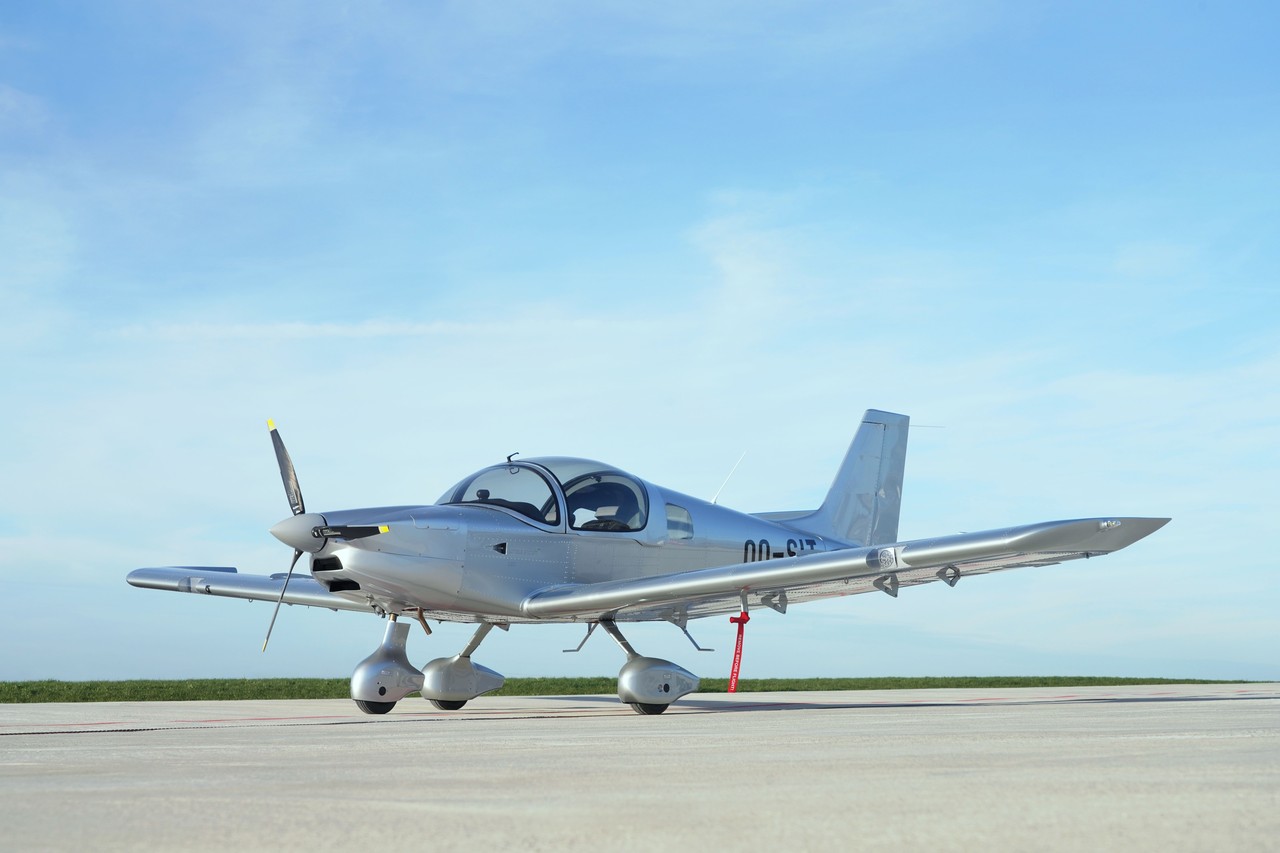
Service History
The Sling 2 achieved immediate commercial success, with over 100 units sold within its first two years of production from 2009 to 2011. By mid-2011, more than 65 aircraft had been delivered to customers across Africa and Europe. The aircraft's rapid market penetration demonstrated strong demand for its combination of aluminum construction, modern avionics compatibility, and proven long-range capabilities in the light-sport aircraft category.
Notable operations include Marc C. Trollip's extensive flights across southern Africa, covering Zambia, Zimbabwe, Botswana, Namibia, Malawi, Madagascar, and South Africa. The aircraft's reliability and range made it particularly popular among pilots seeking to explore remote destinations while maintaining the safety margins of certified aircraft construction.
The Manufacturer
The Airplane Factory was founded in 2006 by Mike Blyth and James Pitman at Tedderfield Airpark in Johannesburg, South Africa. The company later rebranded as Sling Aircraft and expanded rapidly, achieving over 100 Sling aircraft sales across all models in its first two years of operation. In 2011, the company added director Jean d'Assonville, an aeronautical engineer, designer, and pilot who contributed to subsequent aircraft development.
Sling Aircraft remains in business today, having shifted focus to newer models including the four-seat Sling 4 introduced in 2011 and the Sling TSi launched in 2018. The company continues operations from its original Tedderfield Airpark facility south of Johannesburg, maintaining its position as a significant player in the kit aircraft and light-sport aircraft markets.
Engine & Technical Details
The Sling 2 utilizes Rotax engines from Bombardier-Rotax GmbH in three configurations: the 912ULS producing 100 horsepower, the fuel-injected 912iS at 100 horsepower, or the turbocharged 914UL generating 115 horsepower. These four-cylinder, four-stroke, horizontally-opposed engines feature 1,352cc displacement with liquid-cooled cylinder heads and air-cooled cylinders.
The 912ULS produces 73.5 kilowatts at 5,800 rpm for maximum five-minute operation and 69 kilowatts continuous power, driving a Warp Drive 1.78-meter three-blade composite propeller. The aircraft's all-aluminum stressed-skin semi-monocoque construction uses CNC-punched aviation-grade aluminum components, emphasizing ease of assembly and long-term durability over composite alternatives.
Record-Breaking Performance
The Sling 2 achieved international recognition through Mike Blyth and James Pitman's 2009 around-the-world flight in aircraft ZU-TAF/ZU-TSF. This remarkable journey covered 45,000 kilometers in 40 days, including legs of 22 to 26 hours duration, accumulating over 240 flight hours and demonstrating exceptional reliability for a light-sport aircraft.
In April 2010, the prototype ZU-TSF completed a seven-day delivery flight from South Africa to Poland. The same year, the innovative "5577" project demonstrated the aircraft's kit-building efficiency when five men and five women assembled a complete Sling 2 in just seven days.
Performance Specifications
The Sling 2 achieves cruise speeds of 120 to 130 knots true airspeed at 9,500 feet, with variations depending on engine selection. The turbocharged 914UL variant delivers the highest performance with 130-knot cruise speeds and 900 feet-per-minute climb rates. Stall speed is 46 knots indicated airspeed in clean configuration, reducing to 40 knots calibrated airspeed with full flaps deployed.
Takeoff performance varies from 460 feet for turbocharged variants to 560 feet for normally aspirated engines, while landing distance is consistently 295 feet. The aircraft's service ceiling ranges from 13,000 to 16,000 feet depending on engine choice, with endurance of 7 to 10 hours and maximum range of 700 to 850 nautical miles at 75 percent power with 45-minute reserves.
Production & Legacy
The Sling 2 became the 125th Special Light-Sport Aircraft certified in the United States, enabling broader market access beyond its initial European and African sales territories. Manufacturing at Tedderfield Airpark utilized precision CNC manufacturing techniques that set new standards for kit aircraft construction quality and assembly time.
The first New Zealand-registered example, ZK-SLG (construction number 82), was registered on October 20, 2014, and continues flying today. A Belgian production variant emerged as the Sonaca 200, with prototype OO-NEW featuring a Rotax 914F engine and 750-kilogram gross weight.
The aircraft's cultural significance extends beyond mere specifications, representing a "South African success story" that inspired global sales and influenced subsequent model development. Its demonstration that aluminum construction could deliver reliability superior to composites in extreme conditions influenced industry design philosophy and established Sling Aircraft as a major player in the light-sport aircraft market.